Electrical Estimating Software: 2026 Small Business Guide
Why are you still paying "rent" on the tools you use to build your business? For a small electrical contractor, every dollar tied up in a…
This author has not written his bio yet.
But we are proud to say that Steve Griffin contributed 423 entries already.
Why are you still paying "rent" on the tools you use to build your business? For a small electrical contractor, every dollar tied up in a…
Did you know that 41% of the current construction workforce is projected to retire by 2031? This massive generational handoff is creating a vacuum…
How many 20-hour weekends have you spent hunched over a paper set of prints, squinting at symbols, only to lose the bid by a razor-thin margin? It’s…
How much of your hard-earned profit is being siphoned off by monthly software subscriptions that you’ll never actually own? It’s a frustrating…
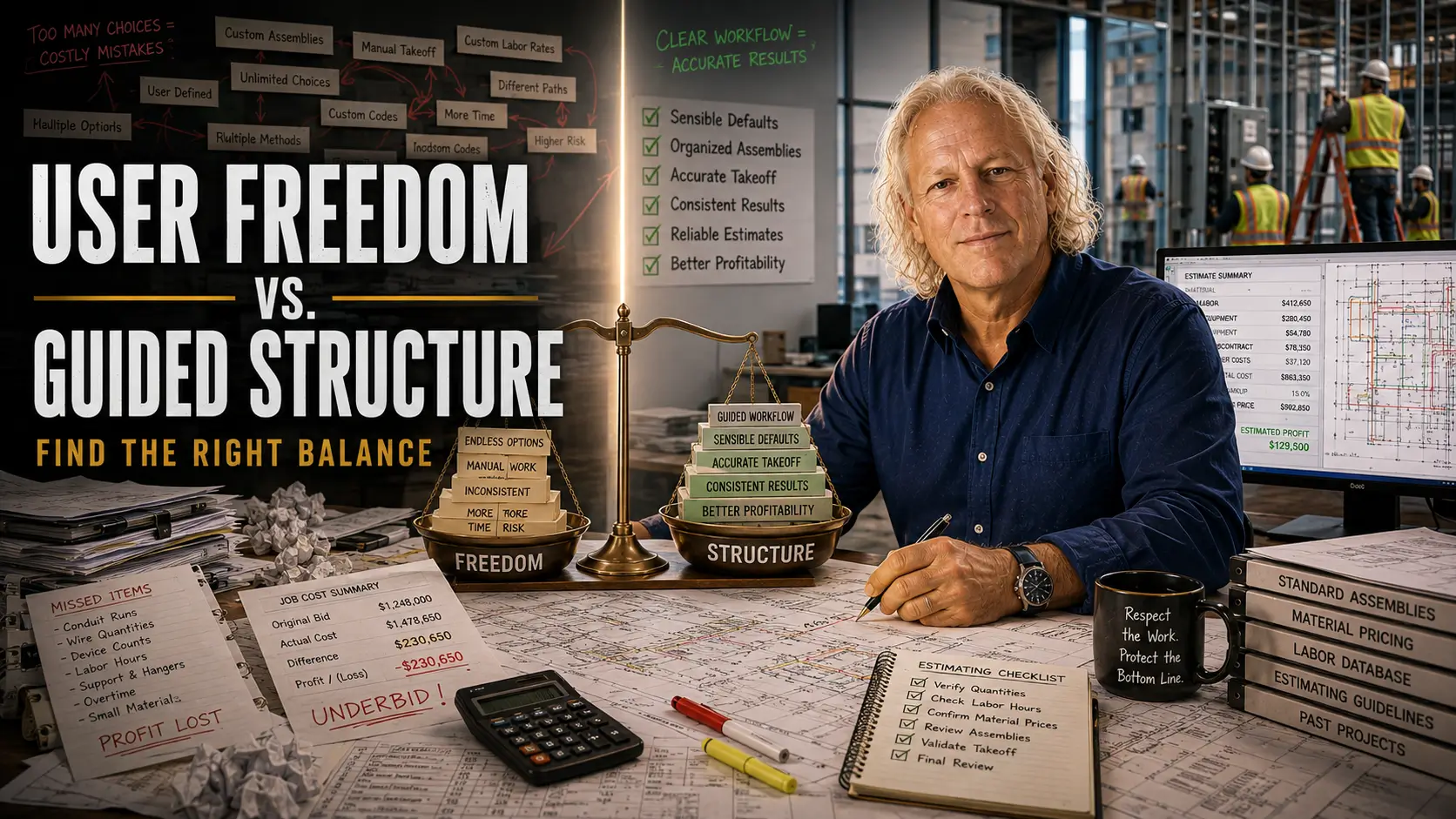
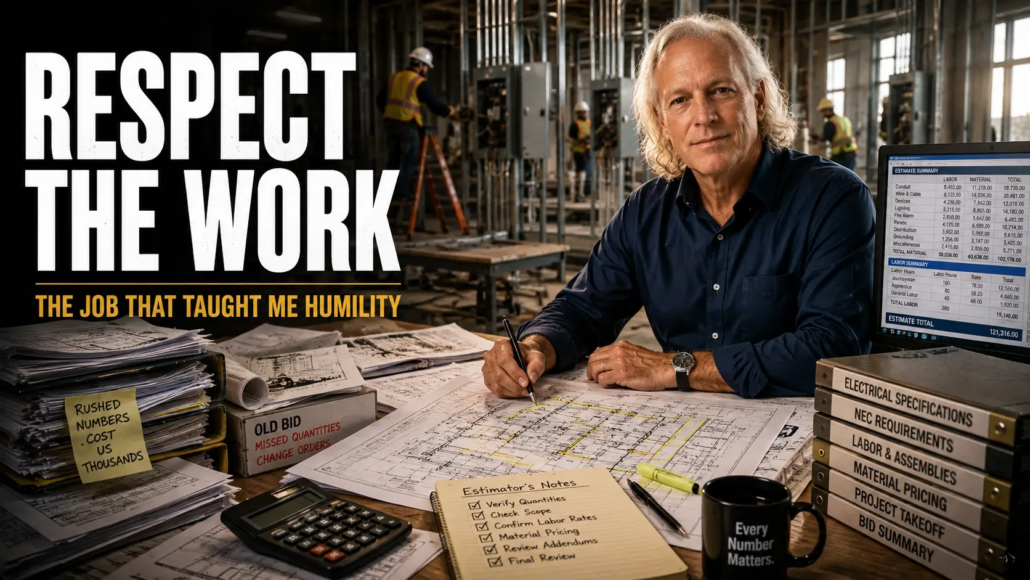
Electrical estimating is more than number-crunching—it’s a craft that demands accuracy, humility, and respect for every project. Careless estimates cost contractors money and reputation. The right mindset, combined with proper tools like Best Bid Electrical Estimating Software, helps estimators build careers defined by consistency and credibility.
Back in the mid-1980s, I took on a commercial job I thought I had completely figured out. I’d been estimating electrical projects for years by then. I was confident. Maybe a little too confident.
I rushed the takeoff. I glossed over some of the MEP coordination details. I told myself I’d seen enough jobs like this one to know what it would cost. I submitted the bid, won the work, and then spent the next several months watching my profit evaporate—dollar by dollar, day by day.
That job taught me something I’ve never forgotten: the work deserves your full respect, every single time.
It means treating every estimate—whether it’s a $15,000 service upgrade or a $3 million commercial buildout—as if your reputation depends on it. Because it does.
Respecting the work means acknowledging what you don’t know. It means picking up the phone and asking questions before you put a number on paper. It means slowing down when your gut tells you to speed up.
I’ve seen plenty of sharp, talented estimators lose bids—or worse, win them at a loss—because they let ego get in the way of accuracy.
The consequences cut both ways.
Underestimate, and you win the bid but bleed out on the job. Your crew is underpaid for their hours, your material budget runs dry, and the client relationship suffers. I’ve watched good contractors go out of business because a few bad estimates wiped out the profit from dozens of good ones.
Overestimate, and you hand the job to your competitor. You lose revenue, lose momentum, and—over time—lose your standing in the market.
Every number on your estimate is a direct reflection of your credibility as an electrical contractor. There’s no neutral ground here.
Early in my career, I had to learn that not knowing something is not a weakness—it’s a starting point. The estimators I respect most are the ones who ask more questions, pull more data, and refuse to guess when they can verify.
In my book, Everybody Has A First: “Lessons from a Lifetime in Electrical Contracting and Business”, I write about how the willingness to say “I’ve never done this before” is often what separates contractors who grow from those who plateau. That same principle applies directly to estimating. Humility leads to thoroughness. Thoroughness leads to accuracy.
Humility and hard work will only take you so far without the right systems behind you.
That’s why I built Best Bid Electrical Estimating Software—because I lived through the frustration of estimating electrical projects with tools that weren’t designed by people who had actually done the work. Best Bid Electrical Estimating Software features built-in on-screen takeoff capabilities, so you can count and measure directly from your PDF drawings without relying on third-party software. You enter your quantities, and Best Bid handles the rest—fast, accurately, and with the fewest keystrokes possible.
It eliminates the guesswork. And when you remove guesswork from estimating, you remove one of the biggest sources of costly errors.
Respect for the work isn’t just an individual mindset. It’s something you build into your entire operation.
That means reviewing every estimate before bid day, no matter how routine the project seems. It means investing in education—resources like the Online School for Electrical Estimating exist specifically to sharpen the skills that separate good estimators from great ones. And it means holding yourself to the same standard on a $20,000 job that you would on a $2,000,000 one.

After more than 50 years in this industry—starting as a ditch digger in 1973 and building what I believe is one of the most practical electrical estimating tools available today—I can tell you this with complete certainty: the estimators who respect the craft produce better numbers, win better work, and build stronger businesses.
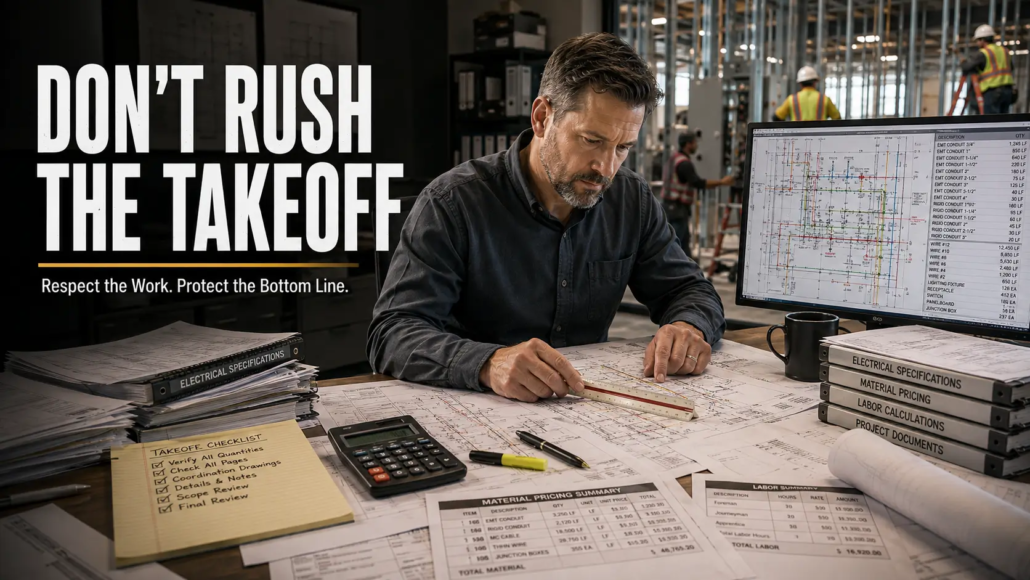
Don’t rush the takeoff. Don’t assume you know. Respect the work, and the work will respect your bottom line.
Ready to sharpen your estimating process? I’d love to show you personally how Best Bid Electrical Estimating Software can help you bid with confidence. Call us at 800-941-7028 or visit bestbidestimating.com to schedule a no-pressure walkthrough today.
Steve Griffin
Founder of Best Bid Electrical Estimating Software
Electrician • Estimator • Contractor • Author • Software Developer
From digging ditches in 1973 to creating one of the industry’s longest-running electrical estimating software systems, Steve Griffin has spent more than 50 years helping contractors win more work and make more money.
Ready to sharpen your estimating process? Call 800-941-7028 to schedule a no-pressure Best Bid walkthrough and learn how to bid with greater confidence.

Too much freedom creates chaos. Too much structure creates rigidity. Steve Griffin explains the right
balance between estimator control and software guidance.
By Steve Griffin · Founder, Best Bid Electrical Estimating Software
· July 23, 2026 · 8 min read
How much freedom should the user have?
Too much freedom leads to:
Too little freedom leads to:
Balance is giving users the ability to change things when needed — while making smart choices for them by
default.
Most contractors don’t want to think about every tiny detail. They want the software to:
Sometimes fewer options is better.
Freedom is not always helpful. Freedom can be overwhelming. Freedom can be confusing.
Freedom can be dangerous. Freedom can be inefficient.
Guided structure is not always restrictive. Guided structure can be helpful. Guided structure can be efficient.
Guided structure can be safe. Guided structure can be powerful.
Balance is choosing the right amount of freedom — not maximum freedom.
The best software makes smart decisions for the user. It chooses the right assemblies. It chooses the right
quantities.
It chooses the right labor. It chooses the right structure. It chooses the right defaults.
And then — only when needed — it allows the user to override those decisions.
This is balance.
Freedom should be available — but not required. Guided structure should be present — but not oppressive.
The software should feel like a guide, not a dictator. It should feel like a partner, not a prison. It should
feel like a tool, not a trap.
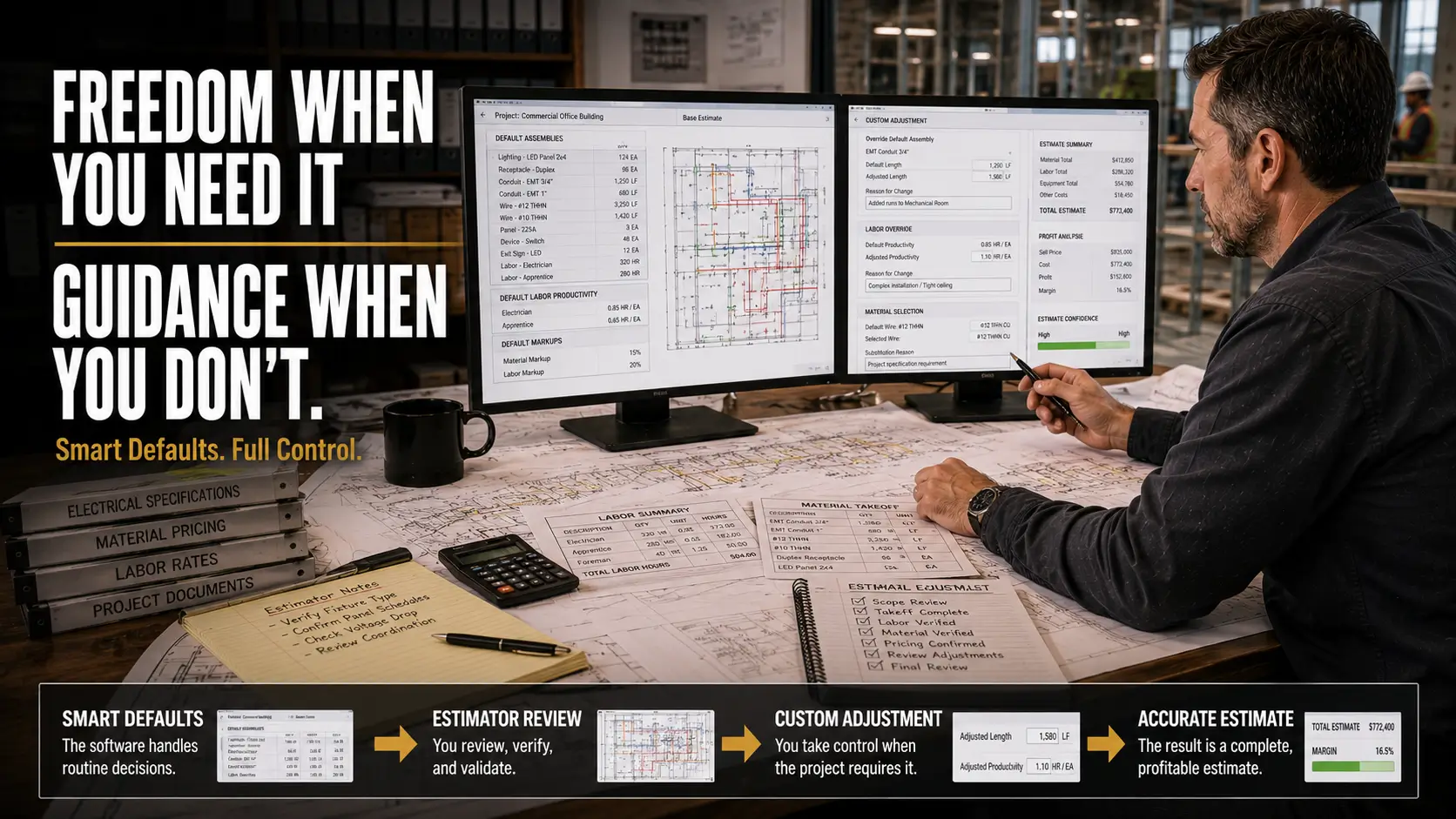
Balance is designing software that gives users freedom when they want it — and guidance when they need it.
Key Principle
This principle is one of 30 that together form a complete philosophy of electrical estimating built from 50
years of real-world experience. Every principle connects to every other. Read the full
guide to see how they work together.
Complete Series Navigation
How much profit are you leaving on the table because your 2 AM manual takeoffs can’t keep up with your project pipeline? It’s a frustrating cycle…
Why are you still paying a "software tax" every year just to keep using the tools you already bought? It’s a question more electrical…
Your most expensive employee isn’t the journeyman on the job site; it’s the invisible error hiding in your bid. It’s a frustrating reality for many…
How much of your project margin is being siphoned off by software companies that never stop billing you? If you’re tired of “renting” your bidding…