Common Electrical Estimating Mistakes: How to Protect Your Profits in 2026
Did you know that a tiny 3% omission in your takeoff can wipe out 10% of your total project profit? It is a sobering reality in 2026, where over 65%…
This author has not written his bio yet.
But we are proud to say that Steve Griffin contributed 423 entries already.
Did you know that a tiny 3% omission in your takeoff can wipe out 10% of your total project profit? It is a sobering reality in 2026, where over 65%…
How much profit is leaking out of your bids because you’re forced to “guestimate” vertical drops or complex conduit runs? If you’ve ever finished a…
Why does finding the actual mccormick electrical estimating software pricing feel like you’re trying to decode a top-secret government document?…
Why are you still paying “rent” for the software you need to run your business? It feels like every tool in the modern electrical trade comes with a…
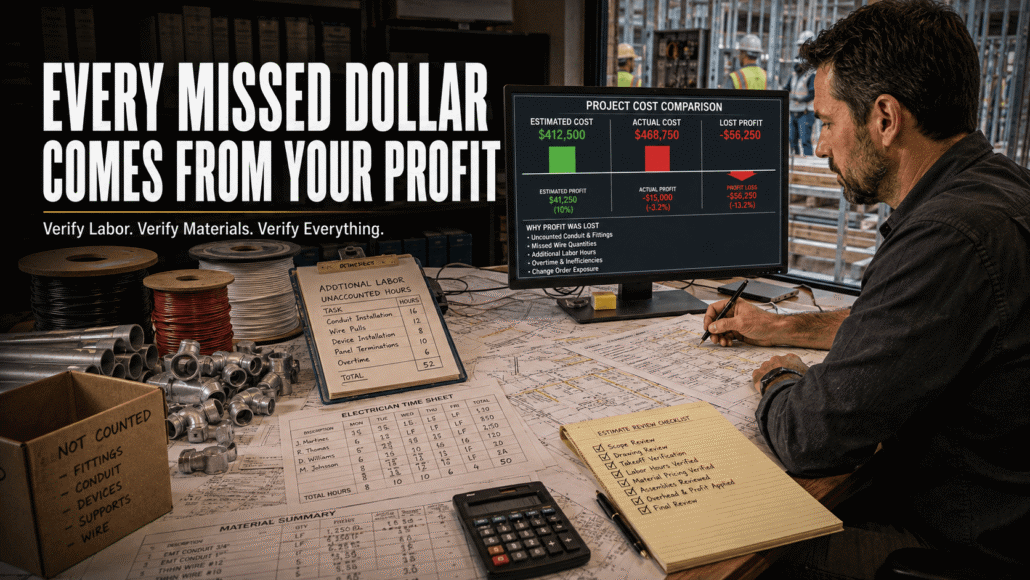
Rushing an electrical estimate without verifying labor and material costs is one of the most common—and costly—mistakes a contractor can make. Underbidding a job means every missed dollar comes directly out of your profit margin, not the client’s pocket. The fix: break estimates into smaller components, double-check your numbers, and use a reliable system before bid day.
I lost real money on a job early in my career. Not a rounding error. Not a small miscalculation I could absorb.
A genuine financial hit that came straight out of my pocket. And I’ve thought about it for 50 years.
That’s the kind of lesson that sticks.
I underbid the job. Plain and simple. I didn’t account for all the labor.
I missed materials. I rushed through the estimate because I was eager to win the bid, and I let confidence override careful attention to detail.
There was no one else to blame. I moved too fast, didn’t double-check my numbers, and paid the price for it.
Here’s what made it worse: I didn’t even realize the full extent of the mistake until I was already on the job. By then, it was too late. You can’t go back to a client and renegotiate after you’ve signed the contract.
Every dollar you miss in an electrical estimate comes out of your profit margin—not overhead, not contingency. Your profit.
That realization changed everything for me. I had been treating estimating like a formality, something you did to get to the work. That first loss taught me it was the work.
Getting the estimate right is the whole game. You can run a flawless installation and still lose money if the numbers going in were wrong.
Winning the bid only matters if you win it profitably. That’s a lesson I cover extensively in my book, Everybody Has A First: “Lessons from a Lifetime in Electrical Contracting and Business” — because it’s one of the truths that took me years and real dollars to fully understand.
After that job, I started tracking everything. Every line item. Every labor hour.
Every spool of wire. I reviewed completed jobs to find exactly where I was losing money, and I started breaking estimates down into smaller, verifiable components instead of working from rough mental totals.
That discipline is exactly why I eventually built Best Bid Electrical Estimating Software. I wanted a system that would catch the kinds of calculation errors that cost me that job—something organized, accurate, and built by an electrical contractor who had actually sat through bid day and felt the sting of getting it wrong.
If you take nothing else from this, take these four things:
I’m not grateful it happened, but I’m glad I paid attention when it did. That one job gave me a discipline I’ve carried for over 50 years. It taught me that estimating is a skill—one you build deliberately, with systems, with humility, and with a commitment to getting the numbers right before bid day, not after.
Your estimating mistakes don’t have to be expensive. They just have to teach you something.

Ready to tighten up your electrical estimates? At Best Bid, we work directly with electrical contractors and estimators to help them price work with confidence and win jobs profitably. Call us at 800-941-7028 or visit bestbidestimating.com to schedule a walkthrough—no sales pressure, just straight answers.
Rushing through an estimate without fully accounting for labor and material costs. Speed and confidence are valuable, but not at the expense of accuracy. Every missed dollar reduces your profit margin directly.
Electrical estimating software like Best Bid Electrical Estimating Software organizes your estimate into structured components, flags calculation errors, and tracks labor and material costs systematically—reducing the chance that a critical line item gets missed before bid day.
Because when you underbid, the shortfall comes out of your profit, not your overhead recovery. Overhead is already built into your pricing structure. A missed labor or material cost has nowhere to go except your bottom line.
Steve Griffin
Founder of Best Bid Electrical Estimating Software
Electrician • Estimator • Contractor • Author • Software Developer
From digging ditches in 1973 to creating one of the industry’s longest-running electrical estimating software systems, Steve Griffin has spent more than 50 years helping contractors win more work and make more money.

False precision wastes time and rarely improves your bid. Steve Griffin explains the right level of
quantity detail for competitive, profitable electrical estimating.
By Steve Griffin · Founder, Best Bid Electrical Estimating Software
· July 23, 2026 · 8 min read
Quantity accuracy is another balancing act.
Take lighting assemblies:
Is it worth the time to enter the exact number of boxes and covers?
Or is it better to enter one per light and move on?
Balance is choosing the method that saves time without risking the final number.
Manual thinking should be spent on expensive items — not low cost materials.
Estimators often chase perfect quantities. They want exact numbers. They want exact counts.
They want exact
materials. They want exact assemblies. They want exact labor.
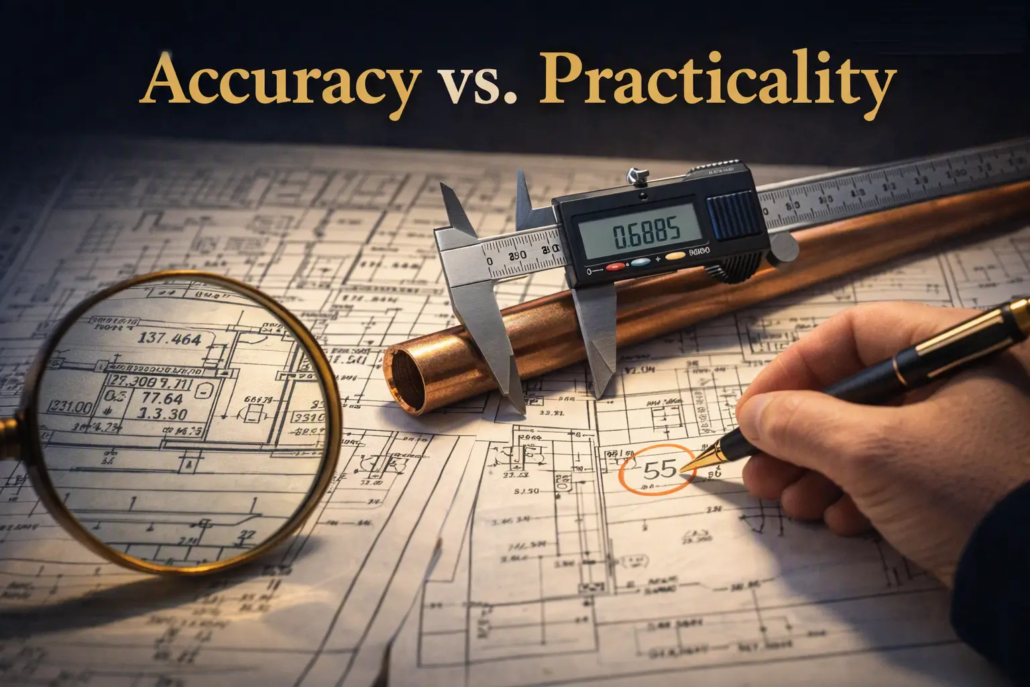
But exactness is not always accuracy. Exactness is time.
Accuracy is reliability. Accuracy is practicality. Accuracy is consistency. Accuracy is profitability.
Balance is knowing when “close enough” is actually better than “perfect.”
If you spend time entering exact quantities for low cost materials, you slow down the estimate. You increase
thinking. You increase decisions. You increase complexity.
But does it change the final number? Usually not.
Balance is choosing the right level of detail — not maximum detail.
Key Principle
This principle is one of 30 that together form a complete philosophy of electrical estimating built from 50
years of real-world experience. Every principle connects to every other. Read the full
guide to
see how they work together.
Complete Series Navigation
Why are you still paying over $2,300 every single year for an AutoCAD subscription just to mark up a few circuit changes? It’s a common trap in our…
What if the electrical bid proposal template you rely on is actually the silent killer of your profit margins? It’s a tough question to face, but in…
About This Article This article was prepared following an in-depth interview with Steve Griffin, founder of Best Bid Electrical Estimating Software and an industry professional with decades of experience in electrical estimating, software development, and contractor education. Steve says: I have lived through almost every change in the electrical industry from solder cups to wire Read more about The Future of Electrical Estimating: How AI Will Change the Industry
Is your estimating software actually a partner in your success, or is it just another monthly bill that doesn’t account for the real-world grit of…