Why Historical Data Is One of Your Greatest Estimating Tools
| — POST 12— |
Why Historical Data Is One of Your Greatest Estimating Tools
One of the biggest mistakes I see contractors make is believing that every estimate starts from zero.
They look at a new set of drawings, open their estimating software, and begin building a number without looking at what happened on previous projects.
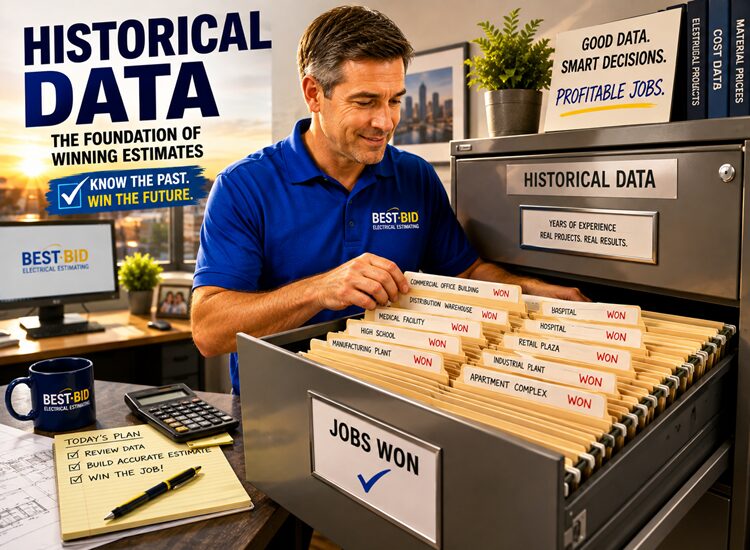
I have always believed that your past jobs are one of the most valuable estimating tools you have.
The best estimators do not just create estimates. They learn from them.
Historical data allows that.
Every project your company completes creates information.
The question is whether you capture that information and use it to make the next estimate better.
Your Past Projects Are a Road Map
Historical data tells you what actually happened, not what someone thought would happen.
An estimate is a prediction. The completed project is the answer key.
When you compare estimated hours to actual hours, estimated material to purchased material, and planned production to actual production, you begin to understand where your company is truly making money.
Why Good Estimators Study Completed Jobs
A successful estimator does not simply move on after a project is awarded. They want to know what happened after the bid was accepted.
Did the labor hours match the estimate? Did the crew struggle with something that was not obvious during takeoff? Were there design issues, material problems, or installation challenges?
Those answers improve every estimate that comes afterward.
- Compare estimated labor to actual labor.
- Review major material cost differences.
- Identify missed scope items.
- Record installation challenges.
- Track project types where your company performs best.
Historical Data Helps You Bid Smarter
Many contractors think the lowest number wins the job. The truth is that the best number wins the right job.
Knowing your history helps you understand where you are competitive and where you are taking unnecessary risks.
If hospitals consistently require more labor than estimated, your future hospital bids should reflect that knowledge. If your company performs extremely well on certain project types, that information becomes an advantage.
The Information Is Only Valuable If It Is Organized
Many companies have years of experience but do not use it because the information is scattered or forgotten.
A good estimating system should help you keep that information organized and available when you need it.
The goal is not storing old estimates. The goal is creating a knowledge base that helps your company make better decisions.
The Advantage of Experienced Companies
The best contractors have something new companies do not have: history.
Every completed project adds knowledge. Every mistake teaches a lesson. Every successful job creates a better understanding of what it takes to be profitable.
The companies that use this information have an advantage before they ever submit a proposal.
What makes historical data a powerful tool for estimating in electrical contracting?
Historical data is your road map for estimating. It shows what actually happened, not what someone thought would happen, and helps you compare estimated hours to actual hours and planned production to actual production so you can understand where your company is truly making money.
How should I use past projects to improve future estimates?
After a bid is won, review what happened: did labor hours match the estimate, were there design issues or material problems, and what installation challenges came up. Use those insights to adjust future estimates and better reflect reality.
What mistakes do estimators make regarding historical data?
Many teams don’t use their history at all or keep it scattered. The mistake is letting information sit in silos instead of organizing it so it’s ready to guide the next estimate.
How can historical data help me bid the right job instead of just the lowest price?
Knowing your history helps you see where you’re competitive and where you’re taking unnecessary risks. If certain project types consistently require more labor, reflect that in future bids; if you excel in others, leverage that as an advantage.
What is the role of an estimating system with historical data?
A good estimating system organizes past information into a usable knowledge base so it’s available when you need it, turning experience into smarter decisions rather than just storing old estimates.
🔗 Best Bid Resource:
Continue Reading
👉 Guided Link: Post 11 — The Information Great Estimators Use Before Bid Day
👉 Guided Link: Post 13 — Understanding Labor: The Number That Makes or Breaks an Estimate
👉 Guided Link: Post 7 — How to Get True Vector Drawings from AutoCAD and Revit