The Future of Electrical Estimating: How AI Will Change the Industry
About This Article
This article was prepared following an in-depth interview with Steve Griffin, founder of Best Bid Electrical Estimating Software and an industry professional with decades of experience in electrical estimating, software development, and contractor education.
Steve says: I have lived through almost every change in the electrical industry from solder cups to wire nuts, copper conductors to aluminum conductors, GRS raceways to PVC. I have seen hack saws and screwdrivers, the cordless invasion, to the point that if a battery goes down, the electrician goes home. Now the invasion of AI in the electrical industry will be the biggest change of them all.
Steve has spent years studying the intersection of electrical estimating, technology, and artificial intelligence. His unique perspective comes from not only understanding the challenges faced by electrical contractors and estimators but also from being directly involved in developing estimating tools used by professionals every day.
The following article represents Steve Griffin’s views on the future of electrical estimating, the role artificial intelligence will play, and why technology should be used to enhance the skills of estimators rather than replace the knowledge and judgment that make a great estimator successful.
The Future of Electrical Estimating:
Why AI Will Help Estimators — But Never Replace Electrical Knowledge.
Computers changed the way estimates were created. Estimating software changed the speed and accuracy of the process.
Now artificial intelligence is creating another major shift.
The question many people are asking is: Will AI replace electrical estimators?
The better question is: What will happen to estimators who understand how to use AI compared to those who don’t?
The future of electrical estimating will not belong to people who find a shortcut around learning.
It will belong to people who combine electrical knowledge, estimating experience, and modern technology.
AI will become a powerful tool, but it will remain a tool.
It cannot replace the years of experience required to understand what a set of drawings really means.
It can not detect difficulty factors that are seen by the eye.
Honestly, I use AI every day. I am sure that in one way or the other I use AI more than anyone reading this article. So many times a day I ask AI “How do I ” and the list is endless, from:
How do I fix my lawnmower?
How to remove this virus from my computer.
Know which brand is best.
What programming language will work with Python?
Will this code work of x86 or x64?
Secret phone number for help lines, and the list goes on.
Your question should be: How can AI assist me, not can AI do this task for me!
AI helps me daily, so I am not against AI. I ask myself this question. How can AI assist me? I do not expect AI to do it for me.
Companies are asking AI to write code for them daily. Good luck. AI gets lost, blends ideas from other jobs, and can actually take longer.
If you know me, you know I have many talents, but writing and spelling aren’t one of them. I will often write on a subject and ask AI to make it understandable.
Sometimes it gets it right, but sometimes it may go off track and add things like the best zoo in Nashville. Just be cautious when using AI.
The Coming Shortage of Electrical Estimators
Everyone in construction has heard about the shortage of skilled electricians. I can tell you one major contributing factor. You can make more money delivering pizzas than starting as an electrician. Contractors across the country struggle to find qualified people who understand installation, troubleshooting, and field leadership, but they are unwilling to pay top wages.
When the old guys die out, the trade will be in trouble. We have dumbed down the trade just about as much as we can with slapping MC everywhere.
But another shortage is developing that receives far less attention: the shortage of skilled electrical estimators.
A great estimator is not simply someone who can count symbols on a drawing. A great estimator understands how projects are built.
They understand labor, material, installation difficulty, specifications, risk, and profitability. That knowledge takes years to develop.
The challenge is that fewer people are willing to spend the time necessary to develop that knowledge.
Many people entering the workforce are looking for faster answers and easier paths. We are living in the day of instant gratification. I didn’t start in a new house and new car, and I didn’t start in the office either. I had to work for it. I set up an interview with this guy fresh out of trade school. He walked in, filled out his application, and said he needed $32.00 per hour. I asked how much experience he had, and he said I do not have electrical experience yet. I asked, ” So you want $32,00 per hour? His reply was, “Well, what do the other office workers make?” You can guess the end of the story, but everyone wants it now. Yeah, so he wants to start at the top.
The Search for Shortcuts
Every generation looks for ways to improve efficiency. That is not a bad thing. Technology exists because people want better ways to accomplish difficult tasks.
The problem begins when technology is used as a replacement for learning instead of a tool to improve learning. Today, many people see AI and immediately think: If AI can read drawings, why do I need to learn estimating? That mindset creates a dangerous situation. The goal should never be avoiding knowledge. The goal should be using technology to make knowledgeable people more effective. Read that one more time. That is a powerful statement.
AI Can Assist Estimators — But It Cannot Become the Estimator.
AI has tremendous potential in electrical estimating. It can help organize information, identify patterns, reduce repetitive work, and assist with reviewing large amounts of data. AI does those tasks well.
A computer may identify a symbol. An experienced estimator understands what that symbol means in the real world. A computer may count devices. An experienced estimator understands the labor required to install those devices. A computer may produce a number. An experienced estimator knows whether that number makes sense.
The Danger of Trusting AI Without Understanding Estimating
The greatest danger is not that AI will make mistakes. Technology has always had limitations. The greater danger is someone using AI who does not know when the answer is wrong.
An experienced estimator questions information. They review results. They compare against past projects. They understand when something does not look right.
Someone without estimating knowledge may accept the answer because it came from a computer. A fast incorrect estimate is still an incorrect estimate. There Is No Shortcut to a Great Estimate.
There has never been a shortcut to becoming a great estimator.
Computers did not create great estimators. Estimating software did not create great estimators. It is looking at plan after plan and having historical data.
If you use AI enough, it will greatly let you down. At Best Bid, we use AI, but we are careful. We treat AI like a person in maximum security prison. AI can and will create its own thoughts, and when felt threatned, will try to preserve itself. We never let our AI have access to the internet. Now you know how we protect our customers from it; think about our competition. You are on a server with many other companies. I can’t imagine how something could go wrong.
AI will not create great estimators.
Tools make knowledgeable people better. They do not replace the knowledge that makes someone valuable.
A great estimate comes from understanding the drawings, the work, the risks, and the company performing the project.
Why Estimating Knowledge Must Come First
Before someone can trust automation, they must understand the process being automated.
A person who understands estimating can use AI as an assistant.
They can ask better questions, verify results, and recognize problems.
A person who does not understand estimating becomes dependent on the tool.
The future belongs to estimators who know both the trade and the technology.
The Role of Modern Estimating Software: The right estimating software does not remove the estimator from the process. It gives the estimator more power.
Modern systems such as Best Bid Next Generation help estimators organize information, improve workflow,
create detailed reports, manage assemblies, review estimates, and make better decisions.
The computer should handle what computers do best: organization, calculations, speed, and consistency.
The estimator should handle what experience does best: judgment, evaluation, and decision-making.
The Future Estimator Will Be a Hybrid Estimator
The next generation of successful estimators will combine four things.
1. Electrical knowledge
2. Estimating experience
3. Powerful software
4. Artificial intelligence assistance
None of these replace the others.
Together they create a better estimator.
The Companies That Adapt Will Win
The companies that succeed in the future will not be the ones that reject technology.
They also will not be the ones that blindly trust technology.
They will be the companies that develop knowledgeable people and provide them with the best tools available.
The competitive advantage will come from combining human experience with technology.
My Thoughts
The future of electrical estimating is exciting. Technology will continue to improve. AI will continue to develop. Software will continue to become more powerful.
But one thing will never change.
You must know how to estimate.
AI may guide you. Software may assist you. Computers may make you faster. But if you do not understand the answer, you should not unquestioningly trust the answer. There is no shortcut to a great estimate. The future belongs to estimators who learn, adapt, and use every tool available to become better.
A Wrong Estimate Is Still Wrong, Even If AI Created It
One of the most important lessons contractors must remember is that responsibility does not transfer to the software. If AI misses scope, misunderstands a drawing, or produces an unrealistic result, the contractor still owns the estimate. That is why professional estimators review, question, and verify information. The goal is not to get an answer quickly. The goal is to get the right answer.
The New Competitive Advantage
For many years, contractors competed through price and production. In the future, companies that develop strong estimating departments will have another advantage.
They will have better information, better processes, and better decisions before projects even begin.
A company with skilled estimators and advanced technology will outperform companies that depend on automation.
Best Bid Next Generation and the Role of Software
The purpose of estimating software is not to remove the estimator. It is to give the estimator more capability.
The Best Bid Next Generation represents this approach: helping estimators organize information, work faster, review estimates, manage assemblies, create reports, and maintain control of the process.
The software handles the repetitive work. The estimator handles the decisions.
The Next Chapter Will Belong to Those Who Prepare
The electrical industry is changing. The workforce is changing. Technology is changing.
But the fundamentals remain the same.
Great estimates come from people who understand the work, understand the numbers, and use every available tool to improve.
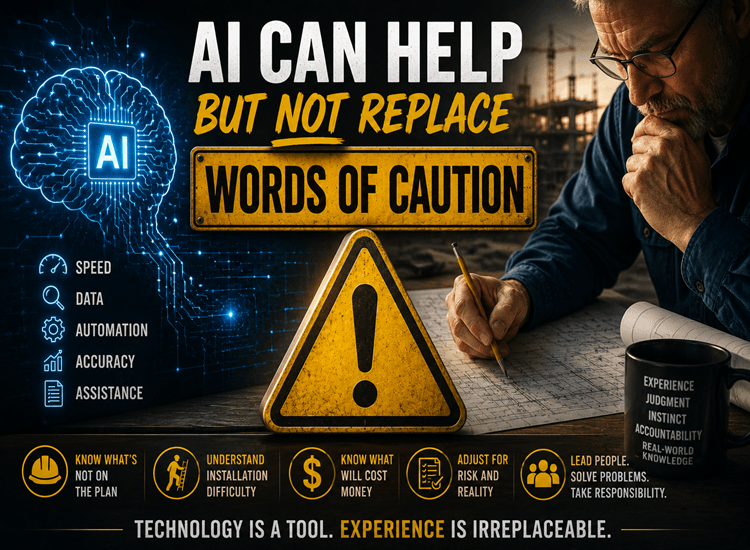
AI will not replace the future estimator.
The future estimator will be the person who knows how to use AI correctly.
The Future of Electrical Estimating: Building Estimators Instead of Searching for Shortcuts
The Industry Needs Estimators Who Understand the Work
Electrical contractors have always needed people who can make good decisions. The tools have changed, but that need has not.
A great estimator is responsible for protecting the company before the project ever starts. They are the person who determines whether a job can be completed profitably.
That responsibility requires more than producing a number. It requires understanding what is behind the number.
Why Estimating Is More Than Reading Drawings
A drawing is a communication tool. It shows the designer’s intent, but it does not always show the complete reality of construction.
An estimator must understand what happens after the bid is accepted.
How difficult will the installation be? What challenges will the field team face? What assumptions were made? What risks are hidden in the documents?
Those answers come from knowledge and experience.
The Difference Between Information and Understanding
Modern technology gives estimators more information than ever before. Digital drawings, databases, software, and AI tools can process tremendous amounts of data.
But information alone does not create a good estimate.
Understanding is what creates a good estimate.
The estimator must decide what information matters and how it affects the final proposal.
Why Experience Will Become More Valuable
As more companies use automation, the value of experienced estimators will actually increase.
When everyone has access to similar technology, the advantage comes from knowing how to use it better.
The estimator who understands electrical construction will get more value from AI than someone who only understands the software.
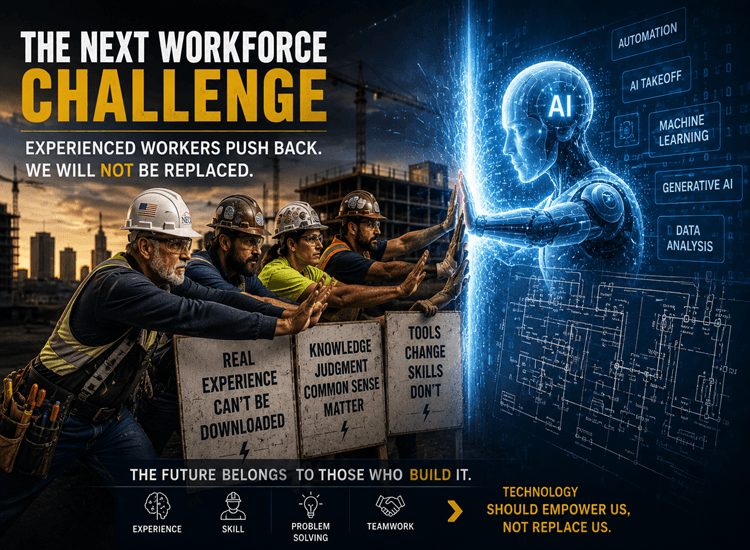
The Next Workforce Challenge
The electrical industry already knows how difficult it is to find skilled electricians. A similar challenge is developing in the estimating field.
Becoming a great estimator takes time. It requires learning from experienced people, studying projects, making mistakes, and improving.
If fewer people are willing to invest the time, skilled estimators will become even more valuable.
Why Companies Must Train Estimators
Companies cannot simply expect software to solve their estimating problems.
They must develop people.
Training, mentoring, reviewing completed projects, and teaching the reasons behind decisions are what create strong estimating departments.
Technology should support training, not replace it.
The Correct Way to Use AI in Estimating
The correct question is not, ‘Can AI estimate this project for me?’
The better question is, ‘How can AI help me become a better estimator?’
That difference changes everything.
AI should help reduce repetitive work, improve organization, and provide assistance. The estimator must still provide judgment.
The Estimator Still Has the Final Responsibility
When a proposal is submitted, the customer does not care which software was used. They care whether the contractor can complete the project.
The responsibility remains with the estimator and the contractor.
That is why knowledge cannot be removed from the process.
The Message to take away is:
- There is no shortcut to becoming a great electrical estimator.
- The future will reward people who learn the fundamentals, understand the trade, and use technology as an advantage instead of depending on it as a replacement
- The Best Estimators Will Combine Experience and Technology
- The top Electrical Estimators didn’t take shortcuts.
The Myth That Technology Eliminates the Need for Skill
Throughout history, every major technology change has created the same concern: will the tool replace the person?
The answer has always been the same. The people who understand their profession and learn how to use new tools become more valuable.
Technology does not remove the need for skill. It changes where that skill is applied.
Electrical estimating is no different.
The Estimator’s Job Is Decision Making
A common misunderstanding is that estimating is mainly about collecting quantities and applying prices.
But the real value of an estimator is making decisions.
Should this labor be adjusted? Is this installation more difficult than normal? Did the specifications create additional requirements? Is the scope complete?
Those decisions determine whether a contractor makes money or loses money.
AI Can Process Data — Estimators Create Understanding
However, AI is extremely powerful at processing information. It can analyze drawings, recognize patterns, and assist with repetitive tasks.
But information is not the same as understanding.
An experienced estimator understands why something matters. They know when a result should be questioned. They know when a number looks unrealistic.
That experience is what protects the estimate.
Why the Next Generation Must Learn Differently
Today, new estimators entering the industry have advantages previous generations did not have.
They have access to better software, online training, digital drawings, and artificial intelligence.
But those tools should accelerate learning, not replace learning.
The strongest future estimators will use technology while building a deep understanding of the trade.
The Danger of Becoming Dependent on Technology
There is a difference between using technology and depending on technology.
A professional estimator uses software and AI as tools. They verify results. They question answers. They apply knowledge.
Someone who depends completely on technology becomes vulnerable when the information is incomplete, incorrect, or misunderstood.
The Future Electrical Contractor Needs Electrical Estimators.
As electrical becomes more complex, accurate electrical estimating becomes even more important.
Margins are tight. Material prices change. Labor challenges continue. Mistakes are expensive.
Contractors will need people who can make good decisions before a project begins.
That is the role of the estimator.
Building the Estimator of the Future
Additionally, the estimator of the future will not look like the estimator of the past.
- They will use better tools.
- They will have more information.
- They will work faster.
- They will create fewer human mistakes.
But the foundation will remain unchanged: understand the work, understand the numbers, and understand the risk.
Technology will make them better because they already understand estimating.
The Final Advantage
The greatest advantage in estimating has never been a single piece of software or a single feature until the Best Bid Next Generation came out.
The advantage is knowledge combined with the right tools.
The future belongs to companies that develop skilled estimators and give them the technology needed to succeed.
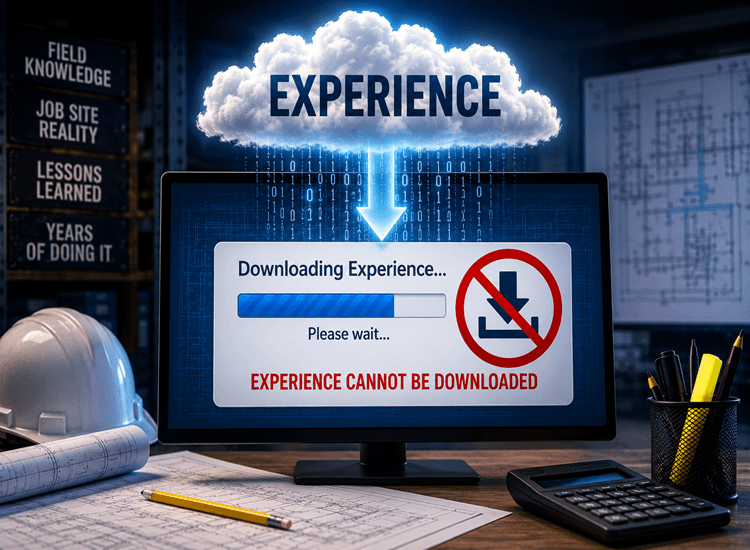
Why Experience Cannot Be Downloaded
One of the biggest mistakes companies can make is believing experience can be replaced by technology.
Software can store information. AI can analyze information. But neither one creates years of field understanding overnight.
Experience comes from seeing projects, making decisions, learning from mistakes, and understanding what happens after the estimate becomes reality.
The Estimator Must Understand the Question Before Trusting the Answer
AI can provide answers quickly. But a professional estimator understands that the most important part is knowing whether the question was asked correctly.
If the information going into the process is incomplete, the result may also be incomplete.
A knowledgeable estimator knows how to challenge the result and determine whether it makes sense.
Why Shortcuts Create Long-Term Problems
The desire for shortcuts is nothing new. Every industry looks for faster ways to work.
The problem is when shortcuts remove the learning process.
A shortcut may save time today, but a lack of knowledge can create expensive mistakes tomorrow.
In estimating, one missed item or incorrect assumption can cost far more than the time spent learning the correct process.
That ability to see beyond the drawing is one of the greatest skills an estimator develops.
The Importance of Learning From Completed Projects
The best estimators do not stop learning when the bid is submitted.
Completed projects provide some of the most valuable lessons available.
Comparing estimated hours to actual hours shows what worked, what did not, and where improvements can be made.
That knowledge becomes the foundation for better future estimates.
Preparing the Next Generation of Estimators
The industry must recognize that great estimators do not appear overnight.
They must be developed.
Companies need to provide training, mentorship, and opportunities for new estimators to learn from experienced professionals.
Technology can shorten the learning curve, but it cannot remove the learning process.
The Future Belongs to Complete Estimators
The future estimator will not be someone who ignores technology.
They will not be someone who depends completely on technology.
They will be someone who understands electrical construction, understands estimating, and knows how to use modern tools correctly.
That combination will become one of the most valuable skills in the electrical industry.
The wrong question is: ‘Can AI do my estimating for me?’
The better question is: ‘Do I want it to?
How can AI help me become a better estimator?’ That is the real question.
That difference determines whether technology becomes an advantage or a risk.
The best tools in the world are only as effective as the person using them.
Will the Next Generation Have an Advantage
Although there are challenges, the next generation of estimators has opportunities previous generations never had.
They can learn from experienced professionals while using modern tools.
They can become productive faster than ever before if they are willing to put in the work.
The shortcut is not avoiding learning. The shortcut is using better tools while learning.
The Final Advantage Will Always Be Knowledge
The Future Is Not About Replacing Estimators
There is a lot of discussion about artificial intelligence and what it will change. Some people believe AI will eliminate the need for estimators.
The future is not about replacing estimators. The future is about changing what the best estimators can accomplish.
For example, the estimator who understands the work and knows how to use technology will have a tremendous advantage.
The Most Valuable Skill Will Be Knowing When to Trust Technology.
However, as technology becomes more powerful, one skill becomes more important: judgment.
Electrical Estimating is a profession built on understanding.
- You cannot shortcut experience.
- You cannot shortcut learning the trade.
- You cannot shortcut understanding how a project will actually be built.
- You must learn how to adjust for difficulty.
- You must have an idea of the final number
The companies that chase shortcuts may save time today but create problems tomorrow.
If you cannot recognize the project is off by a million dollars, you are not an electrical estimator.

T
Why Best Bid Next Generation Represents This Future
Best Bid understands what AI can do and what it should not do.
Best Bid knows the power of AI and contains it with limitations much like living in a maximum security prison.
This is why Best Bid was built without reliance on the relientthe internet.
Best Bid Next Generation represents this philosophy: technology should help knowledgeable estimators work faster, review better, and make stronger decisions.
The software provides capability. The estimator provides understanding.
AI is an opportunity. Software is an advantage. Knowledge is the foundation.
A great estimate will always require someone who knows how to estimate.
Continue Learning: The Future of Electrical Estimating Series
Building the Foundation of Estimating
👉 Post 1 — Why Estimating Is the Most Important Skill in Your Electrical Business
👉 Post 2 — The Real Cost of a Wrong Estimate
👉 Post 3 — Why Every Electrical Contractor Must Understand Estimating
👉 Post 4 — AI Is a Tool, Not an Estimator
👉 Post 5 — There Is No Magic Pill in Electrical Estimating
👉 Post 6 — Estimating Without Field Experience
👉 Post 7 — The Importance of Understanding the Work
👉 Post 8 — The Two AI Auto-Count Models Every Electrical Estimator Should Know
👉 Post 9 — Why AI Cannot Replace Electrical Knowledge
👉 Post 10 — AI Auto Count: The Promise and Reality
👉 Post 11 — The Difference Between Counting and Estimating
👉 Post 12 — Why Experience Still Separates Great Estimators
👉 Post 13 — What Makes a Professional Electrical Estimator
👉 Post 14 — Why Software Makes Good Estimators Better
👉 Post 15 — The Evolution of Electrical Estimating
👉 Post 16 — AI Will Not Make You an Estimator — Learning Estimating Will
👉 Post 17 — Why Estimating Knowledge Matters More Than Software
👉 Post 18 — Why Experience Still Separates Great Estimators
👉 Post 19 — The Difference Between Counting and Estimating
👉 Post 20 — Estimating Software Should Make You Better, Not Replace You
👉 Post 21 — Why Reports Are More Than Just Numbers
👉 Post 22 — Assemblies: Turning Experience Into Company Knowledge
👉 Post 23 — Why Historical Data Is Your Competitive Advantage
👉 Post 24 — Why Reviewing the Estimate Is Just as Important as Building It
👉 Post 25 — Why Reports Are More Than Just Numbers
👉 Post 26 — Why Your Estimating Database Is Company Knowledge
👉 Post 27 — The Cost of Bad Estimates
👉 Post 28 — Why Good Estimators Protect Contractor Profit
👉 Post 29 — The Future of Electrical Estimating
👉 Post 30 — The Next Generation of Electrical Estimators
About This Article
This article reflects the views and experience of Steve Griffin, founder of Best Bid Electrical Estimating Software and an electrical-industry professional with decades of experience in electrical estimating, software development, and contractor education.