Real-World Electrical Estimating: 50 Years of Hard-Won Lessons | Steve Griffin
Real-World Electrical Estimating: 50 Years of Hard-Won Lessons
What 50 years of electrical estimating actually teaches you. Steve Griffin shares the hard lessons that classroom training and software manuals never cover.
Section 9: Real World Lessons Learned Over Decades
This section expands into deep, practical insights — the kind you only learn after decades of estimating and decades of designing estimating software.
Estimators fail when they rely too heavily on manual thinking. Software fails when it relies too heavily on user thinking.
Estimators fail when they chase detail instead of accuracy. Software fails when it chases features instead of usability.
Estimators fail when they overthink small items. Software fails when it underthinks big items.
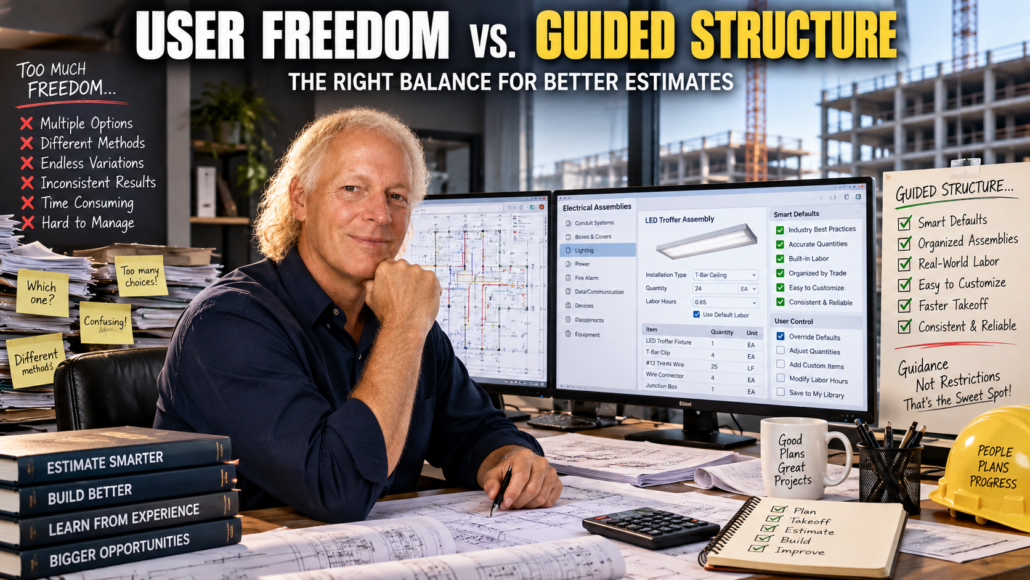
Balance is the difference between success and failure.
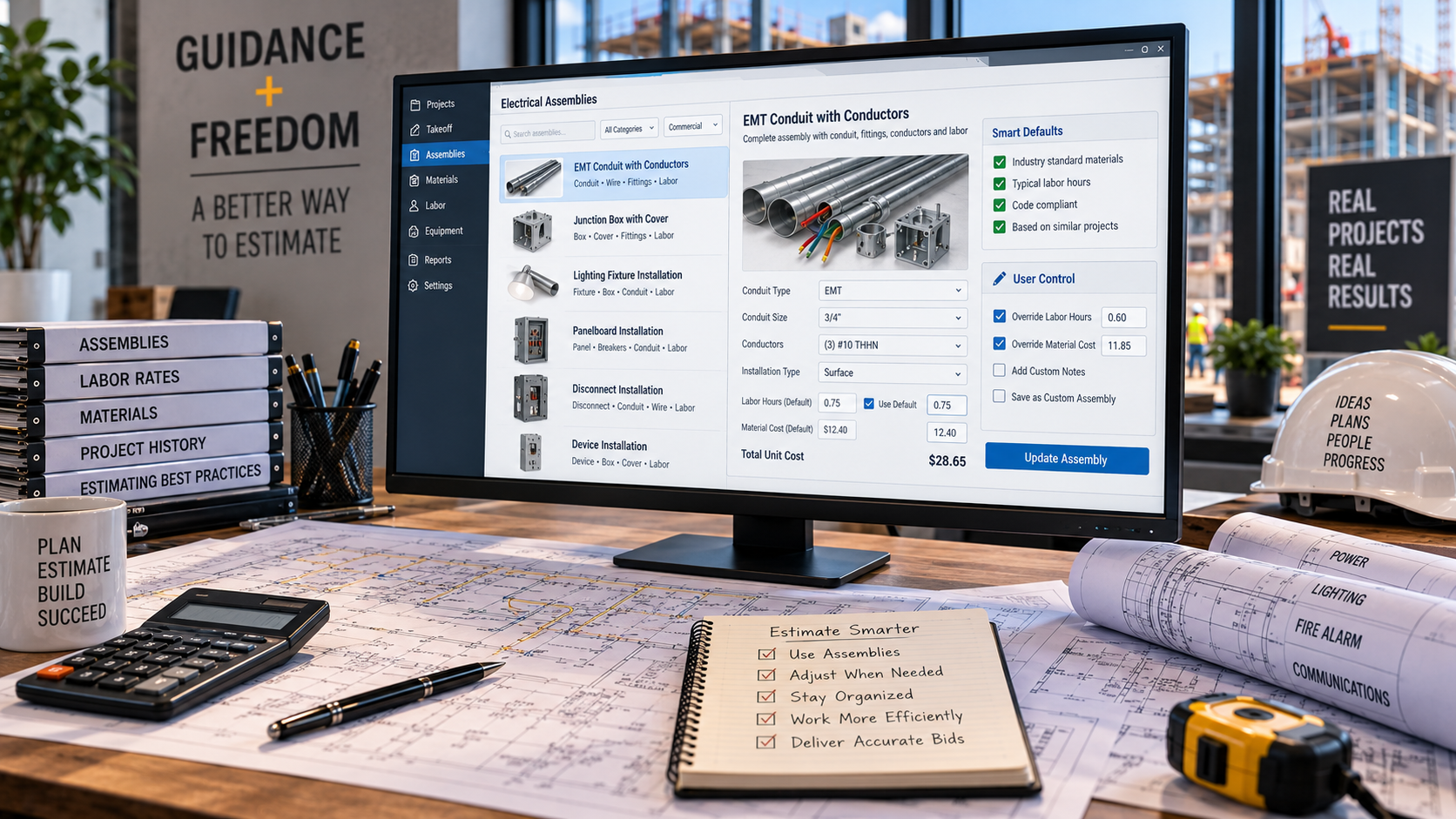
One of the biggest lessons learned is that estimators don’t want more control — they want better control. They don’t want more options — they want smarter options. They don’t want more features — they want better features. They don’t want more assemblies — they want better assemblies.
Balance is designing software that helps the estimator think less — not more.
Another lesson is that estimators don’t want perfection — they want reliability. They don’t want exactness — they want consistency. They don’t want complexity — they want clarity.
Balance is designing software that produces reliable numbers — not perfect numbers.
Another lesson is that estimators don’t want to be impressed — they want to be supported. They don’t want flashy features — they want practical features. They don’t want marketing — they want workflow.
Balance is designing software that supports real world estimating — not theoretical estimating.
Another lesson is that software should not replace the estimator — it should empower the estimator. It should not take over thinking — it should reduce thinking. It should not force decisions — it should simplify decisions.
Balance is designing software that works with the estimator — not against them.
Another lesson is that the best software is invisible. It disappears into the workflow. It feels natural.
It feels intuitive. It feels obvious. It feels like part of the job.
Balance is designing software that feels like a tool — not a task.
Key Principle
The principle in this section is one of 30 that together form a complete philosophy of electrical estimating — built from 50 years of real-world experience bidding and winning electrical work. Every principle connects to every other. Master them together.
Frequently Asked Questions
Questions electrical contractors ask about electrical estimating lessons learned.
📚 Complete Series Navigation