Benefits of Hiring a Freelance Electrical Estimator for Cost Savings

A tighter electrical estimate can protect more than your bid. The benefits of hiring a freelance electrical estimator include a clearer view of project costs and scope, better visibility into required materials and labor hours, and fewer avoidable estimating errors that can contribute to delays.
It’s understandable to weigh the cost of outside estimating against keeping the work in-house. The practical value is focused estimating support when project demands exceed your team’s available time or capacity, while internal resources stay focused on other priorities.
This article explains how freelance estimating can help identify potential savings, account for project variables, and keep work moving with a more reliable estimate. You’ll also learn what to consider when choosing an electrical estimator and how freelance support compares with an in-house approach.
Key Takeaways
- See how a detailed estimate that accounts for project variables can help reduce costly errors and schedule disruptions.
- Learn which estimating and software skills matter when assessing an estimator’s fit for electrical projects.
- Understand what freelance estimating covers, from project scope to materials and labor hours.
- Explore how freelance support can help identify potential savings and more efficient electrical solutions.
- Compare common freelance billing approaches with the broader costs of maintaining in-house estimating capacity, and see when estimating education may be useful.
Avoiding costly mistakes and delays
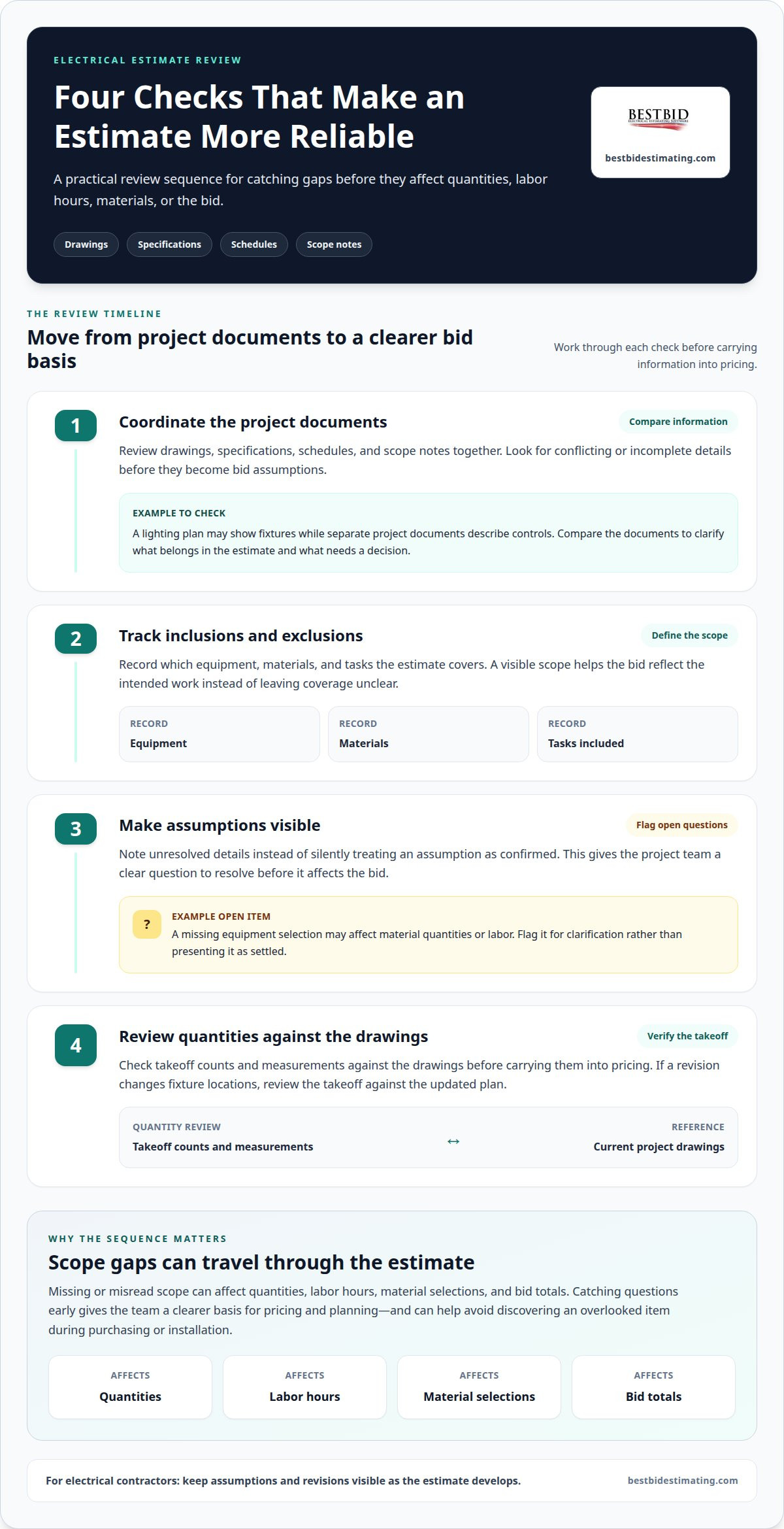
An electrical estimate is only as dependable as the project information behind it. A freelance estimator can review drawings, specifications, schedules, and scope notes together, then identify gaps before they become bid assumptions. For example, a lighting plan may show fixtures while separate project documents describe controls. Comparing those details helps clarify what belongs in the estimate and what needs a decision.
That review matters because missing or misread scope can affect quantities, labor hours, material selections, and bid totals. A detailed estimate gives the contractor a clearer basis for pricing and planning. It can also help the team spot issues early, rather than discovering during purchasing or installation that a required item was overlooked. Estimates that account for project variables can help reduce avoidable mistakes and support a workable schedule.
- Check drawing coordination: Compare electrical plans with relevant schedules and specifications for conflicting or incomplete information.
- Track inclusions and exclusions: Record which equipment, materials, and tasks the estimate covers, so the bid reflects the intended scope.
- Make assumptions visible: Note unresolved details, such as a missing equipment selection, instead of silently treating an assumption as confirmed.
- Review quantities: Check takeoff counts and measurements against the drawings before carrying them into pricing.
These checks give the project team a practical way to resolve questions. If a drawing set lacks a clear equipment schedule, the estimator can flag the gap for clarification before it affects the bid. If a revision changes fixture locations, the takeoff can be reviewed against the updated plan. Keeping assumptions and revisions visible makes it easier to understand why an estimate changed.
How quickly can a freelance electrical estimator complete a takeoff and estimate? There’s no single turnaround for every project. Drawing completeness, project scope, plan revisions, and the level of detail required all affect the time needed.
What are the risks of outsourcing electrical estimating, and how can they be managed? Risks include miscommunication, unclear scope, and estimates based on outdated documents. Set expectations for deliverables, share current project files, and document questions and revisions.
Outsourcing also requires attention to the working relationship. The U.S. Government Accountability Office explains that misclassifying a worker as an independent contractor can deprive them of protections and benefits and leave an employer liable for unpaid taxes. Classification depends on the actual working relationship, so a freelance arrangement should not be treated as a label alone.
A clear process makes outside estimating support more useful: provide coordinated documents, define the estimate’s scope, and keep project changes traceable. This gives the electrical contractor a more reliable basis for reviewing costs and coordinating upcoming work.
The U.S. Government Accountability Office explains that project variables and other relevant information should be considered when preparing an estimate. Detailed, reliable electrical estimates can help contractors avoid costly mistakes and potential delays.
Finding a qualified estimator
A qualified electrical estimator needs more than general construction experience. Electrical drawings, equipment schedules, specifications, and bid instructions all shape the scope. Their work should show how they translate those documents into quantities, labor hours, and a clear cost breakdown.
A lighting package, for example, requires more than counting fixtures. The takeoff must reflect related equipment and the scope described in the project documents.
Software skills matter, too. Electrical estimators should understand estimating tools and software such as AutoCAD. Familiarity with these tools helps them work with digital drawings and organize takeoff information.
The right tool depends on the project files and required deliverable. A polished-looking estimate alone doesn’t show whether its quantities align with the drawings.
Useful indicators of estimating competence include:
- Electrical scope knowledge: The estimate separates systems and work categories instead of treating the project as one undifferentiated total.
- Traceable quantities: Takeoff quantities connect to specific drawings, schedules, or scope notes, making review easier.
- Clear assumptions: Unresolved items are identified, such as equipment details that affect material quantities or labor.
- Consistent software use: Digital takeoff and estimating tools support an organized workflow, including revisions to project documents.
These indicators are especially useful when a project includes several drawing types. An estimator might need to reconcile a power plan with an equipment schedule, then account for changes in revised documents. A clear estimate makes those relationships easier to follow and helps the electrical contractor understand how the scope was interpreted and where questions remain.
Communication is part of the technical work. The estimator needs to distinguish stated requirements from assumptions, explain how a scope item was handled, and connect revisions to the correct project documents. If a plan revision moves equipment, for instance, the revised takeoff should reflect the affected quantities. Clear version control helps prevent an earlier drawing from being mistaken for the current one.
Fit depends on the assignment, not just a résumé. A small tenant improvement and a complex facility project may require different levels of detail and coordination. Define the estimate’s scope and deliverables, then assess whether the estimator’s electrical experience and software workflow suit the work. An estimate prepared for a bid may need different breakdowns than one used for internal planning.
Ultimately, a strong estimator makes the path from drawing to estimate understandable. Electrical contractors can use that clarity to review scope, identify open questions, and make informed bid decisions without relying on unexplained totals.
Freelance electrical estimating
A freelance electrical estimator develops a cost and scope estimate for a construction project. The estimate can outline required materials and labor hours, giving an electrical contractor a basis for bid planning. A commercial tenant improvement, for example, may need separate quantities for lighting, power, and related electrical work. The estimator uses project documents to define what the estimate covers.
What project types and sizes are best suited to freelance electrical estimating? Project size alone doesn’t determine fit. Freelance estimating can suit projects with a defined electrical scope, from a focused system package to work across several building areas, provided the available documents support the requested estimate.
The work generally follows a sequence. The estimator reviews project information, identifies the electrical scope, measures or counts items, and organizes the resulting quantities. They can then prepare an estimate detailing materials and labor hours. For a project with a new lighting layout and an equipment schedule, those documents help clarify which items belong in the takeoff.
What information and documents should I provide to a freelance electrical estimator? Send the current electrical drawings, specifications, equipment schedules, bid instructions, and relevant addenda. Include scope notes and clarify the estimate’s intended use, such as bid preparation or project planning.
Document coordination matters. A drawing revision may change fixture locations, while a specification describes equipment requirements. Providing both current documents gives the estimator a consistent project basis. If a document is missing, identify the gap so the estimate can distinguish documented scope from open questions.
Before work begins, define the deliverable. An estimate may need a high-level cost and scope summary or a more detailed breakdown of quantities and labor hours. The project’s bid requirements and the contractor’s planning needs determine the useful level of detail. A clear scope also helps prevent unrelated work from being folded into the estimate.
- Project identification: Provide the project name, location, and the relevant bid or planning milestone.
- Drawing set: Share current electrical plans and revisions, including the sheet references used for takeoff.
- Written requirements: Include specifications, schedules, addenda, and bid instructions that define electrical scope.
- Requested output: State whether you need quantities, material descriptions, labor hours, or a broader estimate.
Freelance estimating can also support an electrical contractor facing a temporary workload spike or a project requiring focused estimating time. The contractor retains responsibility for deciding how the estimate fits the bid and business strategy. The estimator’s work supplies a structured view of electrical scope, quantities, materials, and labor hours for that decision.
For projects with evolving documents, organize revisions and identify which files replace earlier versions. A consistent document set makes the estimate easier to review and update as the electrical scope develops.
Identifying cost savings
A freelance electrical estimator can help identify potential savings by reviewing project scope, quantities, materials, and labor assumptions together. The goal isn’t simply to cut line items. It’s to align the estimate more closely with the electrical work required, without overlooking what the drawings and specifications call for.
Start with quantities. If a takeoff counts more devices or cable routes than the current drawings show, the estimate may include unnecessary material and labor. Reviewing the takeoff against the relevant plans can reveal a mismatch before it flows into the bid.
The reverse matters, too: missing scope can create added costs later. Savings depend on a sound quantity review, not simply lower totals.
Material choices are another area to examine. An estimator can compare specified items with alternatives that suit the project’s needs and budget. If the documents allow options for an equipment package, for example, comparing required features and quantities may reveal a more economical fit. Clearly identify any proposed alternative for the contractor’s review rather than silently substituting it in the estimate.
Labor assumptions can also shape the estimate. A freelance estimator can review the work breakdown and labor hours assigned to each scope area. Correcting tasks that have been counted twice or assigned to the wrong scope can improve the cost picture. A clear breakdown helps the contractor see which assumptions drive the total and where further review may be useful.
Useful review points include:
- Quantity alignment: Compare takeoff quantities with the current drawings and schedules.
- Scope coverage: Identify duplicate items, omissions, and unclear divisions between work categories.
- Material options: Assess alternatives against stated project requirements and intended use.
- Labor logic: Review labor hours by task to find assumptions that need clarification.
- Estimate traceability: Keep the basis for each quantity or choice visible for bid review.
Consider a project where the equipment schedule differs from an electrical plan. Rather than pricing both versions together, the estimator can flag the discrepancy and separate the affected quantities. The contractor can then clarify which information governs the bid. This makes the estimate more useful than a single unexplained total and helps avoid pricing scope that may not belong.
Cost savings also depend on comparing equivalent scopes. A lower estimate may exclude equipment, omit labor, or use a different material assumption. Reviewing inclusions, exclusions, quantities, and labor together helps the contractor determine whether alternatives are genuinely comparable. It also supports deliberate decisions: retain the specified approach, evaluate an option, or seek clarification.
Freelance estimating can focus attention on these cost drivers when internal staff are managing other project demands. The result is a clearer view of where estimate costs come from and which adjustments deserve consideration, rather than across-the-board cuts that may weaken accuracy.
Freelance vs. In-House Electrical Estimator Costs
Freelance and in-house estimating have different cost structures. A freelance electrical estimator may charge by the hour, set a flat amount per project, or use a variable rate based on project size. An in-house estimator’s cost includes salary and the overhead of maintaining the role. Compare the full cost with the estimating workload your electrical contracting business expects.
Project demand is a key factor. If your team needs support for a defined bid, a project-based freelance arrangement ties the work to that assignment. If bids arrive steadily and require ongoing estimating attention, an in-house role may make more sense. Compare how consistently the work arises, not just the size of one estimate.
Freelance pricing depends on the project; scope, drawing quality, required detail, and revisions affect the work involved. An hourly approach ties the charge to time spent, while a flat project amount gives the assignment a defined basis. A variable rate can reflect differences in project size. Clarify deliverables and revision expectations so everyone understands the estimate’s scope.
For an in-house estimator, salary is only part of the operating cost. The contractor should also account for the resources needed to support the employee and the time spent managing the estimating workload. Those costs continue during quieter bidding periods. Freelance work, by contrast, is generally assigned to a defined estimating need, so the contractor can assess each project separately.
A practical comparison weighs several factors:
- Workload pattern: Identify whether estimating demand is steady or concentrated around particular bids.
- Scope of each assignment: Consider drawing completeness, estimate detail, and expected revisions.
- Internal capacity: Account for staff time diverted from other estimating or project responsibilities.
- Cost structure: Compare freelance billing methods with salary and ongoing in-house overhead.
- Business continuity: Consider how each model supports deadlines when internal workloads shift.
For example, a contractor facing an occasional large bid may compare a flat project fee with the internal time needed to complete the estimate. A contractor pricing projects continuously may instead assess the sustained workload against the ongoing expense of an in-house position. Neither arrangement is automatically cheaper; scope and demand determine the useful comparison.
Build the comparison around actual estimating tasks. List the required takeoff, estimate detail, document coordination, and revisions. Then compare the freelance arrangement’s defined work with the in-house resources those tasks would consume. This gives the contractor a clearer basis for deciding whether to outsource a specific bid or maintain internal capacity.
For electrical contractors weighing estimating support, explore estimating support options alongside the workload and cost factors that shape the decision.
Best Bid: Online School for Electrical Estimating
Best Bid’s Online School for Electrical Estimating is a practical next step for electrical contractors who want to strengthen estimating skills in-house. Its training helps teams understand the estimating process and build confidence reviewing project scope, takeoffs, and bid details.
For contractors who need tools as well as training, Best Bid Next Generation and Best Bid Hybrid Pro support electrical estimating workflows. Both offer an unlimited license, with no extra charge for additional installations. Best Bid Next Generation includes on-screen takeoff, conduit and wire length calculations, and tools for creating detailed project bids. Accura CADD PDF Draw provides tools for working with PDF drawings.
Choose the option that fits your current need: build estimating knowledge through the Online School for Electrical Estimating, or use estimating software to support project work. Contact Best Bid to discuss the right fit for your electrical contracting business.
Put your estimating approach to work
The benefits of hiring a freelance electrical estimator matter most when they support a deliberate estimating strategy. Match the support or tools you use to your project workload, your team’s capacity, and the level of control you want over each bid. Keep the decision practical: focus on the work your electrical contractors need to estimate and where your current process needs support.
Best Bid offers Best Bid Next Generation, Best Bid Hybrid Pro, and Accura Cadd PDF Draw for electrical estimating work. Consider which option best fits your estimating workflow, whether you’re refining how your team handles drawings or organizing bid preparation.
Ready to discuss your estimating needs? Contact Best Bid about your estimate. A clearer process starts with a focused conversation, and you can take the next step when you’re ready.
Frequently Asked Questions
What are the main benefits of hiring a freelance electrical estimator?
The benefits of hiring a freelance electrical estimator include flexible support for bid workloads and focused attention on electrical project estimates. This can help an electrical contractor manage periods when internal staff are committed to project work. For example, a contractor preparing several bids at once can assign a defined estimate externally while keeping internal staff focused on other responsibilities. The value depends on matching the assignment to the contractor’s actual workload.
How can a freelance electrical estimator improve bid accuracy and reduce estimating errors?
A freelance estimator can improve bid accuracy by organizing the estimate so its basis is easier to review. Ask for major cost categories to be separated, assumptions to be documented, and the drawing set used to be recorded. If a bid includes an allowance for an unresolved item, for example, identifying it separately helps the contractor assess that exposure rather than overlook it in a combined total.
How do I vet and hire a qualified freelance electrical estimator?
Start by defining the project type, estimate purpose, required detail, and deliverables. Then assess whether the estimator understands electrical bid preparation and can explain how the work will be organized. Review a relevant work sample for readable quantities, clear assumptions, and traceable links to project documents. Before assigning the estimate, agree on file handling, communication, revision expectations, and the final format your estimating team can use.
How much does a freelance electrical estimator cost in the United States?
Freelance estimators may charge by the hour, a flat amount per project, or a variable rate based on project size.