Entries by Best Bid Electrical Estimating Software Team

Estimators in the modern world use electrical estimating software.

Estimators in the modern world use electrical estimating software.

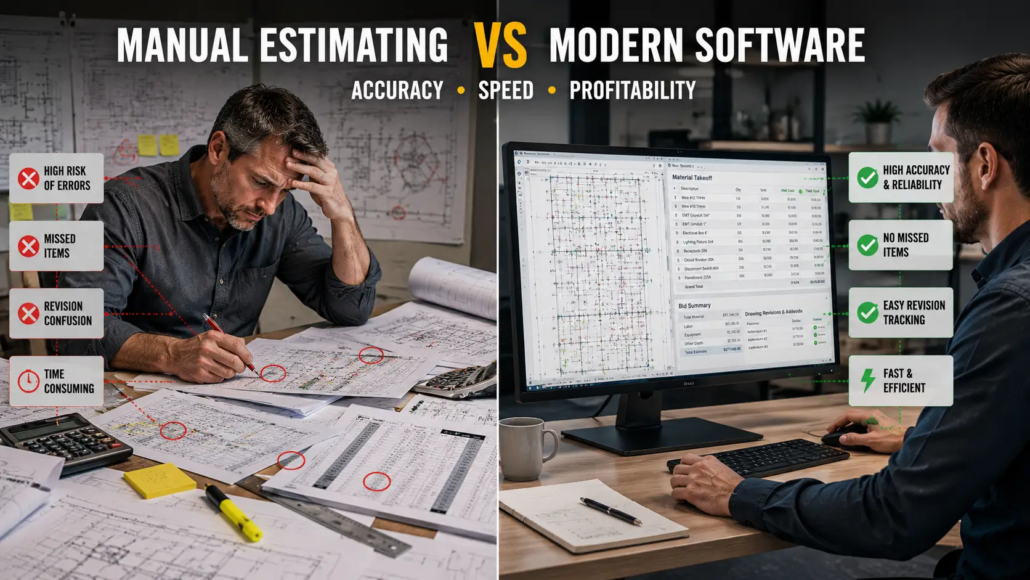
At first, people used paper spreadsheets to figure out how much it would cost to do electrical work for contracts.

As electrical projects get more complicated, contractors need powerful software to make accurate estimates, get more bids, and stay in business.

This guide talks about the basic tools that are making the work of electrical estimators easier. It talks about how picking the right software can help with contract issues and make or break your business.

What is software for estimating electrical work?

Electrical estimating software is a digital tool that helps electrical contractors quickly and accurately figure out how much a job will cost. These programs handle tasks that take a lot of time, like figuring out how many hours of work and materials are needed and how much the project will cost.

Electrical estimating tools are different from regular spreadsheet programs because they know what electrical work needs to be done, like putting in panels and running conduit.

The newest electrical estimating software has a lot of tools in one place. These programs can quickly make expert proposals for estimators, bring in PDF drawings, do takeoffs on the screen, and keep up with the latest prices for materials.

This integration means that estimators don’t have to use outdated manual methods that made their estimating take longer or pretend to be other software programs.

Why is it important to guess how much software will cost for electrical projects?

One mistake can definitely turn a project that was going well into a financial disaster. There is no way that manual methods can be as fast, accurate, and consistent as electrical estimating software.

When there is a lot of competition for bids, speed is very important. With good software, contractors can make bids that are accurate and detailed in just a few hours. On the other hand, competitors have to spend days doing estimates by hand.

Because they are so efficient, they can look for more opportunities and quickly respond to projects with tight deadlines.

The most important thing is still accuracy. People often make mistakes that this software fixes. For instance, wiring mistakes, counting mistakes, or prices that are no longer valid. Built-in databases keep track of everything, from small parts to large machines, to make sure that everything is put together correctly.

Integrating cost databases into electrical estimating software has some important benefits. For example, professional electrical estimating tools come with detailed databases of materials, labor rates, and equipment costs. Professionals update these software program databases on a regular basis to keep up with changes in the market and differences between areas.

The best programs come with built-in real-time pricing services that make sure estimates are based on the most current material costs.

There are thousands of electrical items in quality databases, from simple wires and conduits to more complex tools. They also think about how the local market is doing and how much it costs to hire workers in the area, which can have a big CIV, which can have a big effect on the cost of the project.

Project Management Tools: These days, modern estimating software can do more than just figure out how much something will cost. A lot of these estimating software programs have tools that let you compare bids, make proposals, and keep track of projects. These useful features help contractors keep track of the entire project, from the first estimate to the last day of work.

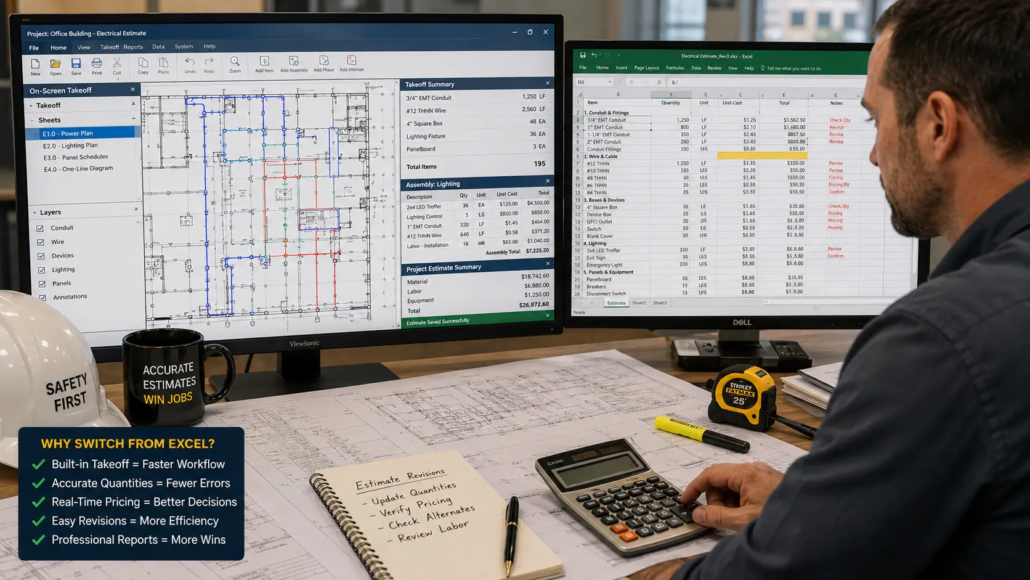
Estimators can measure directly from digital plans with built-in takeoff tools. These tools automatically figure out how long the wires and conduit runs are and how many fixtures there are. This on-screen takeoff feature cuts down on mistakes and makes extra measurement software unnecessary.

Software That People Often Use to Estimate Electrical Work

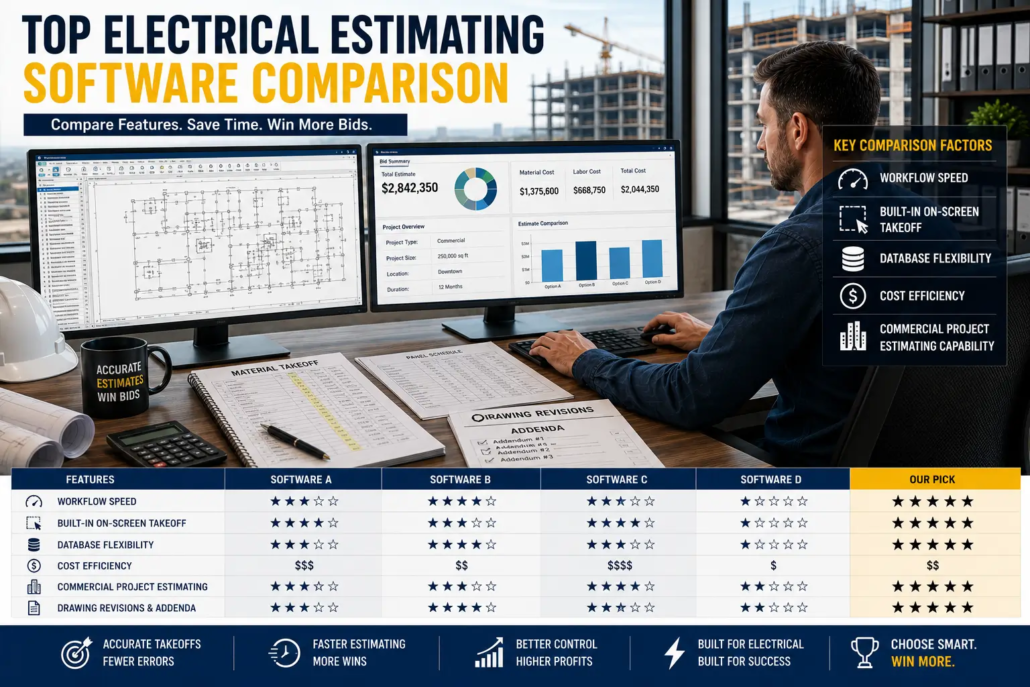
A Quick Look at the Best Software Options:

Here are some of the answers that electrical contractors like the best:

Best Electrical Estimating Software is a great choice for electrical contractors of all sizes because it is very useful. It is a cheap way to get updates for life without having to pay any extra fees or subscriptions.

Accubid is popular with big contractors who work on complicated commercial projects because it has a lot of data and advanced takeoff tools.

McCormick Systems has desktop and cloud-based solutions that can be used by businesses of all sizes.

Contractors who care about data will love ConEst IntelliBid because it has a lot of features and great reporting and analytics tools.

Small and medium-sized contractors like Electrical Bid Manager because it is simple to use and not too pricey.

Software That Fits Your Needs

Software That Fits Your Needs

You may already know that different contractors have different needs. Commercial contractors need advanced takeoff tools and full reporting capabilities. Residential contractors, on the other hand, might care more about how easy and quick they are to use. Industrial contractors often need special assemblies and pricing plans that are different from the norm to make things easier for them.

Accurate and efficient electrical estimating software has these benefits:

A good electrical estimating program speeds things up and makes them much more accurate.
Automated math calculations get rid of errors, and big databases make sure that nothing is missed. Contractors often say they can cut the time it takes to make an estimate in half or more, and they can also make it more accurate.

The software also makes value engineering possible because it lets you easily compare different strategies or resources. Estimators can quickly look at different options and show clients ones that fit within their budget.

Better Communication: Modern estimating software makes it easier for project managers, estimators, and field staff to talk to each other. It’s simple to share, change, and keep track of digital estimates during the project.

This teamwork helps find possible problems early on and keeps field work within the budget.

Choosing the right software can be hard

Being aware of what you specifically need

Choosing software that actually meets their needs is the hardest thing for contractors to do. They tend to get distracted by long lists of features. Small residential contractors don’t need the same high-tech tools that big companies do.

When deciding on a new system, think about the type of project, the size of the business, how tech-savvy the users are, and how well the new system will work with the ones you already have. The best software for your business is the one that fits in with how you work and helps your team get more done.

Looking at Software Providers

There are differences between companies that sell electrical estimating software. Some people care more about features than training and support. When you think about the total cost of ownership, you should include the costs of upgrades, ongoing support, and training time.

Find suppliers who know a lot about the electrical industry and can give you training materials to help your team use the software to its fullest. The value and support you’ll get over time are often worth more than the software’s initial cost.

Picking the Best Choice for Your Business

One of the most important tech decisions you will make for your contracting business is what kind of electrical estimating software to use. Choosing the right thing can change how you estimate, help you win more, and make you more money. If you pick the wrong thing, your team might get mad and you might lose money.

Think about how much it will cost to own something, try out different options, and figure out what you need. Keep in mind that the cheapest choice isn’t always the best one, and the most expensive choice isn’t always the best one either.

Look for software that helps you do your job, gives you reliable support, and helps your team make more accurate estimates more quickly.

Call us today! 800-941-7028

Best Bid-Electrical Estimating

“Your Best Source for Electrical Estimating Software”

Why Contractors Prefer Best Bid Estimating Software

Why Electrical Contractors Choose Best Bid's Estimating Software

Electrical contractors, often under pressure to deliver accurate bids quickly while maintaining profitability, can find relief in Best Bid’s specialized electrical estimating software.

As complexity of projects increase and competition boosts, the use of Best Bid’s specialized electrical estimating software becomes a key factor in gaining a competitive advantage.

This approach addresses the challenges faced in electrical project estimation, from calculating conduit runs to complex assemblies management. The software’s design reflects years of hands-on electrical experience, resulting in a tool that thinks like an electrician.

What Makes Best Bid’s Electrical Estimating Software Different?

Best Bid offers two main products: the Next Generation and Hybrid Pro. Features built-in on-screen takeoff capabilities, allowing contractors to work directly from PDF drawings on their computer screens.

This eliminates the need for separate takeoff software, streamlining the full estimating process.

The software’s database provides contractors with comprehensive information on electrical components—including pricing, labor units, and material specifications—enabling detailed estimates with minimal input for conduit runs and fixture counts.

The electrical estimating software’s database contains unique information on components, including accurate pricing, labor units, and material specifications. Contractors can measure conduit runs, count fixtures, and create detailed estimates with minimal keystrokes.

Custom assemblies represent another key differentiator. Users can create and save an unlimited number of custom assemblies for commonly used electrical configurations. Pre-built switch and receptacle assemblies come ready for immediate use, whilst the flexibility to modify raceways, fittings, and conductors ensures estimates match specific project requirements.

Key Advantages of Best Bid’s Estimating Software

Cost-Effective Ownership Model:

Best Bid offers one-time purchase model, rather than a subscription-based pricing model. Contractors pay onetime and own the software for ever, with no recurring fees, per-seat charges, or annual license renewals etc.

This offer provides significant long-term savings compared to competitors who charge ongoing monthly or yearly fees.

Comprehensive Support and Updates:

From Best Bid, every purchase also includes lifetime technical support and software updates without additional costs. This provides full time access to the software to the latest features and pricing data without ongoing expenses. The support team consists of electrical professionals who understand the industry’s unique challenges.

Built-in On-Screen Takeoff:

The integrated takeoff functionality separates the need for another software of measurement. Contractors can easily import PDF drawings, perform takeoffs directly on screen, and very smoothly transfer quantities.

With this software, different colors can be assigned to various measurements, and the auto-count feature can automatically locate specific items throughout the drawings.

Unlimited Licensing:

Best Bid offers unlimited licensing, that allows contractors to install the software on multiple computers without charging additional fees. This flexibility supports growing businesses and enables collaboration across different project sites and team members.

User-Friendly Software Design:

The software interface streamlines project estimation with an intuitive design that mirrors electrical contractors’ workflows.

Key features include “Master Control Panel” for easy navigation and a worksheet function for estimate review prior to presentation. Auto-save and copy-paste capabilities ensure work is preserved and information can be efficiently transferred between projects.

Real-World Results from Best Bid Users:

Our customers using Best Bid’s software report significant improvements in estimating accuracy and efficiency, providing a sense of confidence and reassurance.

Will Harris, emphasized the software’s accuracy and ease of use: “I’m not great with computers but with Best Bid it does anything for you. I was amazed how accurate it really is.”

This testimonial reflects the ability of the software to serve contractors with varying technical backgrounds.

BCM has used Best Bid’s electrical estimating software for approximately 14 years, highlighting the software’s reliability and evolution. Their experience shows the long-term relation with Best Bid, particularly when expanding estimating teams or upgrading to networked versions.

Comparing Best Bid to Other Contractor Software Solutions

Best Bid’s electrical focus distinguishes it from general-purpose bid management software. While other estimating tools for contractors attempt to serve multiple trades, Best Bid’s specialization ensures every feature addresses specific electrical contracting needs, this targeted approach results in more accurate estimates and faster completion times.

The cost structure of the software also gives a significant advantage. Many contractor software solutions charge monthly subscriptions, per-user fees, or additional charges for support and updates.

Best Bid’s one-time purchase model saves your ongoing expenses, making it particularly attractive for smaller contractors and those looking to control long-term costs.

The software works seamlessly with real-time pricing through NetPricer subscriptions, ensuring material costs remain current.

Quote comparison features automatically select the lowest prices from multiple suppliers, helping contractors maintain a competitive advantage while protecting their profit margins.

Best Bid’ estimating software is designed to run with your existing systems, making it a unique and powerful tool for your growing business.

Making the Right Choice for Your Electrical Business

Making the Right Choice for Your Electrical Business

Selecting the right electrical estimating software directly impacts the success of a business. The combination of Best Bid’s industry-specific features, affordable ownership model, and comprehensive support makes Best Bid a worthy option for electrical contractors of all sizes.

Whether you’re a small contractor or a large enterprise, Best Bid has the tools you need to succeed. The software is designed to handle projects ranging from $10,000 to $10 million, scaling effectively as businesses grow.

The transition from manual estimating methods to computerized solutions can be daunting, but with Best Bid’s user-friendly design and dedicated support team, contractors can successfully navigate this change.

The software is designed to mirror how electrical contractors naturally approach estimating projects, with features like the Master Control Panel that simplify navigation.

The worksheet function streamlines estimate review before presentation, while auto-save and copy-paste features ensure data preservation and efficient project workflow.

For electrical contractors seeking reliable and cost-effective estimating tools, Best Bid offers a compelling solution that scales with their business needs.

What Is the Best Electrical Estimating Software in 2025?

What Is the Best Electrical Estimating Software in 2025

Choosing the right electrical estimating software can transform your contracting business from struggling with manual calculations to winning more bids with pinpoint accuracy.

The difference between success and failure often comes down to having the right estimation tools at your fingertips.


Gone are the days when electrical contractors could rely on pen, paper, and pocket calculators to create competitive estimates. Modern electrical projects demand sophisticated software that can handle complex specifications, integrate real-time pricing, and deliver professional proposals in minutes rather than hours.


This guide examines the leading electrical estimating tools available in 2025, helping you understand which features matter most and how to select software that will boost both your productivity and profitability. Whether you’re managing residential rewires or complex commercial installations, the right software choice could be the key to unlocking your business potential.


Why Your Software Choice Determines Business Success

Your estimating software isn’t just another business expense—it’s the foundation upon which every successful Bid is built. The difference between profitable projects and costly mistakes often stems from the accuracy and efficiency of your initial estimates.


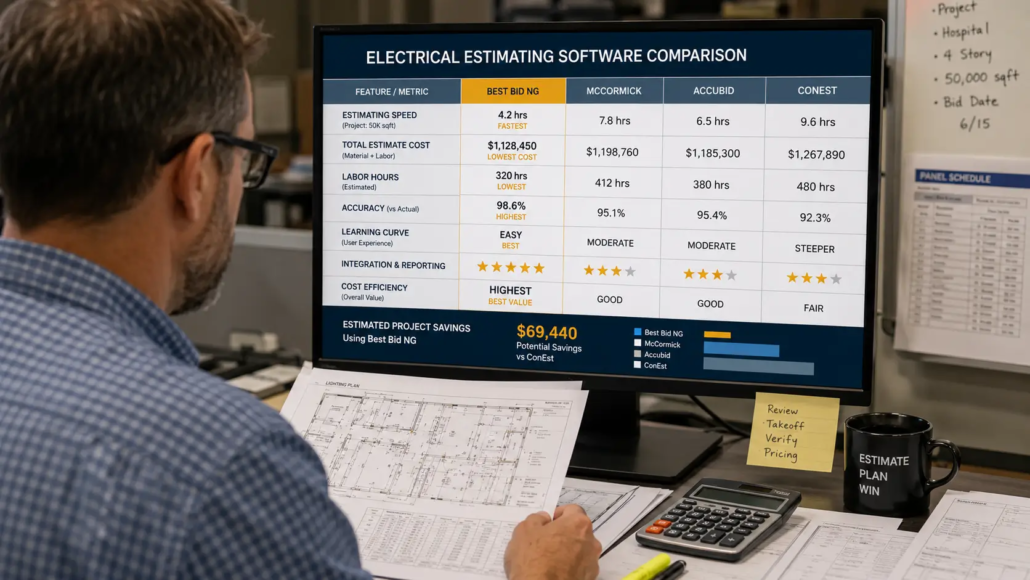
The right electrical estimating tools eliminate human calculation errors, ensure consistent pricing across all projects, and provide detailed breakdowns that help you understand exactly where costs originate. Top-tier software can reduce estimation time by up to 75% whilst significantly improving accuracy rates.


Essential Features That Define Superior Electrical Software

Intuitive User Experience

The best electrical estimating software prioritizes ease of use without sacrificing functionality. Quality software should feel natural to electrical contractors, not require a computer science degree to operate effectively.


Look for clear navigation menus, logical workflow progression, and visual cues that guide users through the estimation process seamlessly.


The software should minimize keystrokes required for common tasks. Entering quantities and selecting assemblies should be straightforward operations that don’t demand extensive training periods.


Seamless Integration Capabilities

Professional-grade software connects effortlessly with existing business systems, including accounting packages, project management platforms, and supplier databases. Real-time pricing integration stands out as particularly valuable, automatically updating material costs to ensure estimates reflect current market conditions.


Consider how effectively the software handles data import and export functions. The ability to share estimates with clients in professional formats, import historical project data, and export information to accounting systems ensures smooth business operations.


Comprehensive Reporting Tools

Quality software provides multiple report formats serving different purposes throughout project lifecycles. Assembly summaries break down costs by system components, material summaries provide purchasing departments with precise specifications, and labour reports help project managers plan workforce requirements.


Advanced reporting includes audit trails, tracking of estimate changes, and warning systems that alert estimators to potential cost anomalies.


Mobile Accessibility

Mobile functionality has become essential rather than optional. Electrical contractors frequently work on-site where desktop access is limited. Mobile-responsive software enables the creation and modification of estimates from tablets and smartphones, including the ability to perform takeoffs directly from PDF drawings.


Leading Electrical Estimating Software Options

Leading Electrical Estimating Software Options

Best Bid Electrical Estimating Software

Best Bid distinguishes itself through its contractor-focused approach, developed by electrical professionals who understand industry-specific challenges. The company offers two primary solutions: Best Bid Next Generation for experienced users seeking advanced capabilities, and Best Bid Hybrid Pro, emphasizing simplicity and efficiency.


The software’s unlimited license model with lifetime updates and complimentary technical support eliminates ongoing subscription costs that strain budgets. This one-time purchase approach provides exceptional long-term value and budget predictability.


Built-in on-screen takeoff capabilities eliminate third-party application requirements, streamlining workflow from blueprint analysis to final estimate delivery. The takeoff tools are specifically engineered for electrical work, understanding unique contractor requirements.


Best Bid’s database flexibility allows unlimited customisation. Contractors can add speciality items, create custom assemblies for recurring work types, and build comprehensive libraries of commonly used configurations. This adaptability suits diverse project types from residential installations to complex industrial work.


Advanced substitution features make Best Bid particularly valuable for value engineering projects. Users can instantly modify EMT to PVC, copper to aluminum, or adjust raceway sizes with a single click, enabling rapid estimate adjustments based on specification changes.


Industry Alternatives

Several other platforms compete in the 2025 electrical estimating market, each offering distinct advantages for specific contractor types and project requirements.


These alternatives typically focus on particular market segments or specialize in specific integration capabilities.


Most competing solutions operate on subscription models with recurring monthly or annual fees. Whilst these platforms may offer certain advanced features, the ongoing costs can accumulate significantly over time compared to one-time purchase options.


Real User Experiences and Feedback

User reviews consistently highlight speed and efficiency as primary benefits, with contractors reporting 70-80% faster estimate turnaround compared to manual methods. Accuracy improvements receive equally strong praise, with users noting fewer calculation errors and more competitive pricing capabilities.


Technical support quality varies significantly between providers. Companies offering unlimited phone support with knowledgeable staff receive notably higher satisfaction ratings than those relying primarily on email assistance. Users particularly value support teams that understand electrical contracting rather than just software operation.


The learning curve remains a consideration for contractors transitioning from paper-based systems. However, most users report becoming comfortable with new software within 2-3 weeks of regular use, particularly when proper training resources are available.


Making Your Final Decision

Selecting optimal electrical estimating software requires evaluating specific business needs, typical project types, and growth objectives. Consider project volume and complexity, budget structure preferences, technical requirements, support needs, and expansion plans.


High-volume contractors benefit most from advanced automation features, whilst smaller operations may prioritise simplicity and cost-effectiveness. Decide between one-time purchases with lifetime updates versus subscription models, considering cash flow preferences and long-term budget planning.


Ready to Transform Your Estimation Process?

The right electrical estimating software doesn’t just improve accuracy and speed—it revolutionises your entire approach to bidding and project management. Quality software pays for itself through enhanced efficiency, reduced errors, and increased project capacity.


Best Bid combines decades of industry experience with cutting-edge technology to deliver unmatched estimation capabilities specifically designed for electrical contractors.


Call Us Today to find out more: 800-941-7028

Top Software to Estimate Electrical Work Fast & Easily

Top Software To Help You Estimate Electrical Work – Fast And Easy

Electrical work estimating used to take long hours, lots of paperwork, and sometimes, painful mistakes that cost both time and money.

Today, powerful software tools can help electricians, contractors, and small business owners create fast and accurate estimates with just a few clicks.

If you want to bid on jobs confidently and save time, if you want to speed up your estimates and avoid expensive errors, electrical estimating software is the answer.

This article explains everything you need to know using easy words and simple steps.

Why You Need Electrical Estimating Software?

Estimating electrical jobs the “old way” (pen, paper, and spreadsheets) is slow and error-prone. Modern software is designed to:

  • Speed up your workflow.
  • Make calculations automatic.
  • Store your prices and materials lists.
  • Help you create clear, professional-looking quotes.
  • Reduce mistakes.

If accuracy, speed, and professionalism matter to your electrical business, then using the right estimating software can make a real difference.

What to Look for in Good Estimating Software?

Choosing the best software can be a challenging task. Before we look at the top options, let’s see which features matter most:

  • Easy to Use: Simple controls, clean screens, and step-by-step guides.
  • Accurate Calculations: Updates prices, includes labor, and materials.
  • Templates and Libraries: Pre-built lists of electrical parts and jobs.
  • Custom Quotes: Let you add your business logo and details.
  • Integration: Connects with tools like accounting or project management software.
  • Support: Helpdesk, tutorials, or chat when you need assistance.
  • Cloud Sync: Access your estimates from any device, including laptops, phones, and tablets.

The Most Popular Electrical Estimating Software

Here are some of the favorite programs among electrical contractors:

Best Bid:

Best Bid gives you great value for your money. It has many helpful features and is suitable for contractors of any size, whether big or small.

Accubid:

Many large contractors love Accubid because it is powerful and has a big database. You get advanced tools to easily measure and count materials. This is great if you are working on big and complicated projects.

McCormick Systems:

McCormick Systems offers both desktop and cloud options, making it easy to fit different needs as they change. Its flexible pricing and scalable features mean both small businesses and big companies can take advantage of all the tools it provides.

ConEst IntelliBid:

If you want strong reporting and easy-to-understand analytics, ConEst IntelliBid is a good pick. It helps you dive deep into your costs, bids, and all project details.

Electrical Bid Manager:

Perfect for small to mid-sized businesses, this program is simple to use and budget-friendly. It lets you create estimates with ease.

Esticom (by Procore)

Esticom is cloud-based, so you can work anywhere (in the office, at home, or on-site) using your laptop or even a tablet. It features a simple design, drag-and-drop takeoffs, and is ideal for teams that want to collaborate or review bids together. Esticom now integrates with Procore, a widely used construction management platform.

ProEst

ProEst is designed for larger companies that manage numerous large projects simultaneously. It includes detailed tracking for every part, labor hour, and cost. The interface may feel complex for first-time users, but it’s powerful for those who need full control and in-depth analysis. ProEst is also cloud-based and works well with other business tools.

Stack

Stack helps you measure plans (“takeoff”) and build quotes entirely online. It’s great for electrical contractors who work with digital blueprints and want colour-coded markups. Stack is also known for its intuitive interface, so you don’t waste time learning new buttons.

Key Benefits: Why Estimating Software Pays Off

  • Save Lots of Time: What took hours can now take minutes.
  • Fewer Mistakes: Automatic calculations mean fewer costly errors.
  • Win More Bids: Fast, accurate, and professional-looking quotes help you stand out from the competition.
  • Easier Planning: Know your costs and profit before you start the job.
  • Grow Your Business: Take on more work by working smarter, not harder.

How to estimate electrical work?

How to estimate electrical work

Estimating electrical work begins by thoroughly comprehending the job. Start by discussing with your client and reviewing all the drawings or plans to determine what needs to be done and when.

Then, create a comprehensive list of all the materials that will be needed, including wires, switches, outlets, panels, and lights. Count and measure everything carefully to ensure that nothing is forgotten.

Next, determine the number of labor hours each step will require, based on standard rates for your region, and don’t forget to add extra time if the job is difficult or time-sensitive. Don’t forget to factor in your overhead expenses, such as office costs, tools, gas, and insurance, and add a reasonable amount for your profit.

Lastly, double-check all your calculations and review your entire estimate to ensure it’s accurate and easy for the client to understand. These steps will help you make a clear, honest, and credible electrical estimate for every project.

The Future of Electrical Estimating Software: Trends to Watch

Electrical estimating software is continually improving, making work easier for electricians and contractors. Let’s examine the most important trends to watch in the future, explained in clear and concise language.

Smarter Software with Artificial Intelligence (AI)

New software utilizes AI, which enables it to “think” and learn from previous projects. This helps you obtain faster and more accurate estimates, identify potential errors, and provide suggestions that save time and money.

Working from Anywhere with Cloud Technology

Estimating software is moving into the cloud. This means you can access your work from any computer, tablet, or phone, whether you’re at the office, on the job site, or at home. Cloud tools also enable teams to work on the same project simultaneously.

Mobile Estimating on the Go

More programs are made for mobile devices. Now you can make or change estimates using your phone or tablet while walking around a job site, no need to wait until you’re back at your desk.

Better Connections with Other Software

Modern estimating software connects easily with programs for accounting, scheduling, and project management. This saves you from typing the same information multiple times, making your entire workflow smooth and simple.

Always Up-to-Date Material Prices

Software now uses live databases to keep track of the latest material and labor prices. Your estimates will use real numbers, ensuring you won’t lose money due to outdated prices or inaccurate estimates.

Stronger Security for Your Data

As more work moves online, keeping your business info safe is very important. New software prioritizes robust security features, including password protection and secure storage, to safeguard your data against hackers.

Focus on Eco-Friendly and Green Solutions

With more clients requesting eco-friendly work, some programs now help you estimate the use of “green” materials and energy-saving solutions. This can help you win jobs from customers who care about the environment.

Rapid Growth in the Market

Electrical estimating software is experiencing rapid growth, with an increasing number of companies utilizing it each year. Technology will continue to improve, bringing new features to help electricians work even more quickly and efficiently.

Last Thoughts

Electrical estimating software has become a necessity for anyone who wants to produce accurate, efficient, and straightforward job estimates. These programs help you save time, minimize mistakes, and create clear, professional estimates that will aid in acquiring more jobs.

New technologies, such as AI, cloud access, and mobile apps, make the estimating process even easier.

The largest benefit of employing this software is that it enables you to become a better planner, track expenses, and expand your business more confidently with the best BestBid, all with less worry.

Top 5 Mistakes That Stop Electrical Contractors’ Growth

In a dynamic world of electrical distribution, growth is not just about getting more jobs. It is about building a sustainable and profitable business. Even the most qualified electricians can fall into traps that limit business possibilities. Here are the five most important mistakes that electric operator’s make, along with implementable strategies to overcome them. […]

Low-Voltage Estimating Software That Works | Best Bid Tools

Low-Voltage Estimating Software That Works Best Bid Tools

Low-voltage electrical estimating is complex, requiring precise material cost calculation and labor anticipation, which directly impacts project success.

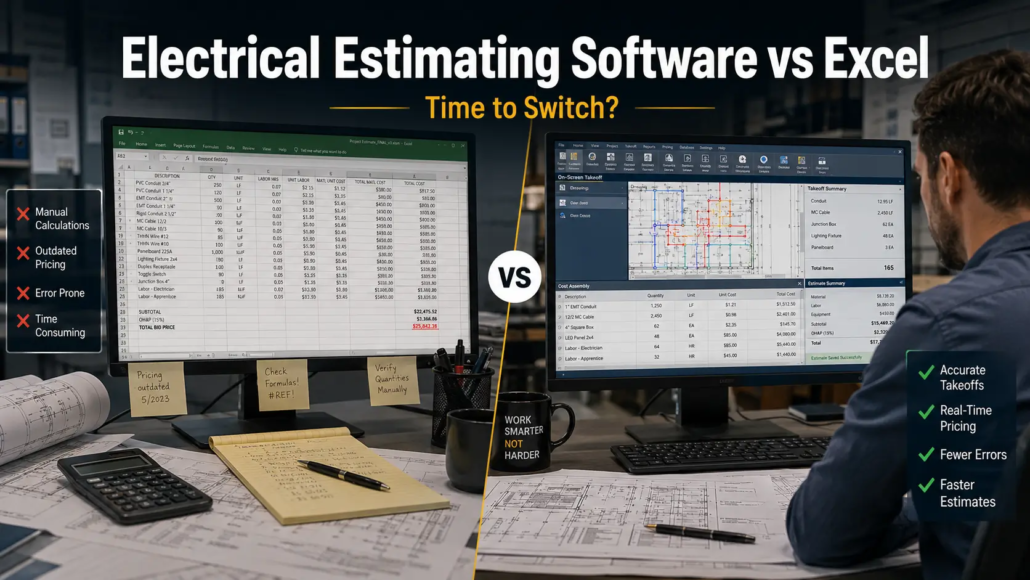
Yet, many contractors and engineers continue to face inefficiencies due to outdated tools and limited software options. If you’re still relying on Excel spreadsheets or struggling with insufficient tools, you’re likely losing time, money, and bids to competitors.

This blog is designed to help you master low-voltage electrical estimating by exploring its challenges, the limitations of traditional tools, and how specialized software like Best Bid Next Generation can revolutionize your approach.

Please stick with us for actionable tips, expert insights, and a path to more accurate, cost-effective estimations.

The Challenges of Low-Voltage Electrical Estimating

Low-voltage electrical estimating, which often includes tasks like wiring for data, security systems, and communications, demands precision and adaptability. However, the process comes with several challenges:

  • Lack of Specialized Software

Many contractors rely on general estimating tools that fail to address the specific needs of low-voltage projects. These tools don’t provide the flexibility required for detailed cost tracking and material breakdowns.

  • Excel Spreadsheets

While spreadsheets are familiar, they lack scalability and can’t adapt to the complexity of modern projects. Manual entry creates room for errors, and keeping pricing accurate requires constant monitoring and updates.

  • Outdated Solutions

Existing low-voltage estimating software often lacks customization, on-screen takeoff capabilities, or user-friendly interfaces. This inefficiency results in unnecessarily long hours spent on calculations and proposal generation.
Accuracy is the foundation of any successful electrical project. A minor error in an estimate can lead to budget overruns, missed deadlines, and unhappy clients.

Why Traditional Tools Fall Short?

If you’re still using spreadsheets or outdated software for your low-voltage electrical estimates, here’s why it’s time for an upgrade:

  • Limited Scalability

Spreadsheets struggle to manage complex projects involving hundreds of components and variables.

  • Time-Consuming & Error-Prone

Manual data entry increases the risk of errors and consumes valuable hours that could be better spent elsewhere.

  • Outdated Pricing

Material costs fluctuate frequently, and maintaining accurate pricing manually is both tedious and unreliable.

  • Lack of Flexibility

Most traditional tools don’t allow for customized assemblies or adaptable project requirements, making it difficult to tailor estimates to unique client needs.
To stay competitive, contractors need tools that enhance efficiency, reduce errors, and facilitate detailed analyses.

Key Features Every Low-Voltage Estimating Software Must Have

Upgrading to professional low-voltage estimating software can streamline your workflow while increasing accuracy. Here are the essential features to look for:

  • Unlimited Database Capabilities

Your software should allow you to store an extensive database of material and labor costs. This ensures quick access to relevant information for every project, helping you maintain organized and up-to-date data.

  • Customizable Options

Flexibility is key for unique projects. Look for software that enables you to create and save custom sections, components, and assemblies. This feature allows you to adapt to varying project scopes and change pricing or difficulty levels as needed.

  • On-Screen Takeoff

Gone are the days of manually measuring and counting items on paper. On-screen takeoff lets you measure distances and count materials directly from PDFs or CAD drawings, saving you time and effort.

  • Customizable Proposals

Generating professional, tailored proposals is essential to winning bids. Software with editable templates simplifies this process and ensures your client documents are polished and persuasive.

  • Integration and Support

Choose software that provides lifetime updates, robust customer support, and user-friendly interfaces. These features ensure your software remains efficient and relevant as your business grows.

Introducing Best Bid Next Generation

For contractors ready to take the next step, Best Bid Next Generation stands out as an industry leader in electrical estimating software. Here’s what makes it unique:

  • No Recurring Fees

Best Bid is a one-time purchase, offering exceptional value without monthly or annual fees.

  • Built-In Tools

Features like custom assemblies, on-screen takeoff, and an unlimited database address the inefficiencies of traditional tools.

  • User-Friendly Interface

Designed with contractors in mind, Best Bid is intuitive and easy to use, even for those with minimal technical experience.

  • Lifetime Updates & Support

With lifetime access to free updates and technical support, you’ll never have to worry about outgrowing your software.

Testimonials:

“Best Bid is the best tool I’ve purchased in years. The customer service is top-notch, and the software has cut my estimating time in half.” – Allen B.

“The accuracy and customization options are unmatched. Highly recommend this software to any contractor.” – Maria P.  

Tips for Transitioning to Professional Estimating Software

Switching from traditional tools to advanced software can feel daunting, but it doesn’t have to be. Follow these steps to ease the transition:

  • Assess Your Needs

Identify the challenges in your current estimating process and determine which features are essential for your business.

  • Schedule a Demo

Take a closer look at your software options by scheduling demos. At Best Bid, we offer screen-sharing sessions to walk you through the software without a high-pressure sales pitch.

  • Training Resources

Take advantage of tutorials, support systems, and programs like Best Bid’s Online School for Electrical Estimating to quickly learn the software.

Cost-Effectiveness and Long-Term Advantages

Cost-Effectiveness and Long-Term Advantages

Investing in professional estimating software is not just a productivity boost; it’s a long-term financial advantage:

  • Reduced Labor Costs

By automating calculations and generating reports, contractors save hours of manual labor.

  • Accuracy Saves Money

Precise estimates reduce the risk of overruns and unexpected expenses, leading to more profitable projects.

  • No Ongoing Fees

Unlike competitors, Best Bid doesn’t charge subscription or recurring fees. Once you purchase the software, you own it outright.

Take Control of Your Low-Voltage Electrical Estimating Today

Success in electrical contracting depends on accuracy, efficiency, and adaptability. With outdated tools, you’re at risk of falling behind. Instead, empower your business with professional estimating software like Best Bid Next Generation.

Act Now:  

  • Call us today at 800-941-7028 for more information.
  • Schedule a walkthrough to see Best Bid in action.
  • Visit Best Bid Tools to learn more and start your free trial.

Why wait? The future of low-voltage electrical estimating is here. Take the first step towards mastering it today.

Low-Voltage Estimating Software That Works | Best Bid Tools

Low-Voltage Estimating Software That Works Best Bid Tools

Low-voltage electrical estimating is complex, requiring precise material cost calculation and labor anticipation, which directly impacts project success.

Yet, many contractors and engineers continue to face inefficiencies due to outdated tools and limited software options. If you’re still relying on Excel spreadsheets or struggling with insufficient tools, you’re likely losing time, money, and bids to competitors.

This blog is designed to help you master low-voltage electrical estimating by exploring its challenges, the limitations of traditional tools, and how specialized software like Best Bid Next Generation can revolutionize your approach.

Please stick with us for actionable tips, expert insights, and a path to more accurate, cost-effective estimations.

The Challenges of Low-Voltage Electrical Estimating

Low-voltage electrical estimating, which often includes tasks like wiring for data, security systems, and communications, demands precision and adaptability. However, the process comes with several challenges:

  • Lack of Specialized Software

Many contractors rely on general estimating tools that fail to address the specific needs of low-voltage projects. These tools don’t provide the flexibility required for detailed cost tracking and material breakdowns.

  • Excel Spreadsheets

While spreadsheets are familiar, they lack scalability and can’t adapt to the complexity of modern projects. Manual entry creates room for errors, and keeping pricing accurate requires constant monitoring and updates.

  • Outdated Solutions

Existing low-voltage estimating software often lacks customization, on-screen takeoff capabilities, or user-friendly interfaces. This inefficiency results in unnecessarily long hours spent on calculations and proposal generation.

Accuracy is the foundation of any successful electrical project. A minor error in an estimate can lead to budget overruns, missed deadlines, and unhappy clients.

Why Traditional Tools Fall Short?

If you’re still using spreadsheets or outdated software for your low-voltage electrical estimates, here’s why it’s time for an upgrade:

  1. Limited Scalability

Spreadsheets struggle to manage complex projects involving hundreds of components and variables.

  1. Time-Consuming & Error-Prone

Manual data entry increases the risk of errors and consumes valuable hours that could be better spent elsewhere.

  1. Outdated Pricing

Material costs fluctuate frequently, and maintaining accurate pricing manually is both tedious and unreliable.

  1. Lack of Flexibility

Most traditional tools don’t allow for customized assemblies or adaptable project requirements, making it difficult to tailor estimates to unique client needs.

To stay competitive, contractors need tools that enhance efficiency, reduce errors, and facilitate detailed analyses.

Key Features Every Low-Voltage Estimating Software Must Have

Upgrading to professional low-voltage estimating software can streamline your workflow while increasing accuracy. Here are the essential features to look for:

  1. Unlimited Database Capabilities

Your software should allow you to store an extensive database of material and labor costs. This ensures quick access to relevant information for every project, helping you maintain organized and up-to-date data.

  1. Customizable Options

Flexibility is key for unique projects. Look for software that enables you to create and save custom sections, components, and assemblies. This feature allows you to adapt to varying project scopes and change pricing or difficulty levels as needed.

  1. On-Screen Takeoff

Gone are the days of manually measuring and counting items on paper. On-screen takeoff lets you measure distances and count materials directly from PDFs or CAD drawings, saving you time and effort.

  1. Customizable Proposals

Generating professional, tailored proposals is essential to winning bids. Software with editable templates simplifies this process and ensures your client documents are polished and persuasive.

  1. Integration and Support

Choose software that provides lifetime updates, robust customer support, and user-friendly interfaces. These features ensure your software remains efficient and relevant as your business grows.

Introducing Best Bid Next Generation

For contractors ready to take the next step, Best Bid Next Generation stands out as an industry leader in electrical estimating software. Here’s what makes it unique:

  • No Recurring Fees

Best Bid is a one-time purchase, offering exceptional value without monthly or annual fees.

  • Built-In Tools

Features like custom assemblies, on-screen takeoff, and an unlimited database address the inefficiencies of traditional tools.

  • User-Friendly Interface

Designed with contractors in mind, Best Bid is intuitive and easy to use, even for those with minimal technical experience.

  • Lifetime Updates & Support

With lifetime access to free updates and technical support, you’ll never have to worry about outgrowing your software. 

Testimonials:

“Best Bid is the best tool I’ve purchased in years. The customer service is top-notch, and the software has cut my estimating time in half.” – Allen B.

“The accuracy and customization options are unmatched. Highly recommend this software to any contractor.” – Maria P.

Tips for Transitioning to Professional Estimating Software

Switching from traditional tools to advanced software can feel daunting, but it doesn’t have to be. Follow these steps to ease the transition:

  • Assess Your Needs

Identify the challenges in your current estimating process and determine which features are essential for your business.

  • Schedule a Demo

Take a closer look at your software options by scheduling demos. At Best Bid, we offer screen-sharing sessions to walk you through the software without a high-pressure sales pitch.

  • Training Resources

Take advantage of tutorials, support systems, and programs like Best Bid’s Online School for Electrical Estimating to quickly learn the software.

Cost-Effectiveness and Long-Term Advantages

Cost-Effectiveness and Long-Term Advantages

Investing in professional estimating software is not just a productivity boost; it’s a long-term financial advantage:

  1. Reduced Labor Costs

By automating calculations and generating reports, contractors save hours of manual labor.

  1. Accuracy Saves Money

Precise estimates reduce the risk of overruns and unexpected expenses, leading to more profitable projects.

  1. No Ongoing Fees

Unlike competitors, Best Bid doesn’t charge subscription or recurring fees. Once you purchase the software, you own it outright.

Take Control of Your Low-Voltage Electrical Estimating Today

Success in electrical contracting depends on accuracy, efficiency, and adaptability. With outdated tools, you’re at risk of falling behind. Instead, empower your business with professional estimating software like Best Bid Next Generation. 

Act Now:

  • Call us today at 800-941-7028 for more information.
  • Schedule a walkthrough to see Best Bid in action.
  • Visit Best Bid Tools to learn more and start your free trial.

Why wait? The future of low-voltage electrical estimating is here. Take the first step towards mastering it today.

Best Bid Software & Steve Griffin’s Legacy in Estimating

Best Bid Software & Steve Griffin’s Legacy in Estimating

Estimating in electrical contracting is a cornerstone of success for businesses in the field. Without accurate and efficient estimates, contractors face risks of losing profits, missing deadlines, or even being unable to stay competitive in a tough market.

As the complexity and volume of projects have grown, the tools used for electrical estimating have evolved to meet new demands. Best Bid Electrical Estimating Software—developed by the visionary Steve Griffin—has become an indispensable tool for electrical contractors, transforming the way they approach estimating.

The software is more than just a tool; it’s a symbol of innovation and progress in the electrical estimating world. This article will explore the origins of Best Bid, its significant features, and the lasting legacy of Steve Griffin, whose contributions have helped elevate the standards of electrical estimating.

From the evolution of the software to its revolutionary features, this blog post will dive into the significant impact Best Bid has made on electrical contractors’ ability to estimate and win bids accurately.

The Evolution of Electrical Estimating Solutions

Before the advent of specialized estimating software, electrical estimating was a painstakingly slow process involving paper, pens, calculators, and rulers. Electrical contractors would painstakingly review printed blueprints, measure wire lengths, count electrical outlets and switches, and calculate the cost of labour and materials manually.

Manual Estimating: The Traditional Approach

For decades, electrical contractors relied heavily on manual methods for estimating project costs. Printed blueprints were the backbone of the process, with contractors marking up designs, noting down measurements, and counting items by hand. This method was not only time-consuming but highly prone to error, making it difficult for contractors to maintain consistency across different projects.

The complexity of electrical systems only made manual estimating more difficult. As electrical installations became larger and more intricate, contractors found themselves spending more time managing their estimates than actually working on the projects themselves.

This inefficiency made it clear that a more effective system was needed—one that could streamline the process, reduce errors, and help contractors stay competitive.

Spreadsheets and Early Software Solutions

As the computing world began to evolve in the late 70’s contractors started turning to computers for help. Spreadsheets such as Microsoft Excel became a popular solution, enabling contractors to create basic estimates and track project details in a more organized manner. Spreadsheets allowed contractors to enter quantities and materials, calculate totals, and update project data quickly, which was a vast improvement over manual methods.

However, spreadsheets lacked the industry-specific features that would make them truly efficient for electrical estimating.

In the early 1980s, the first electrical estimating software systems were introduced to address these gaps. One of the pioneers in this space was First Choice Electrical Estimating Software (1CEES), launched in 1991. The 1CEES Budget Estimator was groundbreaking for its time, offering contractors a more efficient method of creating estimates, even for those with limited electrical experience.

However, as the industry evolved and project complexities grew, 1CEES became inadequate for larger, more complex jobs.

Contractors needed a more advanced, flexible, and scalable solution to meet the growing demands of the market. This need for innovation was the driving force behind the creation of Best Bid Electrical Estimating Software.

Steve Griffin: The Visionary Behind Best Bid

Steve Griffin, a veteran in the electrical industry, is the brain behind Best Bid Electrical Estimating Software. Griffin’s vast experience as an electrical estimator and contractor provided him with a deep understanding of the pain points contractors face daily. He saw firsthand how cumbersome and error-prone the estimating process was with the tools that were available at the time.

The Beginnings of Griffin’s Career

Griffin’s career began in 1974 when he worked in electrical contracting, gaining experience in managing projects and estimating costs. His extensive hands-on experience in the field gave him invaluable insight into the complexities and challenges of electrical estimating.

He understood that estimates needed to be accurate, timely, and comprehensive—especially when dealing with large-scale commercial, residential, or industrial projects.

Griffin quickly became aware of the limitations of the estimating tools available, such as spreadsheets and early estimating software like 1CEES. These tools were not adaptable enough to handle the increasing complexity of electrical projects, and the process was still far too manual. For years, Griffin thought about ways to improve the process and make it easier for electrical contractors to create accurate estimates quickly and efficiently.

Steve Griffin’s Innovations

Steve Griffin’s contribution to the electrical estimating world goes far beyond just software development. He was one of the first to introduce several critical innovations that have become standard in the industry today, including:

  • On-Screen Takeoff: This tool allows contractors to directly measure wire lengths, count devices, and mark up digital blueprints. Griffin recognized that this would eliminate the need for paper blueprints and reduce errors caused by manual measurements, providing contractors with a more accurate and efficient way to complete their takeoff.
  • Auto Count: The Auto Count feature automatically counts recurring electrical components, such as outlets, switches, and light fixtures, making the estimating process faster and more accurate. Before this tool, contractors had to manually count each device, which could be a tedious and error-prone task.
  • Removable Database: Griffin was the first to create a removable database, allowing contractors to add and modify data based on their specific needs. This feature enabled the software to be customizable and adaptable to each contractor’s unique workflow and project requirements.

These innovations laid the groundwork for Best Bid Electrical Estimating Software and provided the foundation for the features that would follow.

Best Bid: Revolutionizing Electrical Estimating Software

The launch of Best Bid Electrical Estimating Software marked a new era in electrical contracting. Griffin’s design was centered on making the estimating process simpler, faster, and more accurate. Unlike previous software options that were rigid and difficult to customize, Best Bid was designed to meet the unique needs of electrical contractors, whether they were estimating a small residential project or a large industrial installation.


Key Features of Best Bid Electrical Estimating Software

  • User-Friendly Interface: One of the most significant advantages of Best Bid is its intuitive and user-friendly interface. The software is designed for contractors who may not be computer experts but need a powerful tool to handle their estimates. Best Bid allows contractors to easily input project data, calculate materials and labour costs, and generate professional estimates without the need for extensive training.
  • On-Screen Takeoff: The On-Screen Takeoff feature revolutionized the way electrical contractors approached estimating. With the ability to measure wire lengths, count devices, and mark up digital blueprints directly on the screen, contractors could now eliminate paper blueprints and reduce errors in measurement. This feature significantly sped up the takeoff process, making it more accurate and efficient.
  • Auto Count: The Auto Count feature automates the process of counting repetitive items, such as electrical outlets, switches, and light fixtures. Contractors no longer need to manually count these items, saving time and reducing the potential for errors. This tool also allowed for more precise estimates, especially for large projects where the number of items could be overwhelming.
  • Removable Database: Best Bid features a removable database that allows contractors to create custom entries and tailor the database to their specific needs. This flexibility makes Best Bid adaptable to any project, whether it requires specialized components or unique assemblies.
  • Cost Control: With Best Bid, contractors can better manage project costs, monitor material usage, and track labour expenses. The software automatically calculates the total cost for materials and labour, providing contractors with a clear and accurate picture of the project’s financial requirements.
  • Reporting and Analytics: Contractors can generate detailed reports based on the estimates they create, providing them with actionable insights into costs, resource usage, and project timelines. These reports are valuable for decision-making and help contractors improve efficiency in future projects.

Affordability and Lifetime Updates

Another hallmark of Best Bid Electrical Estimating Software is its affordability. Unlike many other estimating software platforms that rely on ongoing subscription fees, Best Bid is available for a one-time purchase, which provides contractors with access to the software without recurring costs. This pricing model made Best Bid an attractive option for contractors looking to minimize their overhead costs while still gaining access to powerful estimating tools.

Additionally, Griffin’s decision to offer lifetime updates meant that contractors could always access the latest features, improvements, and support without needing to pay for upgrades.

Best Bid Next Generation: The Pinnacle of Electrical Estimating

As the electrical contracting industry continues to evolve, Best Bid Electrical Estimating Software has kept pace with the changing demands of contractors. Best Bid Next Generation is the latest version of the software, which incorporates new advancements and features to streamline the estimating process further.

Here’s how Best Bid Next Generation stands apart:

Next-Generation Features

  1. Real-Time Pricing Integration: Best Bid Next Generation integrates with Esmarts’Esmarts’ NetPak, giving contractors access to real-time product pricing from certified manufacturers. This ensures that contractors always have up-to-date pricing information, helping them maintain competitive bids while avoiding price fluctuations that could impact project profitability.
  2. Improved Customization: The Next Generation version of Best Bid offers even more customization options, allowing contractors to modify assemblies, create custom fields, and adjust the software’s features to fit their unique needs. Whether a contractor is working on a residential job or a large industrial installation, Best Bid Next Generation can be tailored to fit.
  3. Advanced Reporting and Analytics: The reporting capabilities in Best Bid Next Generation have been expanded, offering more robust analytics and insights. Contractors can now track project progress, monitor costs in real time, and generate detailed reports that help optimize their workflows and ensure greater profitability.
  4. Mobile Integration: Best Bid Next Generation also supports mobile devices, allowing contractors to access project details, estimates, and blueprints on the go. Whether at a job site or meeting with clients, contractors can stay connected and make real-time adjustments to their estimates.

The Legacy of Steve Griffin

The Legacy of Steve Griffin

Steve Griffin’s legacy extends far beyond just the development of Best Bid Electrical Estimating Software. He has shaped the way electrical contractors approach estimating, providing them with a tool that not only simplifies the process but also increases accuracy and efficiency. Through his innovations, Griffin has helped countless contractors streamline their operations, win more bids, and ultimately increase their profitability.

Griffin’s Impact on the Industry

Griffin’s groundbreaking innovations have profoundly and irrevocably reshaped the landscape of electrical estimating, ushering in a new era of efficiency and accuracy. Prior to the advent of Best Bid, electrical contractors found themselves navigating a challenging environment constrained by a limited and often unsatisfactory selection of estimating software solutions.

The existing software platforms frequently presented significant hurdles, proving to be either complicated to master, prohibitively expensive and financially burdensome, or simply lacking the necessary flexibility and adaptability to adequately address the diverse and specific needs of electrical contractors operating in a wide range of project scenarios.

Griffin, recognizing these critical shortcomings, dedicated his efforts to creating a user-friendly, surprisingly affordable, and remarkably powerful solution that electrical contractors could confidently rely upon to consistently produce more accurate and efficient estimates, thereby improving their bidding success rate and overall project profitability.

However, Griffin’s influence extends far beyond the realm of software development and implementation. His significant impact resonates deeply within the electrical estimating profession through his dedicated mentoring and training of future generations of estimators. He has generously shared his extensive knowledge and practical insights by speaking at numerous industry conferences, imparting his expertise to fellow professionals eager to enhance their skills and stay abreast of the latest advancements.

Moreover, he remains actively engaged in continuous innovation within the field, constantly seeking new and improved methods and technologies to optimize the estimating process further. Griffin’s multifaceted contributions to the electrical contracting industry have collectively established a new and elevated standard for estimating practices, influencing the way projects are bid and managed for years to come.

Conclusion: A Legacy That Continues to Shape the Industry

The creation and evolution of Best Bid Electrical Estimating Software is a testament to the vision and innovation of Steve Griffin. His work has revolutionized electrical estimating, offering contractors a comprehensive, efficient, and affordable tool to streamline their operations. As the electrical industry continues to grow, Best Bid will remain a powerful ally for contractors looking to stay competitive and accurate.

With its easy-to-use interface, advanced features, and commitment to ongoing innovation, Best Bid Next Generation continues to set the standard for electrical estimating software. Steve Griffin’s legacy of excellence will live on, helping contractors for years to come. If you’re looking for a solution to optimize your estimating process, Best Bid is the answer.

Experience Best Bid for Yourself—request a free trial today and see how this revolutionary software can help you improve your estimating process and grow your business.

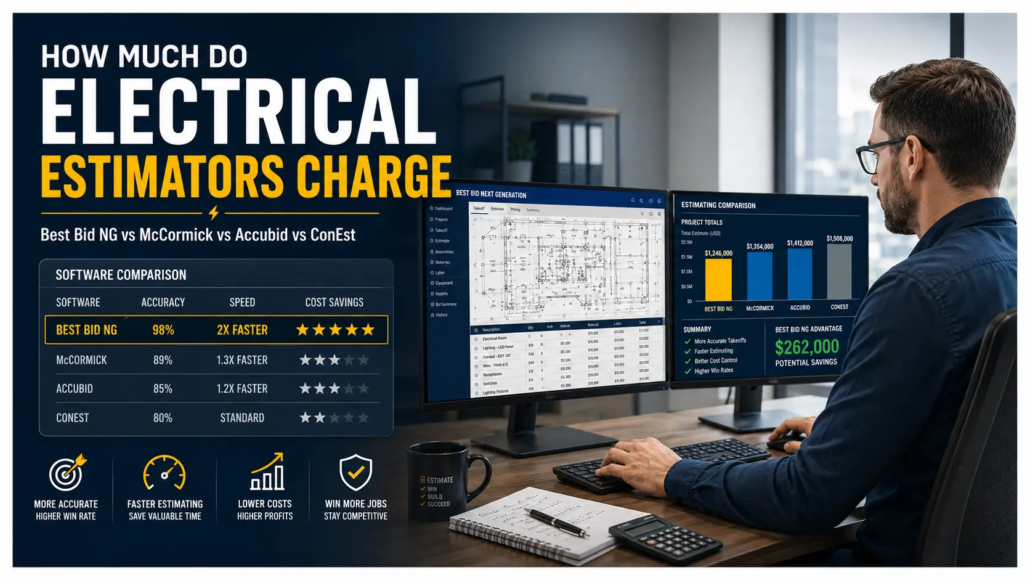
Top 5 Electrical Estimating Tools for Contractors

Top 5 Electrical Estimating Tools for Contractors

Accurate electrical estimating is one of the most critical aspects of running a successful electrical contracting business.

For independent contractors, the right estimating software can mean the difference between winning bids and losing to competitors. But with so many options on the market, how do you know which is the best fit for your business?

Our team of licensed estimators tested and reviewed the top five electrical estimating software solutions based on real-world criteria. From ease of use to cost-effectiveness, we’ve left no stone unturned.

Here’s how each tool stacks up and why Best Bid Electrical Estimating Software emerged as the clear winner.

Do you need expert advice on choosing the best estimating tool for your business? Call 800-941-7028 to speak with a licensed estimator today!

Evaluation Criteria

To help contractors find the best software for their needs, we evaluated the top solutions against the following criteria:

Key Factors We Considered

  • Ease of Use: How straightforward is the software to set up and use right out of the box? The clear winner is Best Bid. The default setting will put you on target right out of the box. Basically, all you do is enter your quantities.
  • Flexibility: Can the tool be customized to fit different estimating workflows? Again, Best Bid has designed their software to be modified. Every result can easily be changed.
  • Detailed Assemblies: Does it include prebuilt assemblies that cover everything from fixtures to small parts like screws? Best Bids Assemblies are all-inclusive down to the screws.
  • Technical Support: How available and responsive is the customer support team? Best Bid, hands down, has the best support handled by qualified estimators
  • Speed: How quickly can users generate precise estimates with minimal keystrokes? Best Bid completes an estimate with the fewest keystrokes possible.
  • Database Quality: Does the software offer up-to-date pricing databases? All software has adequate databases.
  • Material Updates: How frequently is material pricing updated, and at what cost? All software uses NetPricer and Trade Services. EBM uses Epic. Best Bid uses Real Time Pricing, which is by far the least expensive, and NetPricer.
  • On-Screen Takeoff Functionality: Does the software enable easy takeoffs directly from PDF plans? Accubid and McCormick have a multi-page Auto Count. EBM does not offer Auto Count, and Best Bid offers a single-page Auto Count.
  • Cost: Is the pricing fair, and does it include hidden fees for licenses or updates? Best Bid is the only one that offers a one-time fee with no recurring fees, unlimited licenses, and free support. The cost is about 1/3 or less.
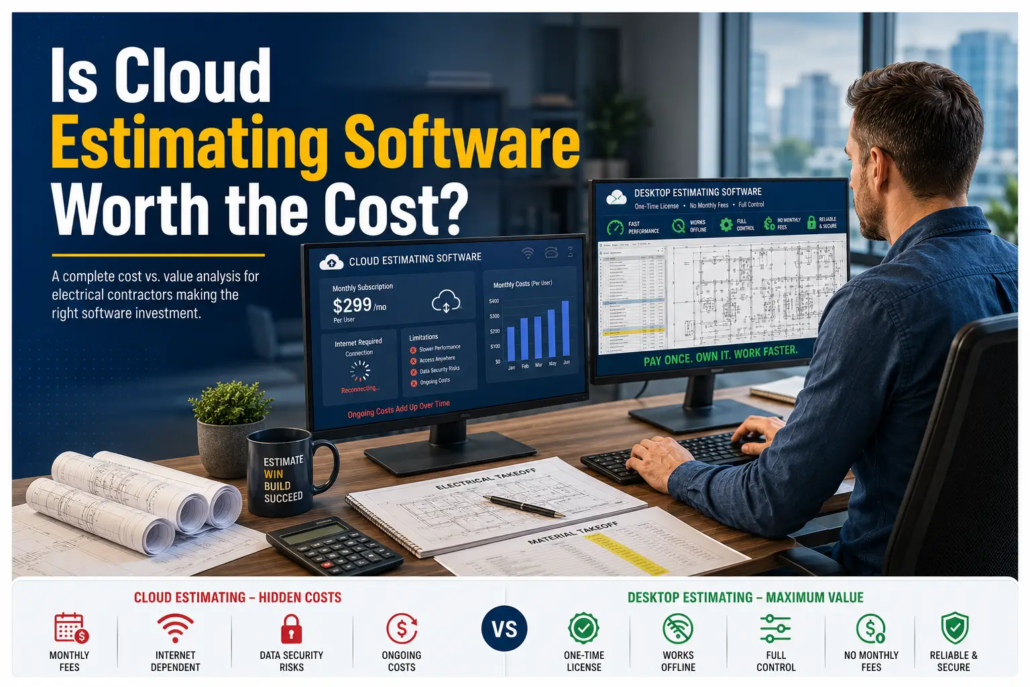
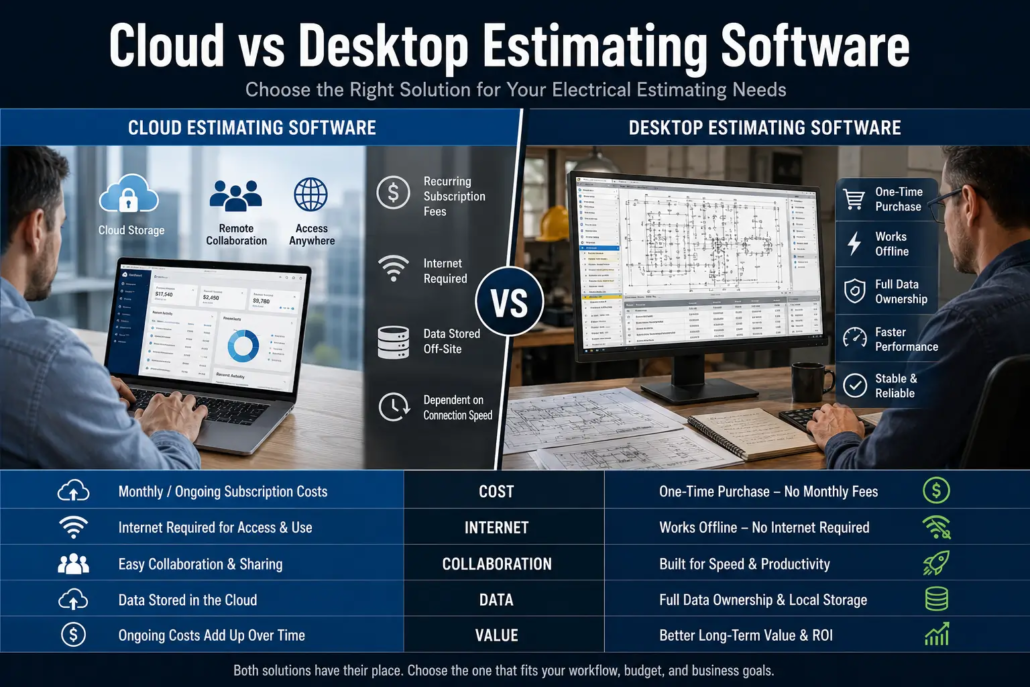
  • Cloud and Server Version Availability: Does the software offer both cloud-based and server-hosted options? Best Bid does not offer a cloud version and never will. They believe in a one-time fee.

Take the first step in simplifying your estimates. Call 800-941-7028 and see why Best Bid stands out from the competition.

Software Options Reviewed

Here’s a deep dive into how each tool performed in our review, ranked from best to worst.

1. Best Bid Electrical Estimating Software

Best Bid consistently topped our evaluation with impressive scores across nearly all criteria.

Why Contractors Love It?

    • Top scores in ease of use, flexibility, and detailed assemblies
    • Single-page Auto Count and real-time pricing features
    • One-time purchase fee with no recurring costs
    • Unlimited licenses and free lifetime support

Best Bid is the best choice for contractors seeking a cost-effective, user-friendly solution without recurring fees.

Need budget-friendly software with no monthly fees? Call 800-941-7028 to learn more about Best Bid.

2. Accubid

Accubid is a solid choice for contractors managing multi-location businesses.

  • Highlights
    • Excellent server version functionality and on-screen takeoff capabilities
  • Downsides
    • Higher cost compared to competitors
    • Less competitive support

3. McCormick

McCormick stands out with robust server and cloud version options, making it ideal for teams requiring flexibility.

  • Pros
    • High marks in cloud versions and database capabilities
  • Cons
    • Slower software speed
    • Limited flexibility

4. EBM

EBM received some of the lowest scores in our evaluation due to its lack of features essential to modern estimating workflows.

  • Weaknesses
    • Poor on-screen takeoff functionality
    • Limited detailed assemblies
  • Uses Epic for Pricing

5. Conest

Conest offers a balanced approach but fails to excel in any specific area.

  • Strengths
    • Cloud version available
    • Decent technical support
  • Weakness
    • Lacks standout features

Final Score Comparison

Score from 1–10 (10 being the best)


Criteria Accubid Best Bid McCormick EBM Conest
Ease of Use 5 10 4 9 8
Flexibility 5 9 4 4 4
Detailed Assemblies 7 9 6 2 6
Server Version 10 7 10 7 7
Technical Support 5 10 6 5 7
Speed 6 10 4 6 6
Database 8 8 8 8 8
Cloud Versions 10 0 10 0 8
Material Updates 6 7 6 6 6
On-Screen Takeoff 9 8 9 2 6
Cost 4 10 4 5 7
Total Score 75 88 71 54 73


Still undecided? Call our team of experts at 800-941-7028. We’ll help you pick the right software solution for your business.

Why Best Bid Leads the Pack?

Why Best Bid Leads the Pack

Best Bid Electrical Estimating Software outshines the competition in nearly every aspect. Here’s why it’s the go-to choice for contractors:

  • Ease of Use

Best Bid’s intuitive design ensures that even first-time users can quickly create accurate estimates. Just input your quantities and go.

  • Unmatched Flexibility

Modify assemblies, adjust settings, and customize results effortlessly to fit your unique projects.

  • Detailed Assemblies

Best Bid includes comprehensive, prebuilt assemblies covering everything down to the screws.

  • Real-Time Pricing

Stay competitive with up-to-the-minute pricing through the industry’s most cost-effective material update system.

  • Cost-Effective

Best Bid offers a one-time fee (less than ⅓ of competitors’ pricing), free updates, and unlimited licenses.

Join thousands of contractors who trust Best Bid. Call 800-941-7028 or visit our YouTube channel for a demo.

Choose Software That Fits Your Business

When selecting electrical estimating software, it is vital to choose a tool that aligns with your business model. While every tool on this list has strengths, Best Bid is the most contractor-friendly and value-driven option.

Don’t leave your estimates up to chance. Whether bidding on small local projects or managing large-scale operations, Best Bid can simplify your process and improve accuracy.

Take the guesswork out of estimating. Call 800-941-7028 today and discover why Best Bid is the industry leader.

Steps to Start an Electrician Business

Steps to Start an Electrician Business

Starting your own business as an electrician is an exciting step toward independence, profitability, and growth. Many skilled electricians wonder if they can break out of working under someone else to create something of their own. Getting your electrical license is the hardest part, but that’s the beginning.

This guide will walk you through the steps of launching a successful electrician business, focusing on what truly matters for growth, including mastering electrical estimating for commercial projects, a critical factor in achieving success.

If you’re serious about scaling your business, tools like Best Bid’s electrical estimating software and learning resources from industry experts can give you a significant head start.

Why More Electricians Are Starting Their Businesses?

Many electricians spend years working under others, helping grow someone else’s business while only scraping by financially. More than ever, experienced electricians realize their potential to step away from this traditional cycle and take a chance on themselves.

Starting your own business is bold, but the rewards are worth it. You gain control over your hours, work environment, and, most importantly, earnings. Additionally, the demand for skilled electricians, especially for commercial projects, is consistently strong, making now a great time to start your venture.

Yes, the road ahead may seem daunting. But with the proper guidance, resources, and willingness to learn, building a successful electrician business is more achievable than you might think.

Licensing Is Just the First Step

Obtaining your electrical license is an important milestone. It’s the foundation you need to start your business legally and professionally. Thankfully, resources like Mike Holt Enterprises or Paul Abernathy’s guides can help simplify preparing for exams and navigating licensing requirements.

However, you’ll face more intricate challenges once you’ve cleared this hurdle. Managing taxes, setting up business credit, and choosing a legal structure are just a few of the non-negotiable business tasks you’ll need to tackle. Licensing gets you started, but understanding the business’s basics will prepare you to succeed.

Consider this phase as building your toolbox—not just for electrical work but for entrepreneurial growth.

Building Your Team and Finding Work

One of the first dilemmas new business owners face is balancing the need for employees with the need for steady work. This catch-22 can leave many electricians stuck doing small service calls or low-paying residential wiring jobs, which may not lead to sustainable growth.

The solution? Position your business to handle commercial electrical projects.

Unlike small-scale jobs, commercial projects offer the potential for higher profits and repeat work.

To secure these projects, however, you’ll need connections with contractors and business networks and the ability to price jobs competitively and accurately. This is where many inexperienced business owners falter.

Electrical Estimating Is the Key to Growth

Electrical Estimating Is the Key to Growth

Commercial electrical projects can be a game-changer for your business, but misestimating them can cost you money and reputation.

Many startups use guesswork or outdated methods like spreadsheets to handle electrical estimating. Unfortunately, this approach often leads to underbidding, overpromising, or missing crucial details without proper training or tools.

To grow your business, you need to master electrical estimating. This skill ensures you price projects competitively while covering all your labour, material, and overhead costs. Accuracy and expertise in estimating can mean the difference between a profitable project and a financial setback.

The Role of Estimating Software and Expertise

Electrical estimating software is revolutionary for electricians looking to grow their businesses. Platforms like Best Bid offer solutions that streamline the estimating process, ensuring speed and precision while minimizing errors.

But here’s the catch: software is only as good as the person using it. You still need foundational knowledge of building accurate estimates, which is where learning resources come into play.

Steve Griffin, the expert behind Best Bid, goes above and beyond by providing highly functional software and industry-leading guidance on estimating and managing commercial projects.

His YouTube channel is packed with tutorials and tips that can empower you to take your estimating and project management skills to the next level.

By combining the right tools with proper training, you can confidently tackle larger projects that will fuel your business growth.

Actionable Steps to Get Started

Now that you understand the essentials, here’s a step-by-step roadmap to launch your electrician business successfully:

  1. Finalize Your Licensing  

Use trusted resources like Mike Holt or Paul Abernathy to pass your exams and obtain your electrical license efficiently.

  1. Build a Solid Business Foundation  

Learn critical business skills, including managing taxes, setting up lines of credit, and hiring and managing employees.

  1. Focus on Securing Commercial Projects  

Start networking with contractors and local businesses to gain access to lucrative commercial jobs.

  1. Invest in Electrical Estimating Software  

Explore software tools like Best Bid Next Generation to streamline your estimating process and reduce costly errors.

  1. Seek Guidance from Industry Experts  

Subscribe to Steve Griffin’s YouTube Channel for invaluable tutorials and insights into electrical estimating and commercial project management. Don’t miss out on free resources that can save you time, money, and headaches. Check it out here.

With these steps, you’re starting a business and setting it up for long-term success.

Create a Business That Works for You

Building your electrician business is more than just breaking free from a traditional job. It’s about creating opportunities to design the life you want, one where your efforts and skills directly benefit you and your family.

Remember, the key to scaling your business lies in mastering electrical estimating. By learning to price projects accurately and investing in the right tools, you’ll position your company as a competitive, reliable choice for commercial projects.

Are you ready to take the next step? Visit Best Bid for professional estimating tools and training, or subscribe to their YouTube channel to begin your learning journey today.

Ready to Take Control of Your Electrical Estimates?
Call us today at 800-941-7028, Best Bid – Your Best Source for Electrical Estimating Software
Experience accuracy, speed, and support you can trust.

Your success story starts now. Make it count.