
Electrical Estimating Software vs Excel
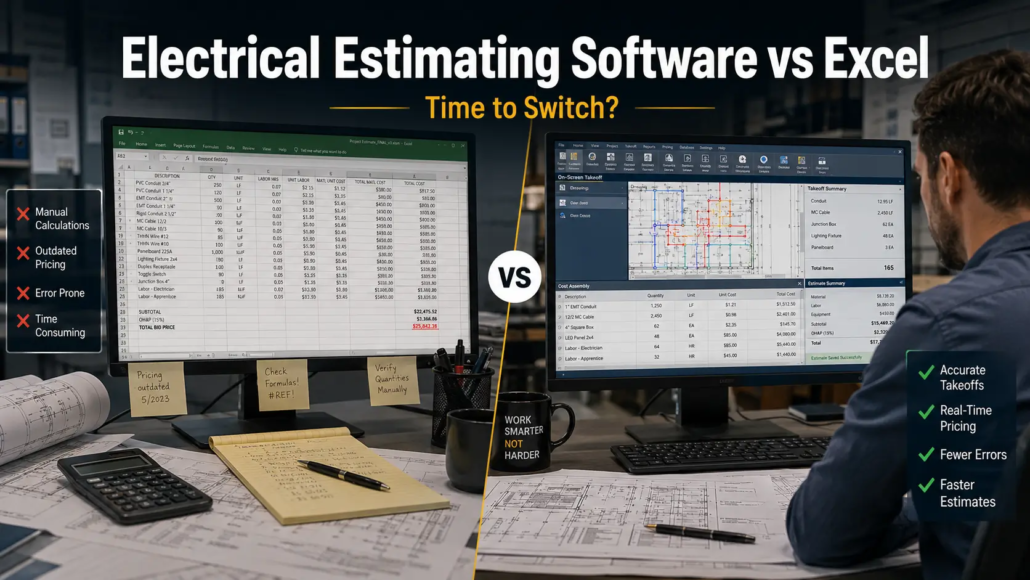
For single-location electrical contractors, Excel provides basic reporting and material tracking but fails to maintain current pricing automatically or handle quick estimate revisions.
Specialized electrical estimating software, such as Best Bid Next Generation, outperforms Excel by offering built-in on-screen takeoff (OST), automated database management, and significantly faster workflow speeds to ensure highly accurate bids.
Accurate estimating remains the biggest challenge in electrical contracting. A single miscalculation can turn a profitable job into a costly mistake. Contractors often start by using basic spreadsheet tools to manage their bids. Eventually, the growing complexity of electrical projects demands a more robust solution.
Moving from basic spreadsheets to specialized platforms is a critical step for modern contractors looking to scale.
What are the initial benefits and common pitfalls of using Excel?
Excel is highly accessible and familiar to most business owners. It provides standard reports and allows contractors to track materials across different project phases. Many single-location contractors use Excel to build their first few estimates because the software requires very little upfront investment.
However, Excel will only take you so far. The platform lacks the industry-specific tools required for complex electrical jobs. Because Excel requires manual data entry, contractors spend hours typing in item costs and labor units.
What are the main limitations of Excel for electrical estimating?
The biggest drawback of using Excel for electrical estimating is that it does not maintain current pricing automatically. Material prices fluctuate constantly, and manual updates increase the risk of costly data entry errors.
Furthermore, Excel does not allow quick estimating changes. When a client requests a sudden revision to a project scope, adjusting a spreadsheet often breaks complex formulas and requires starting large portions of the bid from scratch.
How does specialized electrical estimating software improve accuracy?
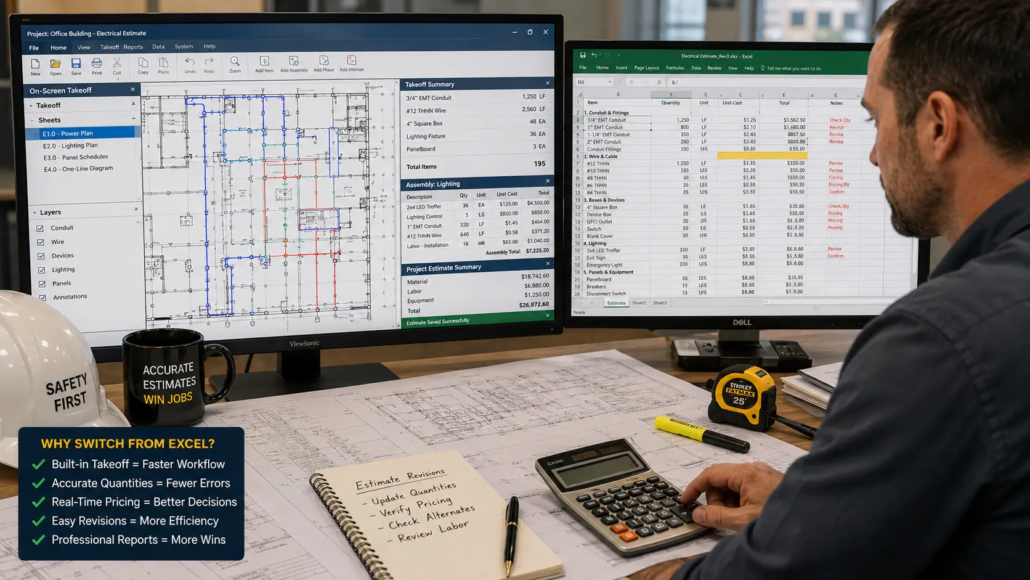
Specialized estimating software eliminates the manual bottlenecks associated with standard spreadsheets. These platforms automatically connect to pricing databases, ensuring your material costs remain accurate up to the minute. This immediate access to current data minimizes the risk of underbidding.
Additionally, specialized estimating software offers advanced capabilities that enhance overall efficiency. Instead of typing out long lists of materials, estimators can pull complete assemblies with a single click. This structured approach reduces human error and allows contractors to generate professional proposals quickly.
Which key features should contractors look for in estimating software?
When evaluating electrical estimating software, single-location contractors should prioritize specific tools that streamline the bidding process.
- Built-in OST (On-Screen Takeoff): Integrating the takeoff directly into the estimating platform eliminates the need to export data between different programs.
- Database Flexibility: The system must allow users to easily add new products and manipulate the database to fit specific project needs.
- Workflow Speed and Revision Handling: The software should process quick estimate changes and global labor adjustments without slowing down the user.
How do leading electrical estimating software options compare?
Choosing the right software requires comparing the critical features and total costs of the top platforms. Here is how four major solutions stack up for single-location electrical contractors:
Best Bid Next Generation:
Best Bid Next Generation ranks as the highest value option for small electrical shops. It is the only platform in this group featuring built-in OST. The system provides a five-star workflow speed and exceptionally high database flexibility. With a low-to-medium learning curve and a 5-user cost of approximately $2,500, Best Bid Next Generation delivers the best return on investment.
McCormick:
McCormick offers strong structured estimating and reliable consistency. It provides high database manipulation and global labor adjustments. However, it lacks built-in OST and comes with a significantly higher price tag, costing between $15,000 and $40,000 for five users.
ConEst IntelliBid:
ConEst IntelliBid features a powerful database system and high proposal generation capabilities. The workflow is more complex, resulting in a steeper learning curve. Like McCormick, it lacks built-in OST. The 5-user cost ranges from $20,000 to $60,000.
Trimble Accubid:
Trimble Accubid is an enterprise-grade system designed for massive operations. It provides high proposal generation and 1-click backup capabilities. However, it represents the highest overhead for small shops, costing between $25,000 and $75,000, and it lacks built-in OST.
Making the switch for scalable growth
Replacing Excel with specialized electrical estimating software is the most effective way to increase profitability. Solutions like Best Bid Next Generation offer the highest speed, lowest cost, and greatest flexibility for single-location contractors. By eliminating manual updates and streamlining revisions, you can bid on more jobs and win more profitable contracts.
Frequently Asked Questions
Excel is error-prone because it requires manual updates for fluctuating material costs. It also makes quick estimate changes difficult and lacks industry-specific features like built-in on-screen takeoff.
Best Bid Next Generation includes built-in OST and costs roughly $2,500 for five users. Trimble Accubid lacks built-in OST, targets large enterprise operations, and costs between $25,000 and $75,000.
Become a better estimator with training designed around your goals. Join our Online School for Electrical Estimating and learn at your pace from experienced professionals.
Call 800-941-7028 or get started today.