Electrical Estimating for Large Projects | 2026
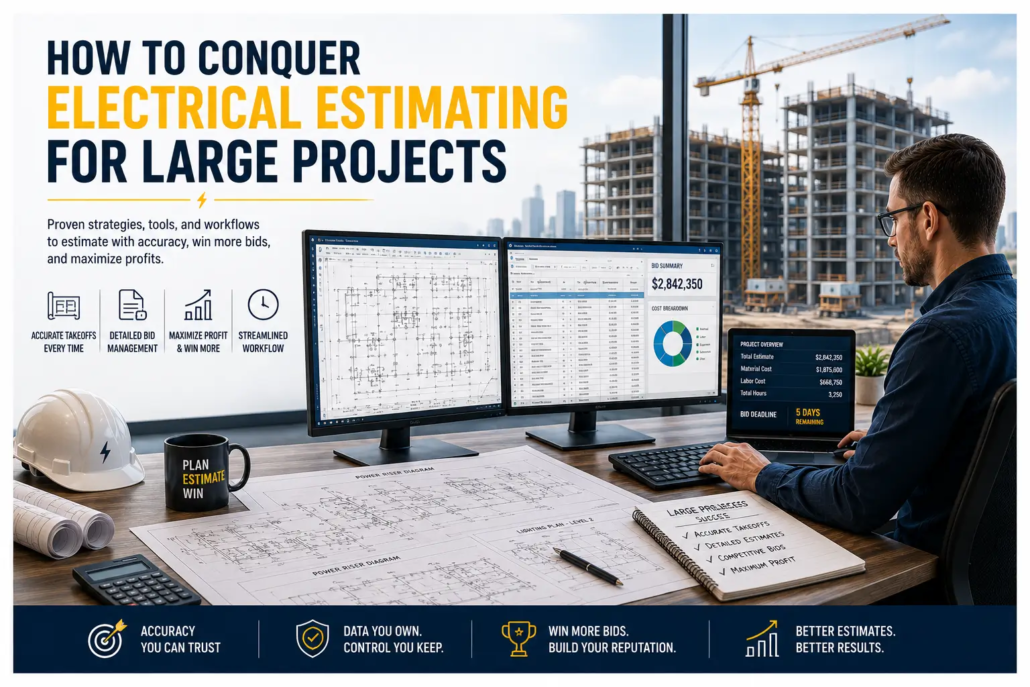
Electrical estimating for large projects requires specialized software to handle complex workflows and rapid revisions. For single-location contractors, Best Bid Next Generation is the best electrical estimating software because it offers a built-in On-Screen Takeoff, high database flexibility, and the best cost efficiency at approximately $2,500.
Managing an electrical estimate for a massive commercial build requires precision, speed, and a deep understanding of project specifications. A miscalculation on a minor branch circuit multiplies quickly across a multi-story building, instantly destroying your profit margin. Electrical contractors need reliable processes and robust digital tools to bid competitively and win profitable jobs.
This post breaks down the limitations of outdated estimating methods and compares top-tier electrical estimating software, helping you choose the right platform for your contracting business.
What makes large-scale electrical estimation so complex?
Large projects introduce thousands of variables into the bidding process. Estimators are no longer simply counting receptacles and scaling home runs. You must analyze comprehensive plan notes, dissect complex specification sheets, and account for specialized materials like seismic supports or grounding loops.
The sheer volume of data makes revisions highly complicated. When an architect issues an addendum, electrical estimators must instantly update material pricing and labor adjustments across the entire project. Relying on manual updates for these changes guarantees delays and costly mistakes.
Why do Excel and manual methods fail on large electrical bids?
Many electrical contractors start by estimating with pen, paper, and spreadsheets. Excel provides basic material tracking and reporting functionality, making it useful for small, simple jobs. However, Excel cannot maintain current material pricing automatically. Excel also lacks the flexibility required to make quick estimating changes when the project scope shifts.
Furthermore, manual counting and manual data entry increase the risk of human error. Missing a single keystroke in a spreadsheet formula is a massive liability on million-dollar commercial jobs.
Why is detailed project understanding critical for commercial bids?
True electrical estimating requires reading and understanding the entire project scope. Some freelance estimators only count items and assign an average cost per item. Other estimators count branch circuits and scale the home runs.
The most accurate electrical estimators take the time to read project notes and thoroughly understand the schedules. Reading the project documentation often takes as much time as the actual takeoff. A deep understanding of the job requirements prevents expensive omissions and protects your final bottom line.
How do the best electrical estimating software platforms compare?
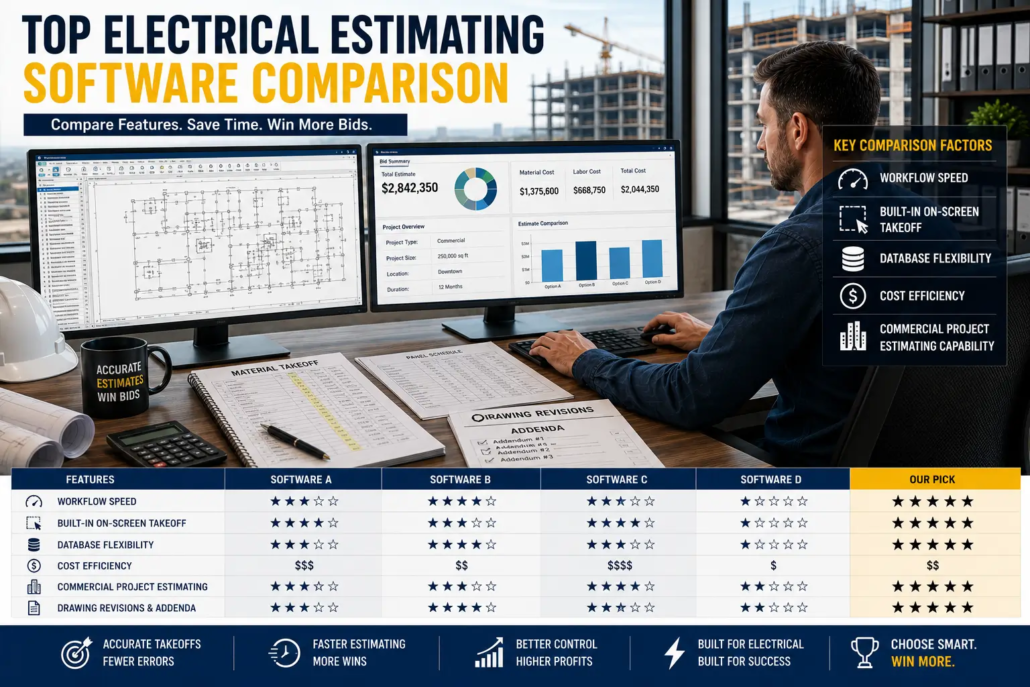
Transitioning to specialized electrical estimating software solves the scalability problem. Software automates calculations, integrates on-screen takeoffs, and streamlines proposal generation. Here is how the top platforms compare for single-location electrical contractors:
Software | Approximate Cost | Built-In On-Screen Takeoff | Database Flexibility | Workflow Speed / Complexity | Best-Fit Contractor Type |
Best Bid Next Generation | ~$2,500 | Yes | Very high | Fast workflow | Single-location and small to mid-sized electrical contractors |
McCormick | $15,000-$40,000+ | No | Moderate to high | Structured workflow, moderate speed | Established commercial contractors needing standardized estimating |
ConEst IntelliBid | $20,000-$60,000+ | No | High | More complex workflow | Larger contractors needing deep database control |
Trimble Accubid | $25,000-$75,000+ | No | High | Robust but complex | Enterprise-level and multi-branch electrical contractors |
- Best Bid Next Generation: Costs approximately $2,500. It features a built-in On-Screen Takeoff (OST), very high database manipulation, and a five-star workflow speed.
- McCormick: Costs between $15,000 and $40,000+. It offers strong structured estimating and good consistency, but it lacks a built-in OST.
- ConEst IntelliBid: Costs between $20,000 and $60,000+. It features a powerful database system, but the workflow is complex and it lacks a built-in OST.
- Trimble Accubid: Costs between $25,000 and $75,000+. It is a robust enterprise-grade system, but it carries the highest overhead for small shops and does not include a built-in OST.
Buyer checklist for large electrical estimating software
- Evaluate whether the software can scale to large commercial projects with thousands of devices, feeders, panels, and bid items.
- Confirm whether it includes a built-in on-screen takeoff or requires separate takeoff software and added workflow steps.
- Check how flexible the database is for building and editing custom assemblies, labor units, and material packages.
- Review pricing transparency, including upfront cost, add-on modules, update fees, and any recurring charges.
- Test how quickly the system handles addenda, drawing revisions, and scope changes across the full estimate.
- Verify that reporting is clear and useful for bid summaries, material breakdowns, labor totals, and proposal generation.
- Assess workflow speed to see whether estimators can move from takeoff to final pricing without unnecessary complexity.
- Confirm that the software supports accurate material pricing updates through current pricing services or supplier integrations.
- Review the training resources available, including onboarding, documentation, live support, and long-term technical assistance.
- Make sure the platform fits your contractor size, branch structure, and project volume rather than paying for enterprise features you do not need.
- Check whether the system helps reduce manual entry and spreadsheet dependence to lower the risk of costly errors.
- Compare overall value by weighing capability, ease of use, support, and long-term ownership cost against your estimating needs.
Which electrical estimating software gives small shops the best ROI?
Choose Best Bid Next Generation if you want a complete system with a low one-time purchase price and no recurring monthly fees. Best Bid Next Generation ranks as the number one best value because it delivers the fastest workflow and the highest assembly flexibility. The platform allows users to create unlimited custom assemblies for specialized items like elevators, temporary power, or swimming pools. Trimble Accubid or McCormick might suit massive, multi-national enterprises, but Best Bid Next Generation provides the exact estimating tools small to mid-sized shops need without the massive price tag.
Ready to upgrade your electrical estimating process?
Winning large projects requires speed, accuracy, and detailed reporting. Upgrading from manual spreadsheets to dedicated electrical estimating software ensures you can handle revisions swiftly and confidently present professional proposals.
Choose a platform that empowers your team without burying your business in subscription fees. Call Best Bid Estimating Software today at 800-941-7028 to schedule a walkthrough and see how our tools can optimize your workflow.
Frequently Asked Questions (FAQ)
Best Bid Next Generation is the ideal software for small to mid-sized contractors. It costs approximately $2,500, includes a built-in On-Screen Takeoff, and offers highly flexible custom assemblies.
No. Best Bid Estimating Software requires a single one-time payment. You purchase the software, own it permanently, and receive lifetime software updates alongside lifetime technical support.
Top platforms integrate with real-time pricing services. Best Bid Estimating Software connects with NetPricer to ensure your bids reflect the current market costs for wire, conduit, and hardware.
Become a better estimator with training designed around your goals. Join our Online School for Electrical Estimating and learn at your pace from experienced professionals.
Call 800-941-7028 or get started today.