Justifying electrical project costs to clients through clear pricing

Justifying electrical project costs to clients starts with a clear, itemized explanation of the work, materials, labor, overhead, and any permit or inspection fees. Show what each cost covers and explain how changes to the scope or materials affect the estimate.
Clients want to know what they’re paying for before work begins. A total without context can leave them guessing, while a straightforward breakdown makes the estimate’s value and limits easier to understand.
This guide explains how to discuss material price changes, overhead, and pricing approaches, and how to account for permits, inspections, and specialty work. It also shows how a well-defined scope and detailed electrical estimate can make cost conversations clearer and help prevent surprises as the project moves forward.
Key Takeaways
- Break out material, labor, overhead, and project-specific charges so clients can see what drives the total.
- Explain how contingency planning and clear change documentation help manage unexpected conditions and material price shifts.
- Choose hourly, per-square-foot, or flat-rate pricing based on the work scope, and explain what each approach includes.
- Show permit, inspection, and specialty-work costs as distinct estimate items, with the project requirements behind them.
- Define the scope, assumptions, and estimate factors before work begins to make pricing conversations clearer and reduce surprises.
1. Material cost increases and unexpected project expenses
Material prices can shift between estimating and purchasing, especially for copper wire or specialized equipment. Explain this risk before work starts, not after the budget changes.
For an itemized electrical project estimate, group materials by type, quantity, unit cost, and extended total. Add separate lines for equipment, labor, permits, inspections, and contingency, then state the scope and pricing assumptions. This helps clients see what changed if a supplier quote or project condition shifts.
To see how takeoffs support a transparent estimate, watch this step-by-step guide:
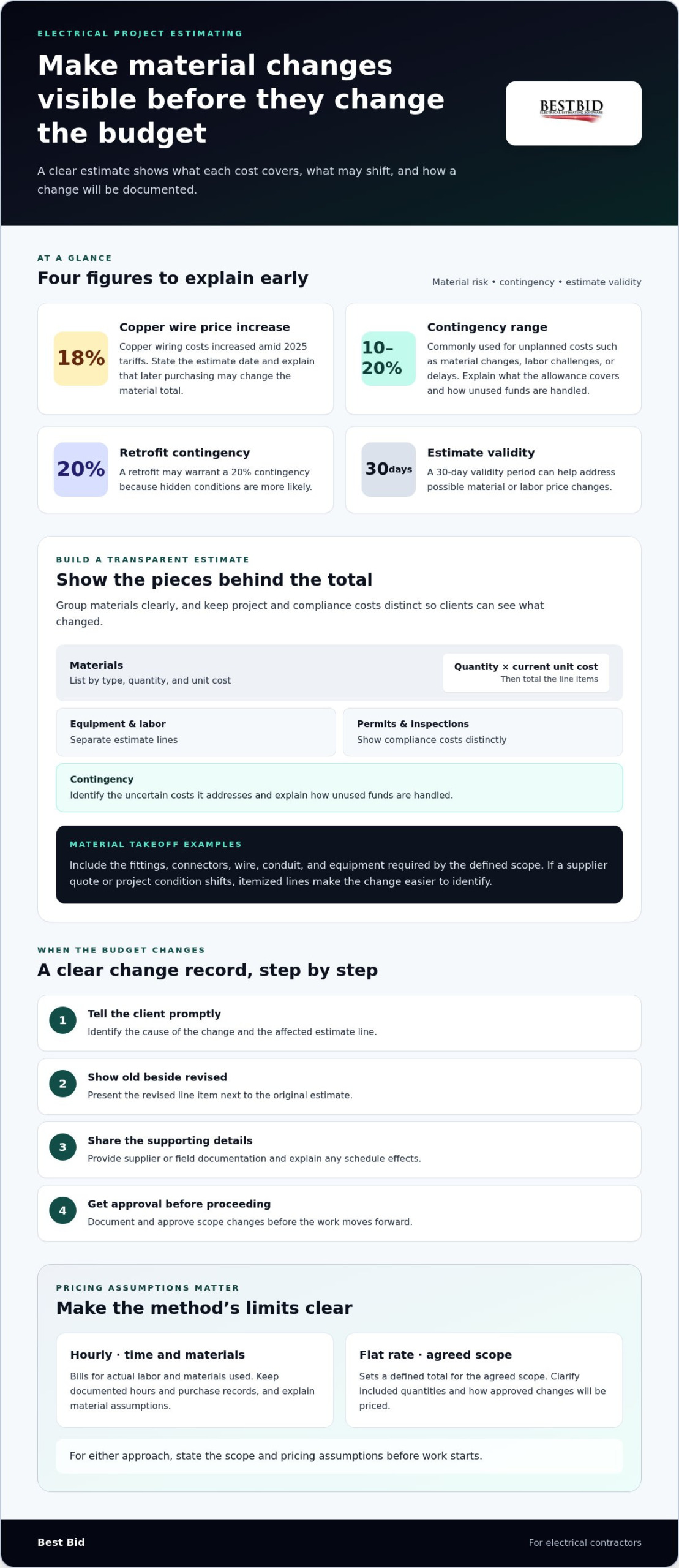
Calculate material costs from the takeoff: multiply each quantity by its current unit cost, then total the line items. Include fittings, connectors, wire, conduit, and equipment required by the defined scope. Copper wiring costs increased by 18% amid 2025 tariffs, so identify the estimate date and explain that later purchasing may change the material total.
Separate compliance costs from materials. Show them as distinct estimate lines so clients can distinguish project materials from administrative and inspection expenses.
Contingency covers potential costs that the scope cannot fully predict. Electrical estimates commonly use a 10-20% contingency for unplanned costs, including material changes, labor challenges, or delays. Retrofits may warrant a 20% contingency because hidden conditions are more likely. Explain what the allowance addresses and how unused funds are handled.
Hourly time-and-materials pricing bills for actual labor and materials used, making documented hours and purchase records essential. Flat-rate pricing sets a defined total for an agreed scope, so clarify the included quantities and how approved changes will be priced. Either way, explain the material assumptions.
To present savings and return on investment, compare the proposed cost with the specific operating savings or avoided replacement costs the project is expected to deliver. Show the assumptions behind the comparison, such as equipment use and energy consumption, rather than promising a fixed payback.
When a budget changes, tell the client promptly, identify the cause, and show the revised line item beside the original estimate. Share supplier or field documentation, explain schedule effects, and obtain approval for scope changes before proceeding. A 30-day estimate validity period can help address possible material or labor price changes.
2. Profit margin and overhead explanations
A bid must cover more than the crew’s time on site. Electrical contractors also need to account for business overhead, non-billable work, and profit. Explain these as separate parts of the price, not as an unexplained increase added at the end.
Overhead keeps the business operating between jobs. It can include office costs, vehicles, insurance, estimating, and administrative work. Commercial electrical contractors’ overhead is estimated at 25-35% of revenue before project work is priced. Use your own cost records to determine how overhead is allocated, then show clients how that portion supports the work.
Estimating is one example of non-billable time. Preparing a bid for a $500,000 commercial electrical project can take 20 to 30 hours of estimator time. Scheduling, purchasing, coordination, and job documentation also take time that may not appear as installation hours. If those tasks are excluded from pricing, the business still pays for them.
Profit is what remains after project costs and overhead. A profit margin expresses that amount in relation to revenue, so distinguish it from a markup on costs. For a commercial contractor with $10 million in revenue, the difference between 3% and 15% profit margins is $1.2 million in annual profit. The example shows why margin decisions affect the business beyond one bid.
Commercial contractors’ reported net profit margins are often 2-3%, while industry experts recommend 10-20% for a healthy business. Residential electrical contractors are advised to target a 15-40% profit margin, depending on job complexity. These figures aren’t a universal rate card. Project risk, scope, labor needs, and operating costs all influence the margin a contractor sets.
To explain a margin, start with the project’s direct costs, then show the overhead allocation and intended profit. For example, an estimate applying a 20% margin to $1,250 in costs reaches a final price of $1,500. Label the calculation clearly so the client can follow how the total was formed.
Non-billable time also affects capacity. Explain which tasks the estimate accounts for, and avoid presenting revenue potential as guaranteed savings.
Clear estimating practices make these calculations easier to review and refine. Explore electrical estimating resources for ways to build more consistent project estimates.
Electrical project estimates help customers and contractors understand the expected job cost before work begins. Detailed plans and timelines clarify what the price covers. A project with four site visits, for example, can show the labor included and when it is expected.
Communication among electrical contractors, general contractors, and other trades can help keep projects on schedule and within budget. Contractors should maintain a comprehensive safety program that includes worker training in safe work practices. Include membership discounts in standard prices, and charge customers outside membership agreements a premium.
3. Hourly, per-square-foot, and flat-rate pricing
Choose a pricing method that suits the work and makes its assumptions visible. Hourly pricing ties labor charges to time worked, per-square-foot pricing suits defined installation or rewiring scopes, and flat rates set a price for a specified task. Each approach needs a clear scope so clients can compare value, not just totals.
Hourly billing can suit troubleshooting or retrofits where existing wiring is uncertain. Record labor by task, such as assessment, preparation, installation, and testing, so clients can see what the hours cover.
Per-square-foot pricing gives clients a useful starting point for defined work. The project’s size, age, and complexity affect the estimate. Clarify whether the calculation covers wiring, equipment, and labor, or only selected work.
Flat-rate pricing works well for repeatable tasks with a known scope. Describe the included work and identify conditions that would change the agreed scope.
New builds and retrofits call for different estimating assumptions. A new-build lighting estimate should make the assumed assessment, design review, compliance checking, and installation work clear. Assessing existing wiring in an older home may take 2-3 hours before the full retrofit scope is clear. Those steps affect labor costs and the pricing method that best represents the work.
Commercial pricing must account for bid preparation as well as field labor. Estimating software can help organize quantities and labor assumptions, while the contractor’s operating costs inform the rate used to price the work.
Tiered pricing can present alternatives without obscuring scope. Offer distinct options, such as a defined base scope, an expanded equipment allowance, or additional specified work. State what changes between tiers, including wiring, equipment, labor, and project deliverables. Avoid calling an option “better” without explaining its practical difference.
To compare electrical contractor quotes fairly, align the scope, quantities, equipment, exclusions, and pricing basis. Check whether each quote uses hourly, per-square-foot, or flat-rate pricing, then compare the included work rather than choosing by total alone.
Download as HTML
4. Permit, inspection, and specialty-work costs
Permit and inspection charges belong in the estimate as distinct project costs, not hidden within materials or labor. Residential electrical permit and inspection fees vary with local regulations. Show each fee separately, identify the related work, and distinguish the charge from contractor time spent preparing documents or coordinating an inspection.
Build the estimate around the project sequence. First, identify the electrical scope and applicable permit or inspection costs. List those charges as separate line items, then explain when each cost is expected, such as before installation or after the work is ready for inspection. This gives clients a clearer picture of project cash flow.
Don’t combine an authority’s fee with administrative overhead. If the estimate includes time to prepare paperwork or coordinate access, label that labor separately. For example, show an inspection fee on one line and coordination hours on another. This helps clients distinguish amounts paid to an outside authority from charges for contractor work.
Inspection planning also affects labor and scheduling. Include the inspection stage in the project timeline, and explain how a required correction could affect subsequent work. If inspection feedback calls for an installation adjustment, document the requested change, its effect on scope, and any resulting labor or material revision before proceeding.
Specialty work needs the same visibility. A project involving a generator connection, complex lighting controls, or specialized equipment may require additional planning, materials, coordination, or testing. Name the equipment or work category in the estimate and explain the task it supports. Avoid a broad “specialty electrical” allowance without stating its purpose.
Separate specialty-work costs by what generates them: equipment, installation labor, design coordination, or testing. For example, a controls scope could distinguish the control equipment from the labor needed to install and test it. This makes the estimate easier to revise if the client changes equipment or removes part of the scope.
Local requirements can differ, so tie each permit-related estimate line to the project location and applicable work. Keep fee records and inspection documentation with the estimate. If the local authority changes a charge or the inspection scope changes, update the affected line and explain why instead of revising the total without context.
Overhead can include contractor time spent managing permits, but it should not disguise authority fees. State whether coordination is included in the labor estimate or shown separately. Identify who schedules the inspection and prepares project documents. Clear responsibilities prevent duplicate charges and make the installation sequence easier to follow.
Before presenting the final estimate, compare its scope with the inspection plan. Confirm that specialty equipment, installation tasks, coordination, and applicable fees each appear once. Reviewing the estimate line by line with the client connects every charge to a project requirement and gives both parties a clear basis for discussing changes.
5. What factors affect electrical project estimates and pricing
Justifying electrical project costs to clients starts with a scope that identifies the work, quantities, and assumptions before pricing begins. Review the scope with the client before work starts. A commercial lighting estimate, for example, should distinguish listed fixtures and installation tasks from later additions. Record exclusions and responsibilities beside the related work so clients understand what the estimate covers.
Site conditions influence the labor plan. An electrical job might include two hours to assess a property and identify obstacles. Explain how access, existing conditions, and the installation route affect planned work.
Separate assessment from installation tasks and document relevant observations. This connects the estimate to the actual site rather than an assumed layout.
Labor rates should reflect the workforce and the business’s cost basis. Electrical contractors can calculate labor rates using labor averages from the past 12 months or average wages and crew expertise. State the approach used, then show how crew composition and task duration shape labor totals. For example, the estimate can distinguish work assigned to a lead electrician from tasks completed by other crew members.
Timing can also affect the rate. Electrical emergency or after-hours rates often double the usual hourly rate. Explain whether the work is urgent or scheduled, and identify the rate basis in the estimate.
Businesses also incur labor and travel costs when preparing estimates. Describe how those costs are treated so clients can tell whether estimate preparation or travel is included.
Coordination affects schedule and cost when electrical work depends on other trades. Keep written records when another contractor causes a project delay, noting the date, affected task, and schedule impact. This connects the delay to its cause and helps distinguish the original electrical scope from added work or a revised sequence.
Work methods can change the labor plan. Prefabricating electrical materials off site can lower labor costs and improve assembly quality control. Consider whether the project layout and delivery sequence support this approach. Explain which tasks happen off site and which remain at the job site so clients understand how the work plan affects the estimate.
Unusually low bids can lead to change orders that increase project costs and consume time. Compare scope, exclusions, schedule assumptions, and included work before comparing totals. A consistent method for justifying electrical project costs to clients ties each estimate line to a defined task or decision, making revisions easier to explain when project conditions shift.
Use a repeatable review: confirm scope, note site conditions, state labor assumptions, and record schedule dependencies. For electrical estimating resources that support this process, explore electrical estimating resources.
Best Bid: Best Bid Next Generation
Best Bid Next Generation helps electrical contractors build detailed project bids when manual takeoffs make pricing harder to track and explain. Its on-screen takeoff tools, automatic conduit and wire length calculations, and bid-creation features support organized estimates with quantities and costs that are easier to review.
Use it to create a consistent process for turning project documents into clear electrical bids. Best Bid Hybrid Pro and Accura Cadd PDF Draw provide additional tools for electrical estimating and PDF takeoff workflows. Contractors who want to strengthen their estimating skills can follow trade-focused training through the Online School for Electrical Estimating.
Explore Best Bid Next Generation or visit bestbidestimating.com to learn more.
Make pricing clarity part of every project
The strongest estimate is more than a number on a proposal. It starts a practical conversation about what the work includes, how decisions affect the scope, and how both sides will handle changes. Make that conversation part of your process, not something reserved for clients who question the bill.
Build a repeatable habit: explain the estimate in plain language, record agreed assumptions, and connect updates to the client’s decisions. This makes justifying electrical project costs to clients an ongoing part of project communication and helps your team present its work consistently and confidently.
Clear pricing takes craft, but you don’t have to refine your estimating process alone. If you’re ready to explore tools and support for electrical estimating, contact Best Bid. Keep the conversation open, make each estimate easier to understand, and move into your next project with a clearer plan.
Frequently Asked Questions
How do you explain electrical project costs to clients?
Explain the estimate by connecting each cost to the work it covers. Break out labor, materials, equipment, and other project expenses, then show quantities and assumptions, such as the number of devices or planned wiring route. If a revised plan adds circuits, for example, identify the added materials and installation work. Best Bid Next Generation includes on-screen takeoff and conduit and wire calculations to help contractors build detailed bids.
How do you justify contingency and unexpected costs in electrical projects?
Present contingency as a separately identified allowance for specific uncertainties, not an unexplained markup. Describe the risk it addresses, such as concealed conditions that could affect an existing route, and explain how added work will be priced and approved. If the risk doesn’t occur, state how the unused allowance is handled under the agreement. For unexpected changes, document the condition, its effect on scope, and the client’s approval before proceeding when practical.
How do you explain code compliance and safety costs to clients?
Link each compliance or safety-related cost to the project documents, applicable requirements, and work needed to meet them. For example, itemize specified equipment, additional installation labor, testing, or inspection-related work when applicable. Explain what each item does and why it belongs in the scope instead of presenting it as a generic surcharge. If plans or site conditions change, clarify whether the revised work affects these items and the estimate.




 Electrical contractor reviewing project costs after winning a construction bid