The Philosophy Behind Electrical Estimating: What Contractors Must Understand
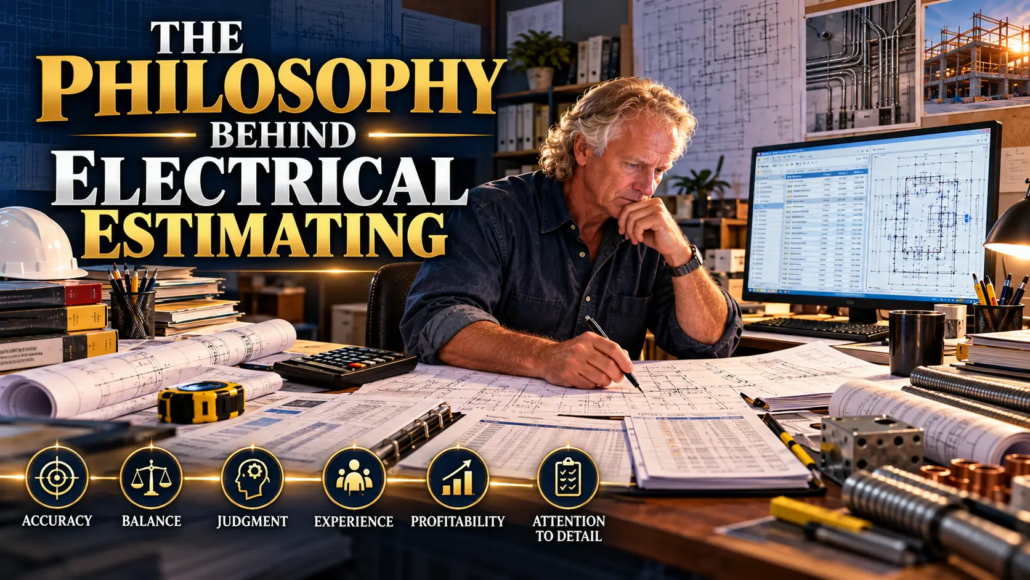
The Philosophy Behind Electrical Estimating: What Every Contractor Must Understand
Electrical estimating is more than math — it is a discipline with its own philosophy. Steve Griffin explains the principles that separate profitable estimators from struggling ones.
By Steve Griffin · Founder, Best Bid Electrical Estimating Software · July 23, 2026 · 8 min read
Section 10: The Philosophy of Estimating
Estimating is not just counting. Estimating is not just math. Estimating is not just software.
Estimating is a discipline. A craft. A skill.
A mindset. A way of thinking. A way of seeing a project before it exists.
A way of understanding labor, materials, risk, and opportunity.
Estimating is decision making. Estimating is risk management. Estimating is pattern recognition.
Estimating is experience. Estimating is judgment. Estimating is balance.
Estimating is the art of predicting the future using the information available in the present. It is the art of turning drawings into dollars. It is the art of turning lines on paper into labor hours.
It is the art of turning symbols into materials. It is the art of turning complexity into clarity.
Estimating is not about perfection. Estimating is about reliability.
Estimating is not about exactness. Estimating is about consistency.
Estimating is not about detail. Estimating is about understanding.
Estimating is not about speed. Estimating is about efficiency.
Estimating is not about guessing. Estimating is about informed judgment.
Estimating is not about software. Estimating is about the estimator.
Software is a tool. The estimator is the craftsman.
Software should not replace the estimator — it should empower the estimator. Software should not take over thinking — it should reduce thinking. Software should not force decisions — it should simplify decisions. Software should not create complexity — it should eliminate complexity.
Balance is designing software that works with the estimator — not against them.
Estimating is also about understanding human behavior. Contractors behave in predictable ways. Suppliers behave in predictable ways.
Labor behaves in predictable ways. Competition behaves in predictable ways. Markets behave in predictable ways.
Estimators must understand these patterns. Estimators must anticipate these patterns. Estimators must adapt to these patterns.
Balance is designing software that reflects real world behavior — not theoretical behavior.
Estimating is also about understanding risk. Every project has risk. Every decision has risk.
Every assumption has risk. Every shortcut has risk. Every detail has risk.
Every omission has risk.
Estimators must manage risk. Estimators must minimize risk. Estimators must anticipate risk. Estimators must balance risk.
Balance is designing software that reduces risk — not software that increases risk.
Estimating is also about understanding opportunity. Every project has opportunity. Every decision has opportunity.
Every assumption has opportunity. Every shortcut has opportunity. Every detail has opportunity.
Every inclusion has opportunity.
Estimators must identify opportunity. Estimators must maximize opportunity. Estimators must leverage opportunity. Estimators must balance opportunity.
Balance is designing software that reveals opportunity — not software that hides opportunity.
Estimating is also about understanding labor. Labor is the most expensive part of most electrical projects. Labor is the most variable part of most electrical projects. Labor is the most unpredictable part of most electrical projects.
Estimators must understand labor deeply. Estimators must understand labor productivity. Estimators must understand labor conditions.
Estimators must understand labor limitations. Estimators must understand labor efficiency.
Balance is designing software that reflects real labor — not ideal labor.
Estimating is also about understanding materials. Materials fluctuate. Materials vary.
Materials change. Materials have lead times. Materials have availability issues.
Materials have substitutions. Materials have alternatives.
Estimators must understand materials. Estimators must understand material cost. Estimators must understand material availability.
Estimators must understand material risk. Estimators must understand material opportunity.
Balance is designing software that reflects real materials — not theoretical materials.
Estimating is also about understanding the field. The field is where the work happens. The field is where the drawings meet reality.
The field is where the estimate becomes installation. The field is where labor meets materials. The field is where mistakes become expensive.
The field is where assumptions become consequences.
Estimators must understand the field. Estimators must understand field conditions. Estimators must understand field limitations.
Estimators must understand field challenges. Estimators must understand field workflow.
Balance is designing software that reflects field reality — not office theory.
Estimating is also about understanding the customer. Customers behave in predictable ways. Customers have expectations.
Customers have budgets. Customers have priorities. Customers have preferences.
Customers have patterns.
Estimators must understand customers. Estimators must understand customer behavior. Estimators must understand customer expectations.
Estimators must understand customer priorities. Estimators must understand customer patterns.
Balance is designing software that supports customer expectations — not software that complicates them.
Estimating is also about understanding competition. Competition is fierce. Competition is unpredictable.
Competition is aggressive. Competition is strategic. Competition is opportunistic.
Estimators must understand competition. Estimators must understand competitive behavior. Estimators must understand competitive pricing.
Estimators must understand competitive strategy. Estimators must understand competitive patterns.
Balance is designing software that supports competitive bidding — not software that slows it down.
Estimating is also about understanding profit. Profit is the goal. Profit is the purpose.
Profit is the reason contractors estimate. Profit is the reason contractors bid. Profit is the reason contractors work.
Estimators must understand profit. Estimators must understand profit margins. Estimators must understand profit risk.
Estimators must understand profit opportunity. Estimators must understand profit strategy.
Balance is designing software that protects profit — not software that threatens it.
Estimating is also about understanding time. Time is limited. Time is valuable.
Time is expensive. Time is unforgiving. Time is competitive.
Estimators must understand time. Estimators must understand deadlines. Estimators must understand workflow.
Estimators must understand efficiency. Estimators must understand productivity.
Balance is designing software that saves time — not software that wastes it.
Estimating is also about understanding clarity. Clarity is essential. Clarity is powerful.
Clarity is efficient. Clarity is profitable. Clarity is competitive.
Estimators must understand clarity. Estimators must understand clear workflow. Estimators must understand clear structure.
Estimators must understand clear decisions. Estimators must understand clear assumptions.
Balance is designing software that increases clarity — not software that creates confusion.
Estimating is also about understanding simplicity. Simplicity is powerful. Simplicity is efficient.
Simplicity is profitable. Simplicity is competitive.
Estimators must understand simplicity. Estimators must understand simple workflow. Estimators must understand simple decisions.
Estimators must understand simple structure. Estimators must understand simple assumptions.
Balance is designing software that simplifies — not software that complicates.
Estimating is also about understanding complexity. Complexity is unavoidable. Complexity is inherent.
Complexity is real. Complexity is part of the job.
Estimators must understand complexity. Estimators must understand complex drawings. Estimators must understand complex installations.
Estimators must understand complex materials. Estimators must understand complex labor.
Balance is designing software that manages complexity — not software that increases it.
Estimating is also about understanding judgment. Judgment is experience. Judgment is intuition.
Judgment is pattern recognition. Judgment is understanding. Judgment is wisdom.
Estimators must understand judgment. Estimators must understand when to trust the software. Estimators must understand when to override the software.
Estimators must understand when to adjust. Estimators must understand when to simplify. Estimators must understand when to dig deeper.
Balance is designing software that supports judgment — not software that replaces it.
Estimating is also about understanding confidence. Confidence is essential. Confidence is powerful.
Confidence is profitable. Confidence is competitive.
Estimators must understand confidence. Estimators must understand confident numbers. Estimators must understand confident workflow.
Estimators must understand confident decisions. Estimators must understand confident assumptions.
Balance is designing software that builds confidence — not software that undermines it.
Estimating is also about understanding trust. Trust is essential. Trust is powerful.
Trust is profitable. Trust is competitive.
Estimators must trust their software. Estimators must trust their workflow. Estimators must trust their numbers.
Estimators must trust their decisions. Estimators must trust their assumptions.
Balance is designing software that earns trust — not software that demands it.
Estimating is also about understanding the future. The future is uncertain. The future is unpredictable.
The future is competitive. The future is opportunity.
Estimators must understand the future. Estimators must understand future risk. Estimators must understand future opportunity.
Estimators must understand future strategy. Estimators must understand future patterns.
Balance is designing software that adapts to the future — not software that becomes obsolete.
Estimating is also about understanding balance itself. Balance is the foundation. Balance is the anchor.
Balance is the compass. Balance is the guide. Balance is the philosophy.
Balance is the difference between:
- A tool and a burden
- A solution and a problem
- A system and a mess
- A win and a loss
Balance is the core principle that guides every other principle.
Balance is everything.
Key Principle
The principle in this section is one of 30 that together form a complete philosophy of electrical estimating — built from 50 years of real-world experience bidding and winning electrical work. Every principle connects to every other. Master them together.
Frequently Asked Questions
Questions electrical contractors ask about electrical estimating philosophy.
📚 Complete Series Navigation