Bid Day in Electrical Estimating: Preparation, Pressure, and Profit

EVERYBODY HAS A FIRST
One small adjustment. One missed quote. One assumption.
One mistake. Sometimes, that is all it takes to change the outcome of an electrical construction bid.
After more than 50 years in the electrical contracting industry, I have learned that Bid Day is about much more than submitting the lowest number. It is about preparation, accuracy, decision-making, and staying calm when unexpected problems arise.
As an electrical estimator, I have experienced the pressure of watching weeks of work come down to a single submission. I have seen bids won by surprisingly small amounts and lost because of equally small differences. But one lesson has stayed with me throughout my career: winning the bid is important, but making a profit on the project is what truly matters.
In this article, I share what Bid Day taught me about electrical estimating, managing last-minute challenges, and building a more reliable bidding process. I share many of these lessons in my book, Everybody Has A First.
Controlled Chaos: Why Preparation Matters on Bid Day
I have seen computers crash on Bid Day, power failures interrupt work, printers quit functioning, and fax machines jam at the worst possible moment. I have watched phone lines become overloaded and seen estimators re-enter entire estimates in the final minutes because a file became corrupted.
Supplier problems can create just as much pressure. A supplier might promise pricing early in the process but become difficult to reach when the final quote is needed. General contractors may also issue addendums just hours before the submission deadline, forcing estimators to review changes when time is running out.
If something can go wrong, it often seems to happen on Bid Day. That is why I believe preparation is one of the most important skills an electrical estimator can develop. You do not prepare because you expect everything to go smoothly. You prepare because you know that eventually, something will not.
A reliable estimating process should include organized bid documents, carefully tracked supplier quotes, secure estimate files, and a clear method for reviewing addendums. Where possible, maintain backups and identify alternative ways to access essential information if equipment or software fails.
The best estimators are not prepared for every possible problem. They are prepared to respond when problems occur.
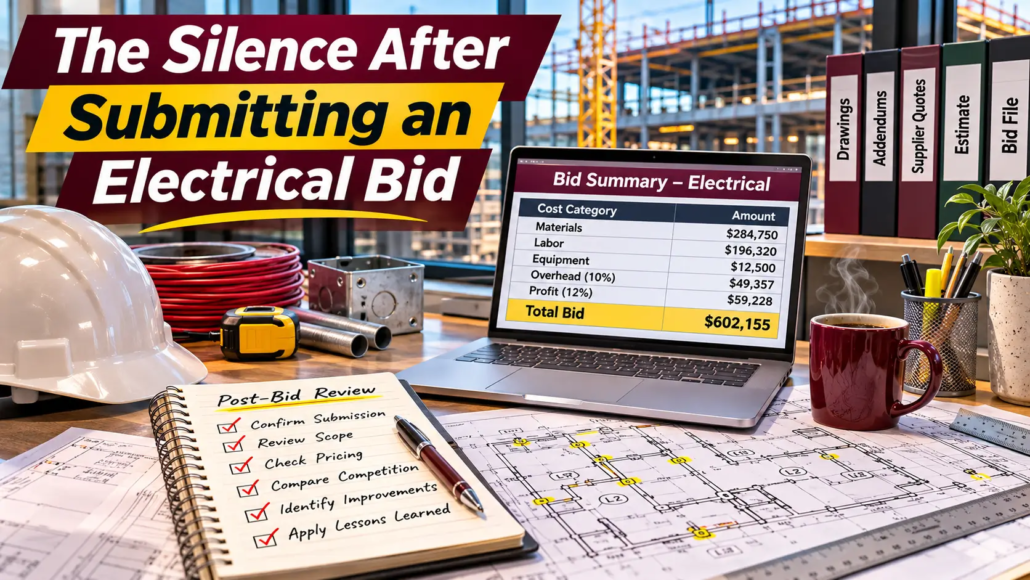
The Silence After Submitting an Electrical Bid
Once the bid is submitted, the atmosphere changes. The phones become quieter, conversations slow down, and the team waits for the results. Those minutes can feel longer than the hours spent preparing the estimate.
Everyone wants to hear the same words: “We got it.” Of course, sometimes the call brings disappointing news: “We missed it.”
Construction bidding can be incredibly competitive. I have seen projects won by amounts so small that I could hardly believe the final result. I have also lost bids by similarly small margins and spent days thinking about what might have made the difference.
Could I have secured a better material price? Did I overlook a requirement? Was my labor allowance accurate?
Did another contractor understand the scope differently? These are the kinds of questions that make electrical estimating both challenging and rewarding.
Every bid provides an opportunity to learn. A successful estimator reviews the outcome, identifies potential improvements, and uses that information to strengthen future estimates. Whether I won or lost, I wanted to understand why.
Celebrating a Bid Win Without Losing Focus
Winning an electrical construction bid feels good, and it should. After long hours of reviewing drawings, calculating quantities, checking labor costs, obtaining supplier quotes, and preparing the final submission, a successful result provides a welcome sense of accomplishment.
The team smiles. Congratulations are exchanged. Everyone begins thinking about the project ahead. But I learned that celebrating a win should not mean abandoning the discipline that helped secure it.
Winning a bid is a significant milestone, but it also creates new responsibilities. The contractor must deliver the work within the agreed scope, coordinate the electricians, purchase materials, manage schedules, and meet the customer’s expectations.
Before the excitement takes over, I recommend reviewing the final estimate and making sure the assumptions, exclusions, supplier quotations, and scope details are clearly documented. The project team needs to understand what was included in the price and which conditions could affect the final cost.
A bid win is worth celebrating. A well-executed, profitable project is an even greater achievement.
The Question Every Electrical Estimator Should Ask: What Did I Leave Out?
After the excitement fades, one question often returns to an estimator’s mind: “What did I leave out?” If my bid is significantly lower than the competition, I want to understand why. Did I identify a legitimate cost advantage, or did I overlook something important?
Perhaps another contractor priced the work differently. Maybe I found a more competitive supplier. Alternatively, I might have misunderstood a drawing, missed an addendum, underestimated labor, or failed to account for a particular requirement.
I do not believe estimators should ignore these questions simply because they have won the work. A little doubt can be useful when it encourages careful review. It reminds us that no matter how much experience we have, we can still make mistakes.
The goal is not to become so uncertain that every decision becomes difficult. The goal is to remain confident while being willing to question assumptions and verify important details.
In my experience, successful electrical estimating requires a balance of knowledge, judgment, discipline, and humility. I also learned that winning a job and making money on a job are not necessarily the same thing. The estimate wins the project. The field has to perform it.
Winning the Bid Is Not the Finish Line
One of the biggest misconceptions about electrical estimating is that the primary objective is to submit the lowest price. I see it differently.
Winning the bid gives you the opportunity to perform the work. Profitability determines whether that opportunity becomes a business success.
Once the project is awarded, the estimate becomes a real commitment. Electricians must complete the installation. Purchasing must obtain the required materials.
Project managers must coordinate schedules, monitor costs, and keep the work moving. The contractor must meet contractual obligations while managing the financial realities of the project.
If the estimate is inaccurate, those weaknesses may become apparent during construction. An underestimated labor allowance can put pressure on the schedule and budget. Missing materials can lead to additional costs. An overlooked scope requirement can create disputes or force the contractor to absorb expenses that were not properly accounted for.
That is why I never wanted to focus exclusively on being the low bidder. I wanted to know whether the number was accurate and whether the company could complete the project profitably.
The real objective is to submit a competitive bid based on a thorough understanding of the drawings, specifications, quantities, labor requirements, material prices, and project conditions. Anyone can occasionally submit the lowest number. The challenge is being competitive for the right reasons.
How Electrical Estimators Can Prepare for Bid Day
After thousands of estimates, I still believe that a consistent process is one of the best ways to reduce unnecessary pressure on Bid Day.
- Review drawings and specifications carefully: Understand the scope, drawings, specifications, and addendums. A small overlooked detail can affect quantities, labor requirements, or material costs.
- Track supplier quotes: Keep an organized record of supplier pricing, the items covered, applicable conditions, and outstanding quotations.
- Maintain backup files: Protect estimate files and essential bid documents so you can recover if a computer fails or a file becomes corrupted.
- Allow time for final checks: Review quantities, labor calculations, material costs, scope coverage, and submission requirements before the deadline.
- Document assumptions and exclusions: Make sure the estimating and project teams understand what the bid includes and excludes.
- Review the result after every bid: Whether you win or lose, look for lessons that can improve future estimates.
For additional learning opportunities, visit the Online Electrical Estimating School.
Looking Back: What Bid Day Taught Me
Even after thousands of estimates, I never lost the excitement of Bid Day. There is something special about watching weeks of preparation come down to one moment. It is part competition, part strategy, part faith, and part controlled panic.
I honestly miss the challenge—not necessarily the stress, but the responsibility of putting together a number that could influence the future of a company. A good estimate can create opportunities for growth. A bad estimate can create financial problems that continue long after the bid has been awarded.
That responsibility is one of the reasons I have always respected the estimating profession. Over the years, my experiences have reinforced several important lessons.
These are lessons I explore in my book, Everybody Has A First, which reflects on the experiences and challenges that shape a career.
- Preparation reduces unnecessary panic.
- Every estimator needs a backup plan.
- Winning a bid is the beginning of the next challenge.
- Reviewing assumptions helps prevent avoidable mistakes.
- Profit matters more than simply being the lowest bidder.
My advice is simple: enjoy winning, take a few minutes to celebrate, and then get back to work. The estimate earns you the opportunity. Execution determines whether the project becomes a success.
Best Bid Rules for a Successful Bid Day
- Never stop checking until the bid is submitted. Review the important details and confirm that the submission is complete.
- Always have a backup plan. Prepare for technical problems, missing quotes, and last-minute changes.
- Protect your bid information. Follow the applicable submission instructions and maintain control over your final pricing.
- Celebrate the win, but verify the estimate. Review the assumptions and scope before the project moves forward.
- Focus on profitability. Being the lowest bidder is not enough if the project cannot be completed profitably.
Frequently Asked Questions About Electrical Estimating and Bid Day
- What is Bid Day in electrical estimating?
Bid Day is the deadline when electrical contractors finalize and submit their prices for a construction project. It often involves reviewing supplier quotes, confirming quantities and labor costs, checking addendums, and ensuring the bid is submitted correctly and on time.
- Why is preparation important for electrical contractors on Bid Day?
Preparation helps estimators respond to unexpected problems such as computer failures, missing supplier quotes, late addendums, and last-minute changes. Organized documents, backup files, and a consistent review process can reduce disruption and help protect bid accuracy.
- What should an electrical estimator check before submitting a bid?
An estimator should review the drawings, specifications, addendums, material quantities, labor calculations, supplier quotations, exclusions, and submission requirements. The final review should also confirm that the estimate reflects the intended scope of work.
- Why might an electrical contractor win a bid but still lose money?
A contractor can win a bid and lose money if the estimate underestimates labor or material costs, overlooks part of the scope, uses inaccurate pricing, or fails to account for relevant project conditions. Poor project execution can also affect profitability.
- How can electrical estimating software help with bid preparation?
Electrical estimating software can help contractors organize estimating information, calculate costs, and prepare reports. Its usefulness depends on the software, the quality of the project information entered, and the estimator’s review process. Software supports estimating judgment but does not replace it.
- What should an estimator do after winning an electrical construction bid?
The estimator should help ensure a smooth handover to the project team. This includes communicating the scope, documenting assumptions and exclusions, identifying important supplier quotes, and highlighting uncertainties that could affect costs or execution.
- Is submitting the lowest electrical bid always the best strategy?
No. The lowest bid does not automatically produce the best business outcome. Contractors need to submit competitive prices that accurately reflect the work and allow for successful, profitable execution.
Need Help Improving Your Electrical Estimating Process?
After decades in electrical contracting, I understand how much pressure comes with preparing an accurate estimate and submitting it on time. A consistent process, careful review, and reliable estimating tools can help contractors manage that responsibility.
Learn more about Best Bid Electrical Estimating Software, review the available pricing options, or call 800-941-7028 to discuss your electrical estimating needs.
I encourage every estimator to keep learning, question assumptions, and treat each bid as an opportunity to improve. Bid Day will always involve pressure. Preparation helps you manage it.
Accurate estimating helps you compete. Disciplined project execution helps turn a winning bid into a profitable job.
I share lessons from my career in my book, Everybody Has A First, which reflects on the experiences and challenges that shape a career.
About Steve Griffin
Steve Griffin
Founder of Best Bid Electrical Estimating Software
Electrician • Estimator • Contractor • Author • Software Developer
From digging ditches in 1973 to creating one of the industry’s longest-running electrical estimating software systems, Steve Griffin has spent more than 50 years helping contractors win more work and make more money.