Electrical Jobsite Safety: Why Dangerous Shortcuts Can Cost Lives
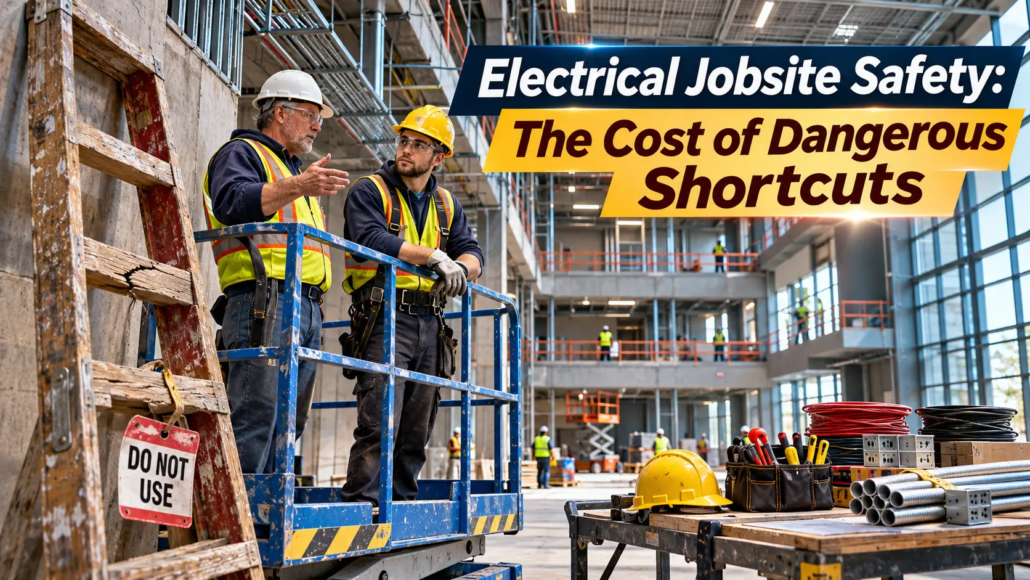
“Young people often believe they’re indestructible. Experience teaches us otherwise.”
One of the best young men I ever worked with was named Paul. He was hardworking, honest, willing, and fearless. Unfortunately, he was sometimes fearless in all the wrong ways.
After more than 50 years in electrical contracting, I have learned that technical skills and productivity mean very little if people put their lives at risk to get the job done. This is a story about Paul and a lesson in leadership, responsibility, and electrical jobsite safety.
The Problem With Being Too Confident
Paul wasn’t lazy. He was one of the hardest-working young men I had ever worked with. He wasn’t trying to avoid work; he was trying to finish it faster.
If there was a shortcut, Paul wanted to try it. If there was a faster method, he had probably already thought about it. I can’t tell you how many times I found myself asking, “Paul… are you out of your mind?”
One day, he duct-taped two extension ladders together because he didn’t want to wait for the correct ladder. Another day, he hung halfway out of a second-story window while installing a floodlight. The amazing part was that his shortcuts usually worked. That was exactly what worried me.
Every successful shortcut gave him another reason to believe the next one would work too. I repeatedly explained that one fall, one broken ladder, or one careless decision could change his entire future. He would listen, nod, and agree—then try another risky idea.
I wasn’t worried because Paul didn’t care about his work. I was worried because he was confident without fully understanding the consequences.
When a Dangerous Shortcut Goes Too Far
One day, we were working in a building with a three-story open lobby. The ceiling was extremely high, and reaching it properly would require scaffolding.
Paul studied the room and announced his plan: lean one extension ladder against a wall, place another ladder against it, add another on the opposite side, and lay a two-by-six across the arrangement to create a working platform. He explained it as though he had solved a major engineering problem.
Normally, I would have spent the next thirty minutes explaining why it was a terrible idea. This time, I simply smiled and said, “Sounds good.” Paul looked surprised. I think he expected another lecture.
We gathered some proper ladders and began setting things up. Then I found an old wooden ladder we planned to throw away. It had a cracked rung and was not safe to use. I asked Paul to go upstairs and start assembling the chandelier while I finished checking the platform.
Once he was out of sight, I staged a dramatic demonstration by throwing the old ladder down the staircase and lying beside it, completely still.
The Moment Paul Understood the Consequences
The crash echoed through the building. Then everything went quiet. A few seconds later, I heard someone running down the stairs. It was Paul.
“Steve!” There was no answer. “Steve!” Still nothing. He rushed over and knelt beside me. I could hear the panic in his voice as he repeatedly called my name.
For those few moments, Paul wasn’t thinking about productivity, saving time, or finding another shortcut. He was thinking about what happens when something goes wrong. I eventually opened one eye and sat up.
Paul wasn’t laughing. He was terrified.
He immediately realized what I had done, and he didn’t speak to me for almost a week. Looking back, I recognize that staging an accident was an extreme way to make a point. It is not a safety training method I recommend. Proper safety demonstrations, clear communication, and approved training are much better ways to teach workers about hazards.
But the experience changed something in Paul. From that day forward, he stopped trying to invent dangerous ways to complete simple jobs. He began to understand that a shortcut isn’t automatically smart just because it saves time.
The Responsibility of Leadership on an Electrical Jobsite
Being a lead electrician or foreman is about much more than completing the project. It’s about making sure everyone goes home safely.
The customer sees the finished building. The business owner sees the schedule and project costs. The estimator sees the labor and material numbers. But the person leading the crew has another responsibility: looking after the people doing the work.
Leadership means protecting workers, especially when they don’t fully recognize the dangers around them. Young electricians may not have enough experience to understand every risk. Experienced electricians, supervisors, and contractors must explain why safe procedures matter, provide suitable equipment, and make sure workers understand hazards before starting.
I’ve seen contractors spend thousands of dollars trying to save hundreds. I’ve seen workers take risks to save ten minutes and bypass safety equipment because it seemed inconvenient. Those decisions rarely feel dangerous at the time. But no deadline, customer, or profit margin is worth gambling with someone’s life.
Why Electrical Safety Should Always Come Before Productivity
Electrical construction involves tools, equipment, elevated work areas, and potentially dangerous electrical conditions. Every task requires proper preparation and appropriate safety procedures.
I believe productivity should never be measured only by how quickly a job is completed. It should also be measured by whether the work is completed correctly and safely.
Practical Electrical Jobsite Safety Principles
- Use the right equipment: Never improvise unsafe equipment arrangements to save time. Use ladders, scaffolding, platforms, and tools appropriate for the task and approved for their intended use.
- Do not treat experience as protection: Experienced electricians can still make mistakes. Confidence should never replace hazard awareness, proper procedures, or careful judgment.
- Question dangerous shortcuts: If a worker suggests an unusual method, stop and evaluate it. Saving a few minutes is not worth introducing unnecessary risk.
- Make safety communication routine: Encourage workers to raise concerns, ask questions, and report unsafe conditions without fear of embarrassment.
- Guide younger workers: New electricians need supervision, practical demonstrations, and explanations of why safety procedures exist.
For additional professional development in the electrical trade, explore the Online Electrical Estimating School.
Looking Back: The Most Important Part of Every Job Is the People
I still smile when I think about Paul. He became a good electrician, a dependable worker, and a smart man. He simply needed time to understand something that experience eventually teaches most of us.
Young people often believe they’re bulletproof. Experience teaches us otherwise. As I look back over my career, I don’t remember the jobs we finished a day early, every project where we saved an hour, or the shortcuts that worked.
What I remember are the people: the friendships, the lessons, the experiences, and how fortunate we were when everyone made it home safely.
That is the real measure of success. Not productivity. Not profit.
Not schedules. People. Always people.
My book, Everybody Has A First, reflects many of the experiences and lessons that shaped my career. Becoming a good electrician involves more than learning how to install equipment. It also means making responsible decisions and protecting yourself and the people working beside you.
What I Learned About Electrical Jobsite Safety
- Confidence without experience can become dangerous.
- Shortcuts often create bigger problems than they solve.
- Leadership means protecting people, not just managing work.
- The consequences of a bad decision can last a lifetime.
- Safety is what allows productivity to continue tomorrow.
- No project is more important than the people working on it.
Best Bid Rules: Safety Comes First
- Never trade safety for speed.
- Use the right tool and equipment for the job.
- Question shortcuts that introduce unnecessary risks.
- Protect your people before protecting the schedule.
- Make sure every worker understands the hazards.
- Never consider a job profitable if completing it requires risking someone’s life.
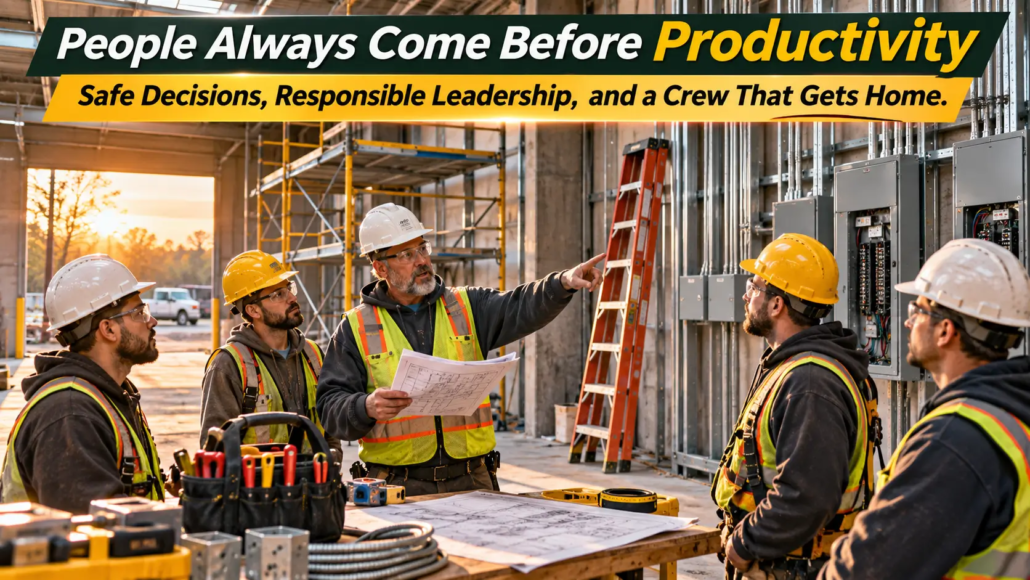
Frequently Asked Questions About Electrical Jobsite Safety
- Why is electrical jobsite safety important?
It helps protect electricians, contractors, supervisors, and other workers from preventable injuries. Proper equipment, hazard awareness, training, and safe work procedures reduce risks.
- Why are shortcuts dangerous in electrical construction?
Shortcuts can bypass safety procedures or introduce unsafe conditions. Improvised ladders, unsuitable equipment, and rushed decisions may result in serious injuries or costly delays.
- What is the responsibility of a lead electrician or foreman?
A lead electrician or foreman helps organize the work, guide the crew, identify hazards, communicate safety requirements, and ensure workers have suitable equipment and supervision.
- How can experienced electricians help younger workers stay safe?
They can share practical lessons, demonstrate correct procedures, explain hazards, supervise inexperienced workers, and encourage questions and reporting of unsafe conditions.
- How can electrical contractors improve jobsite safety?
Through proper planning, worker training, hazard assessments, suitable equipment, regular inspections, and clear communication. Workers should be able to stop and report unsafe tasks.
- Why should electricians never improvise ladder or scaffolding arrangements?
Improvised arrangements can create unstable working platforms and increase fall risks. Workers should use properly selected access equipment according to its instructions and applicable safety requirements.
- Is productivity more important than safety in electrical contracting?
No. Contractors should complete projects efficiently while protecting employees. No deadline or profit target justifies risking someone’s life.
Need Support With Your Electrical Estimating Business?
I have spent more than 50 years in electrical contracting, and I understand that running a successful business requires more than completing installations. It requires planning, accurate estimating, responsible leadership, and a commitment to doing things the right way.
Learn more about Best Bid Electrical Estimating Software, explore the pricing options, or call 800-941-7028 to discuss your electrical estimating needs.
I encourage you to keep learning from the people around you. Every experienced electrician was once a beginner, and the lessons we share can help the next generation make better decisions.
A successful project is not just one that finishes on time and makes money. It is one where the people who built it return home safely.
About Steve Griffin
Steve Griffin
Founder of Best Bid Electrical Estimating Software
Electrician • Estimator • Contractor • Author • Software Developer
From digging ditches in 1973 to creating one of the industry’s longest-running electrical estimating software systems, Steve Griffin has spent more than 50 years helping contractors win more work and make more money.